Loading...
Done


It looks like 2024 has ended and we are still alive (although of course it's not evening yet). Well, let's wish ourselves the same in the future. If someone wants to put USDT TRC20 under the tree: TDWPvSi7RY4wNZPukDRyKghhLGTGsRNRBe (nobody will put anything, of course – but you understand, it's a ritual). Happy New Year! And now disco.
Details
31 Dec 2024 04:28:00
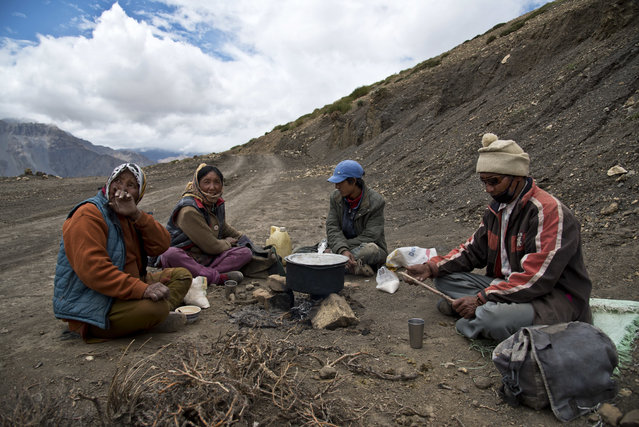
In this August 17, 2016, photo, from left to right, Chhering Chodom, 60, Tashi Yangzom, 50, Lobsang Chhering, 27, and Dorje Tandup, 58, drink milk tea on the side of the road. For centuries, the sleepy valley nestled in the Indian Himalayas remained a hidden Buddhist enclave forbidden to outsiders. Enduring the harsh year-round conditions of the high mountain desert, the people of Spiti Valley lived by a simple communal code – share the Earth's bounty, be hospitable to neighbors, and eschew greed and temptation at all turns. That's all starting to change, for better or worse. Since India began allowing its own citizens as well as outsiders to visit the valley in the early 1990s, tourism and trade have boomed. And the marks of modernization, such as solar panels, asphalt roads and concrete buildings, have begun to appear around some of the villages that dot the remote landscape at altitudes above 4,000 meters (13,000 feet). (Photo by Thomas Cytrynowicz/AP Photo)

In this August 17, 2016, photo, from left to right, Chhering Chodom, 60, Tashi Yangzom, 50, Lobsang Chhering, 27, and Dorje Tandup, 58, drink milk tea on the side of the road. For centuries, the sleepy valley nestled in the Indian Himalayas remained a hidden Buddhist enclave forbidden to outsiders. Enduring the harsh year-round conditions of the high mountain desert, the people of Spiti Valley lived by a simple communal code – share the Earth's bounty, be hospitable to neighbors, and eschew greed and temptation at all turns. That's all starting to change, for better or worse. (Photo by Thomas Cytrynowicz/AP Photo)
Details
15 Sep 2016 09:22:00
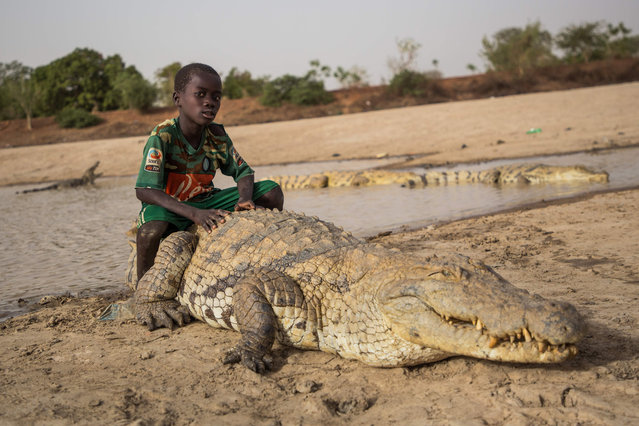
A boy sits on the back of a crocodile on May 19, 2018 at a pond in Bazoule in Burkina Faso, a village which happily shares its local pond with “sacred” crocodiles. Crocodiles may be one of the deadliest hunters in the animal kingdom, but in a small village in Burkina Faso it is not unusual to see someone sitting atop one of the fearsome reptiles. According to local legend, the startling relationship with the predators dates back to at least the 15 th century. The village was in the grip of an agonising drought until the crocodiles led women to a hidden pond where the population could slake their thirst. (Photo by Olympia de Maismont/AFP Photo)

A boy sits on the back of a crocodile on May 19, 2018 at a pond in Bazoule in Burkina Faso, a village which happily shares its local pond with “sacred” crocodiles. Crocodiles may be one of the deadliest hunters in the animal kingdom, but in a small village in Burkina Faso it is not unusual to see someone sitting atop one of the fearsome reptiles. According to local legend, the startling relationship with the predators dates back to at least the 15 th century. The village was in the grip of an agonising drought until the crocodiles led women to a hidden pond where the population could slake their thirst. (Photo by Olympia de Maismont/AFP Photo)
Details
17 Jul 2018 00:01:00
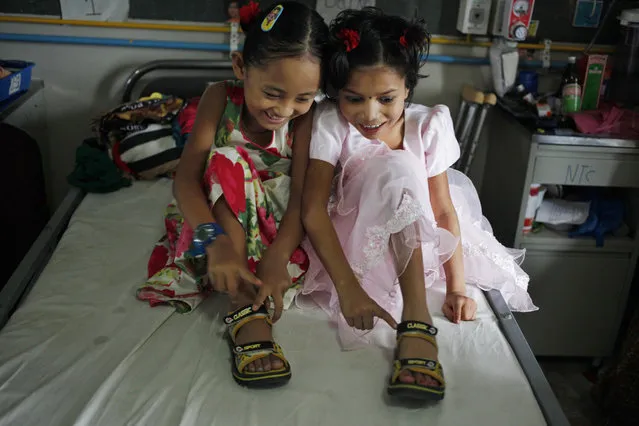
In this July 15, 2015 photo, Nepalese amputee victims Khendo Tamang, left, and Nirmala Pariyar, both 8, share a single pair of shoes at the Bir Trauma Center in Kathmandu, Nepal. After suffering serious leg wounds in Nepal's massive 2015 earthquake that killed and injured thousands, both girls were brought to the Bir Trauma Center in Kathmandu, to receive single leg amputations. Following their surgeries, Nirmala's relentless cheerfulness drew a still very depressed Khendo close and both found an inseparable friendship which has helped their emotional wounds heal. (Photo by Niranjan Shrestha/AP Photo)

In this July 15, 2015 photo, Nepalese amputee victims Khendo Tamang, left, and Nirmala Pariyar, both 8, share a single pair of shoes at the Bir Trauma Center in Kathmandu, Nepal. After suffering serious leg wounds in Nepal's massive 2015 earthquake that killed and injured thousands, both girls were brought to the Bir Trauma Center in Kathmandu, to receive single leg amputations. Following their surgeries, Nirmala's relentless cheerfulness drew a still very depressed Khendo close and both found an inseparable friendship which has helped their emotional wounds heal. (Photo by Niranjan Shrestha/AP Photo)
Details
23 Apr 2016 13:48:00
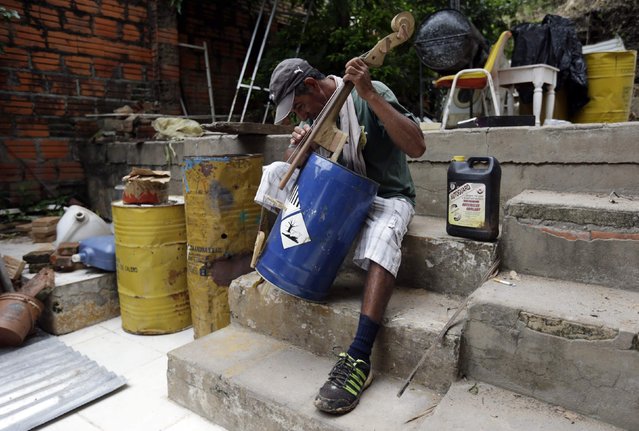
Recycling artist Nicolas Gomez checks the strings of a cello he has made out of an oil barrel for the Orchestra of Recycled Instruments of Cateura, in Cateura, Paraguay February 13, 2015. (Photo by Jorge Adorno/Reuters)

Recycling artist Nicolas Gomez checks the strings of a cello he has made out of an oil barrel for the Orchestra of Recycled Instruments of Cateura, in Cateura, Paraguay February 13, 2015. Saudi Arabia's oil exports have risen in February in response to stronger demand from customers. As OPEC's top producer battles for market share Reuters photographers around the globe have been photographing oil barrels to document how they are utilised once the fuel has been used. (Photo by Jorge Adorno/Reuters)
Details
21 Feb 2015 10:39:00
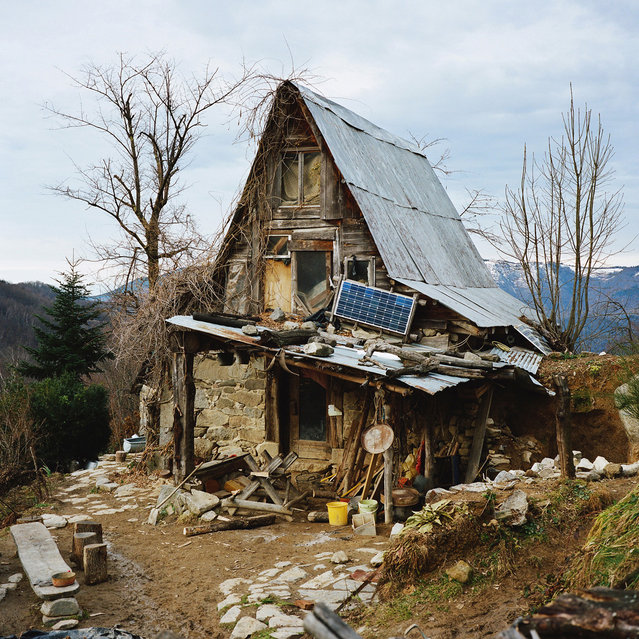
This property in the French Pyrenees is owned by a German man, who moved with his family here 25 years ago. He has since renovated the shack to be a completely self-sufficient house. There are no electrical appliances, but the solar panel powers small lights in the house. (Photo by Antoine Bruy)

Back in 2010, French photographer Antoine Bruy began hitchhiking around Europe without any fixed route. Along his travels, he met people who had entirely abandoned city life in favour of an isolated country existence they found more fulfilling. Bruy began seeking out people who lived off-the-grid. After three years on the road, staying in makeshift houses and on community farms, he has released Scrublands, a documentation of the lifestyle. While each living situation is different, Bruy found that all the people he met shared a common desire to escape the rat race and achieve a quieter life in harmony with nature. (Photo by Antoine Bruy)
Details
13 Aug 2014 09:45:00
GIF Art By James Kerr

James Kerr started his project “Scorpion Dagger” without any real direction, except for the intention to make one GIF everyday(ish) for one year. He had been making collages for some time and “Scorpion Dagger” started out to be a test of discipline and a way for him to learn how to animate. Making GIFs was a logical evolution to him. The project represents many different things to him, the works from which he draws upon are so powerful and inspirational to him, that he is now nearly obsessed with repurposing them to share his vision of the world, and perhaps inspire people to look at art differently. The project is tremendously personal to him, it’s a lot more than the humor that’s at its surface and he is still trying to work out what “Scorpion Dagger” really is.


Details
19 Dec 2013 10:31:00
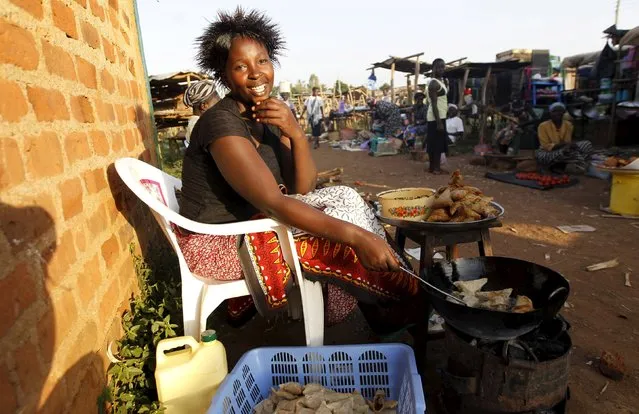
Vivian Odhiambo, 24, frys samosas in the trading centre of Kogelo, west of Kenya's capital Nairobi, July 14, 2015. Odhiambo said, “Obama is our hero and we wait to welcome him back home again. We in Kogelo have witnessed general growth and we are proud of being associated with the Obamas”, she added. (Photo by Thomas Mukoya/Reuters)

Vivian Odhiambo, 24, frys samosas in the trading centre of Kogelo, west of Kenya's capital Nairobi, July 14, 2015. Odhiambo said, “Obama is our hero and we wait to welcome him back home again. We in Kogelo have witnessed general growth and we are proud of being associated with the Obamas”, she added. As U.S. President Barack Obama visits Kenya, a personal connection to his father's birthplace of Kogelo dominates a trip that Kenyans view as a native son returning home. Residents from a herdsman to a housewife share their views on what Obama has achieved and what they would like to see next. (Photo by Thomas Mukoya/Reuters)
Details
26 Jul 2015 10:52:00