Loading...
Done
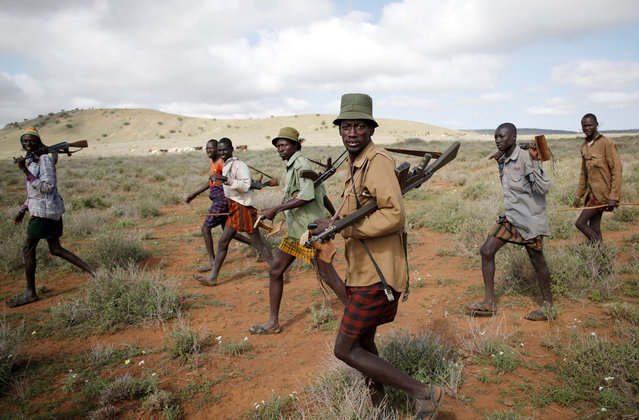
Turkana tribesmen walk with guns to protect their cattle from rival tribes near Baragoy, Kenya August 4, 2017. (Photo by Goran Tomasevic/Reuters)

Turkana tribesmen walk with guns to protect their cattle from rival tribes near Baragoy, Kenya August 4, 2017. (Photo by Goran Tomasevic/Reuters)
Details
05 Aug 2017 08:40:00
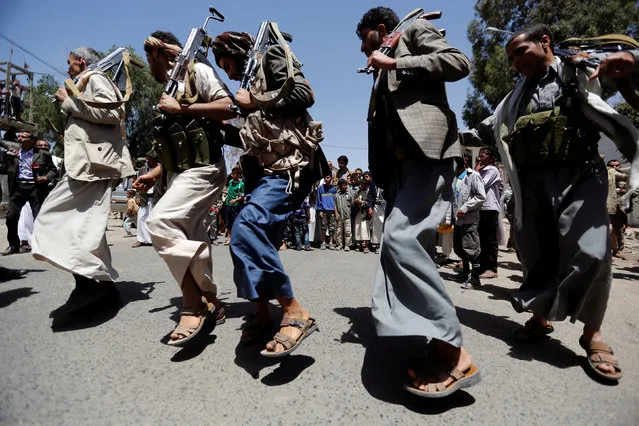
Tribesmen loyal to the Houthi movement perform the Baraa dance during a gathering to show support to the movement in Sanaa, Yemen, May 19, 2016. Bara or Baraa dance is one of the several traditional outdoor dances performed by men in the country of Yemen. Bara dance literally means a dagger dance, where each dancer holds a dagger. The style of the Bara dance differs from tribe to tribe. It is performed on special occasions. (Photo by Khaled Abdullah/Reuters)

Tribesmen loyal to the Houthi movement perform the Baraa dance during a gathering to show support to the movement in Sanaa, Yemen, May 19, 2016. Bara or Baraa dance is one of the several traditional outdoor dances performed by men in the country of Yemen. Bara dance literally means a dagger dance, where each dancer holds a dagger. The style of the Bara dance differs from tribe to tribe. It is performed on special occasions. (Photo by Khaled Abdullah/Reuters)
Details
20 May 2016 12:44:00
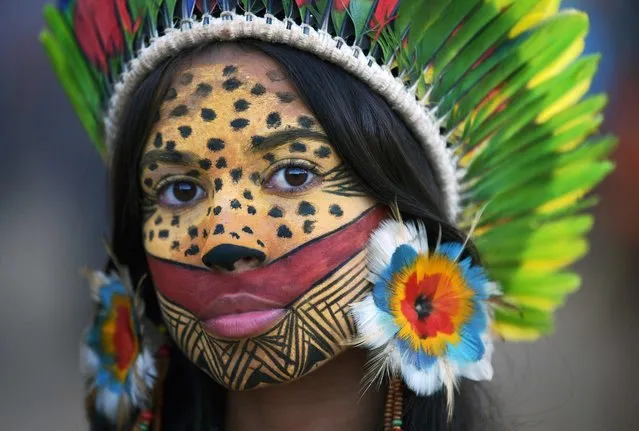
A woman from the Pataxo tribe poses for a photo at an indigenous protest camp on the fourth day of the Terra Livre Indigenous Camp in Brasilia on April 7, 2022. The 10-day annual protest is held by indigenous people from tribes that arrive from all over Brazil, and calls for greater protection of their land and rights. (Photo by Carl de Souza/AFP Photo)

A woman from the Pataxo tribe poses for a photo at an indigenous protest camp on the fourth day of the Terra Livre Indigenous Camp in Brasilia on April 7, 2022. The 10-day annual protest is held by indigenous people from tribes that arrive from all over Brazil, and calls for greater protection of their land and rights. (Photo by Carl de Souza/AFP Photo)
Details
24 Jun 2023 03:41:00
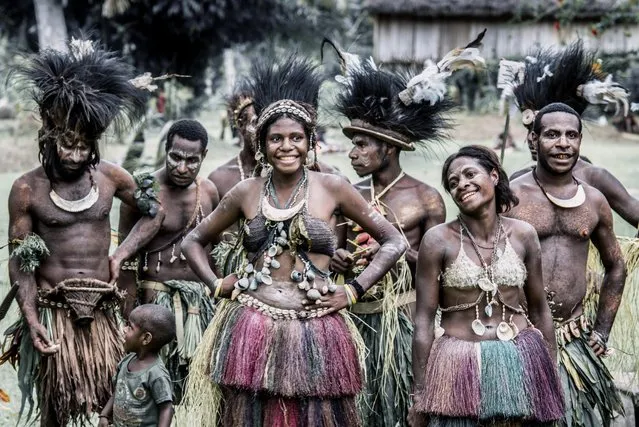
Stunning images capture the tribes of Papua New Guinea during a gathering of clans. (Photo by Trevor Cole/Media Drum World)

These powerful images capture the spear-wielding tribes of Papua new Guinea who believe they are possessed with the spirit of the crocodile. They show how the Kangunaman clansmen scar their backs to resemble reptile scales while the Huli Wigmen wear elaborate headdresses to signal they are ready for battle. (Photo by Trevor Cole/Media Drum World)
Details
05 May 2018 00:05:00
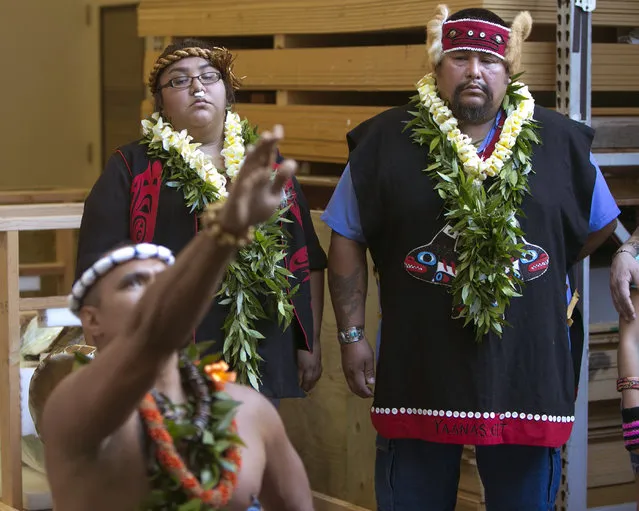
Tlingit Tribal members from Klawock, Alaska Eva Rowan, center, and Jonathan Rowan, right, watch Okolani Tallett perform a hula dance at the Honolulu Museum of Arts, Thursday, October 22, 2015, in Honolulu.   A totem pole, stolen by actor John Barrymore during a sailing trip to Alaska in 1931, was returned to the Tribe today by the Honolulu Museum of Arts where it was on display since the early 1980s. The totem pole was carved by the ancestors of the Tlingit Tribe. (Photo by Marco Garcia/AP Photo)

Tlingit Tribal members from Klawock, Alaska Eva Rowan, center, and Jonathan Rowan, right, watch Okolani Tallett perform a hula dance at the Honolulu Museum of Arts, Thursday, October 22, 2015, in Honolulu. A totem pole, stolen by actor John Barrymore during a sailing trip to Alaska in 1931, was returned to the Tribe today by the Honolulu Museum of Arts where it was on display since the early 1980s. The totem pole was carved by the ancestors of the Tlingit Tribe. (Photo by Marco Garcia/AP Photo)
Details
25 Oct 2015 08:04:00
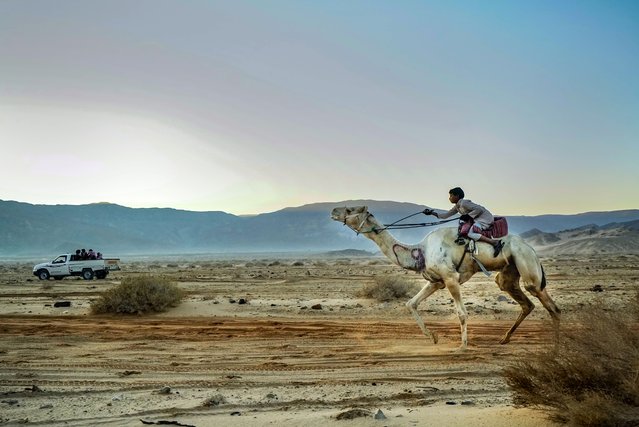
A camel rider push his camel in the annual Wadi Zalaga competition between two rival Bedouin tribes in the South Sinai region, Egypt on January 10, 2023. (Photo by Celestino Arce/NurPhoto/Rex Features/Shutterstock)

A camel rider push his camel in the annual Wadi Zalaga competition between two rival Bedouin tribes in the South Sinai region, Egypt on January 10, 2023. (Photo by Celestino Arce/NurPhoto/Rex Features/Shutterstock)
Details
26 Jan 2023 03:42:00
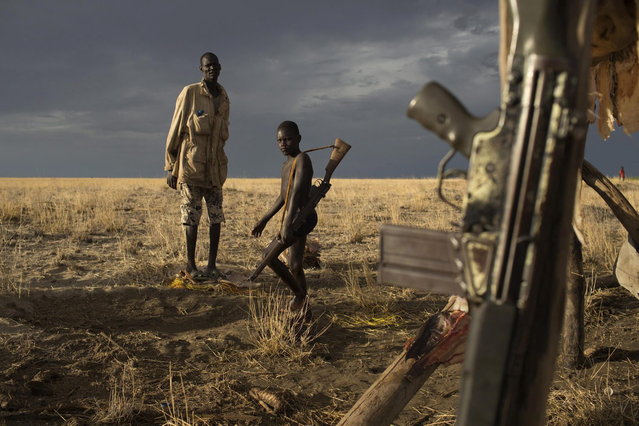
A Turkana man and a boy carrying a gun look on as a G3 battle rifle hangs from a structure used to dry fish at a fishing camp on the shores of Lake Turkana, some kilometres from Todonyang near the Kenya-Ethiopia border in northwestern Kenya October 12, 2013. (Photo by Siegfried Modola/Reuters)

A Turkana man and a boy carrying a gun look on as a G3 battle rifle hangs from a structure used to dry fish at a fishing camp on the shores of Lake Turkana, some kilometres from Todonyang near the Kenya-Ethiopia border in northwestern Kenya October 12, 2013The Turkana are traditionally nomadic pastoralists, but they have seen the pasture that they need to feed their herds suffer from recurring droughts and many have turned to fishing. However, Lake Turkana is overfished, and scarcity of food and pastureland is fuelling long-standing conflict with Ethiopian indigenous Dhaasanac, who have seen grazing grounds squeezed by large-scale government agricultural schemes in southern Ethiopia. The Dhaasanac now venture ever deeper into Kenyan territory in search of fish and grass, clashing with neighbours. Fighting between the communities has a long history, but the conflict has become ever more fatal as automatic weapons from other regional conflicts seep into the area. While the Turkana region is short of basics like grass and ground-water, it contains other resources including oil reserves and massive, newly discovered underground aquifers. (Photo by Siegfried Modola/Reuters)
Details
05 Dec 2013 12:08:00
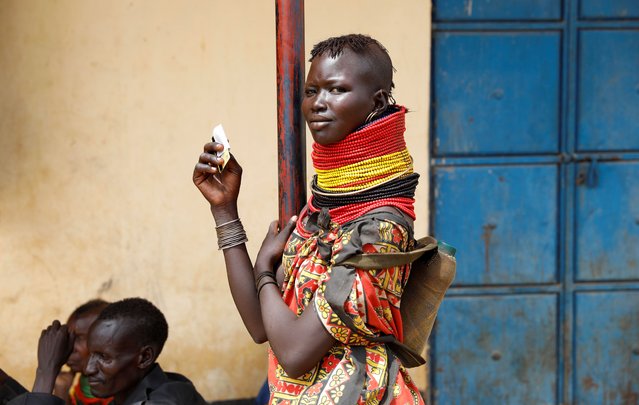
A woman from the Turkana tribe waits at a shop at the village of Lorengippi near the town of Lodwar, Turkana county, Kenya, July 3, 2020. (Photo by Baz Ratner/Reuters)

A woman from the Turkana tribe waits at a shop at the village of Lorengippi near the town of Lodwar, Turkana county, Kenya, July 3, 2020. (Photo by Baz Ratner/Reuters)
Details
13 Jul 2020 00:05:00