Loading...
Done
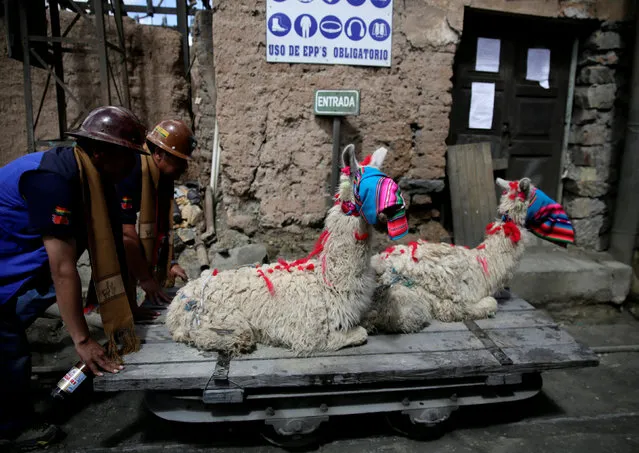
Independent miners transport llamas to sacrifice them for good fortune during the year as part of Andean carnival celebrations, outside the Mina Itos on the outskirts of Oruro, Bolivia February 24, 2017. (Photo by David Mercado/Reuters)

Independent miners transport llamas to sacrifice them for good fortune during the year as part of Andean carnival celebrations, outside the Mina Itos on the outskirts of Oruro, Bolivia February 24, 2017. (Photo by David Mercado/Reuters)
Details
26 Feb 2017 00:03:00
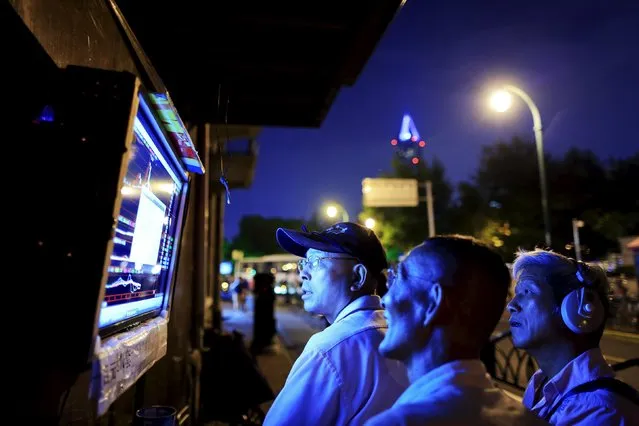
Shen Yuxi (L), introduces analysis software to investors at a “street stock salon” in central Shanghai, China, September 5, 2015. Shen carries a TV screen on his electronic bike to the "salon" every weekends where he sets it up on the wall outside a brokerage house. Shen's been selling analysis software at "the salon" for more than 10 years. (Photo by Aly Song/Reuters)

Some are in it just for the money, others to help buy a meal. Then there are those who trade for fun or to spend time among friends. Millions of investors – pensioners, security guards, high-school students – dominate China's stock markets, conducting about 80 percent of all trades. Retirees gather in brokerage houses dotted around China also to enjoy some company and savour the air conditioning on hot days. Some start as young as 13, trading from home with an eye on future careers in finance. Winning isn't guaranteed. This year, among the most turbulent in China's financial history, its stock markets more than doubled in the six months to May, only to crash amid concerns that growth in the country, which makes everything from cars to steel, is slowing faster than previously thought. (Photo by Aly Song/Reuters)

Details
13 Oct 2015 08:00:00
Mud Madness at the annual Jaffa Cakes charity three-mile run at Foymore Lodge near Portadown this afternoon, on April 13, 2014. A total of a thousand competitors and fun-runners took part in the two races held over the mudstrewn endurance course. (Photo by Alan Lewis/Photopress Belfast)

Mud Madness at the annual Jaffa Cakes charity three-mile run at Foymore Lodge near Portadown this afternoon, on April 13, 2014. A total of a thousand competitors and fun-runners took part in the two races held over the mudstrewn endurance course. (Photo by Alan Lewis/Photopress Belfast)
Details
19 Apr 2014 12:17:00
A Kashmiri woman walks on a footbridge as it rains in Srinagar, June 24, 2015. This year's monsoon rains in India are officially forecast to be only 88 percent of the long-term average. (Photo by Danish Ismail/Reuters)

A Kashmiri woman walks on a footbridge as it rains in Srinagar, June 24, 2015. This year's monsoon rains in India are officially forecast to be only 88 percent of the long-term average. (Photo by Danish Ismail/Reuters)
Details
29 Jun 2015 12:11:00
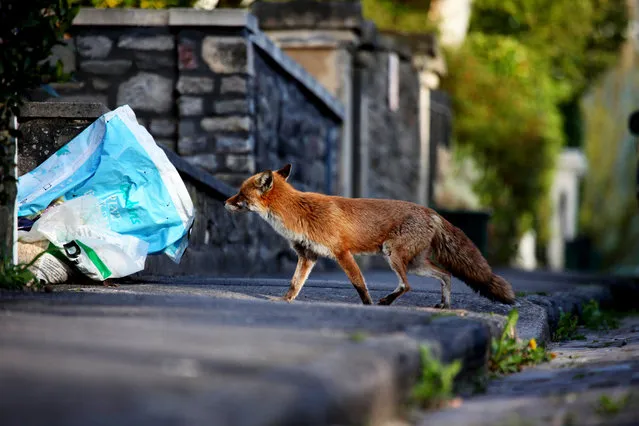
Urban Fox Project by Photographer Ian Wade

“I have been photographing this group of urban foxes in Bristol for over 12 months; what started off as a chance encounter has become an obsession for me and has changed my feelings and attitudes towards urban foxes forever...”. – Ian Wade. (Photo by Ian Wade)
Details
30 Jun 2013 12:36:00
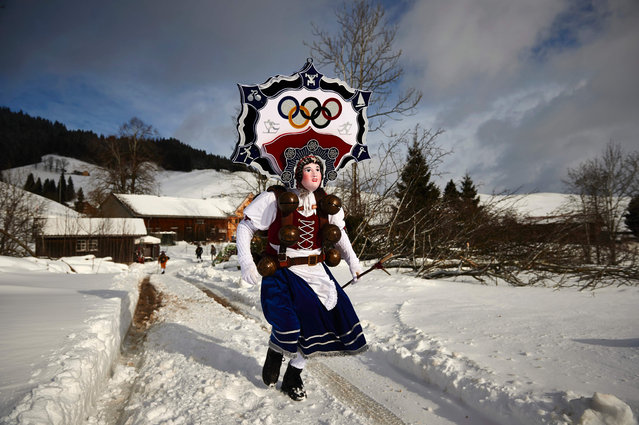
A leader “Rolli” of a yodel group “Schuppel” runs in the snow in front of a farmstead during the “Silvesterchlausen” in the early morning in Urnaesch in the Swiss canton Appenzell Ausserroden on January 13, 2017. The “Silvesterchlausen” is a tradition of the Swiss canton Appenzell, where colorfull characters organized in groups called “Schuppel”, chase out the old year and welcome the new one. They run all day long from farmstead to farmstead, gather together to sing a jodel and great the farmers. A “Schuppel” consists of some “Schelli” and two “Rolli”, sometimes with female dresses and nice scenes over the head, despite the dress all participants are males. The Silversterchlausen run twice a year, first for the new Silvester on December 31, and then again on January 13, for the old Silvester following the Julian calendar. (Photo by Michael Buholzer/AFP Photo)

A leader “Rolli” of a yodel group “Schuppel” runs in the snow in front of a farmstead during the “Silvesterchlausen” in the early morning in Urnaesch in the Swiss canton Appenzell Ausserroden on January 13, 2017. (Photo by Michael Buholzer/AFP Photo)
Details
14 Jan 2017 12:41:00
Ethnic “Kam” (also known as Dong) women get ready for a traditional wedding ritual known as the “steal the chicken at the drum tower” in a minority Dong village in southwestern Chinese city of Congjiang, Guizhou province, China January 29, 2017. The ceremony held in the ethnic Kam minority village of Gantuan in Guizhou province is based on a tradition dating back some 500 years that was revived and modified in the 1990s for villagers and tourists. (Photo by Tyrone Siu/Reuters)

Ethnic “Kam” (also known as Dong) women get ready for a traditional wedding ritual known as the “steal the chicken at the drum tower” in a minority Dong village in southwestern Chinese city of Congjiang, Guizhou province, China January 29, 2017. The ceremony held in the ethnic Kam minority village of Gantuan in Guizhou province is based on a tradition dating back some 500 years that was revived and modified in the 1990s for villagers and tourists. (Photo by Tyrone Siu/Reuters)
Details
03 Feb 2017 07:57:00
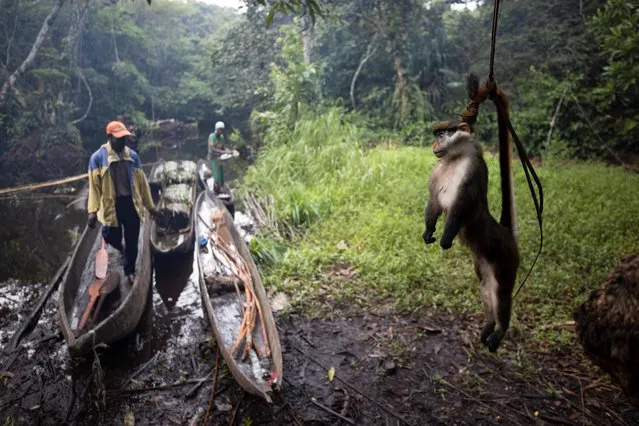
A dead red-tailed monkey hangs by its tail above the ground, in order to keep it away from ants, in the forest near the city of Mbandaka, Democratic Republic of the Congo, April 5, 2019. Bushmeat hunters are emptying Central Africa's forests at a high rate, researchers say. A growing appetite for wild meat in cities has ramped up the scale of hunting. Research shows around 6 million tonnes of bushmeat are sourced annually from the Congo Basin, whose forest spans across six countries and is second in size only to the Amazon. (Photo by Thomas Nicolon/Reuters)

A dead red-tailed monkey hangs by its tail above the ground, in order to keep it away from ants, in the forest near the city of Mbandaka, Democratic Republic of the Congo, April 5, 2019. Bushmeat hunters are emptying Central Africa's forests at a high rate, researchers say. A growing appetite for wild meat in cities has ramped up the scale of hunting. Research shows around 6 million tonnes of bushmeat are sourced annually from the Congo Basin, whose forest spans across six countries and is second in size only to the Amazon. (Photo by Thomas Nicolon/Reuters)
Details
14 Oct 2019 00:03:00