Loading...
Done
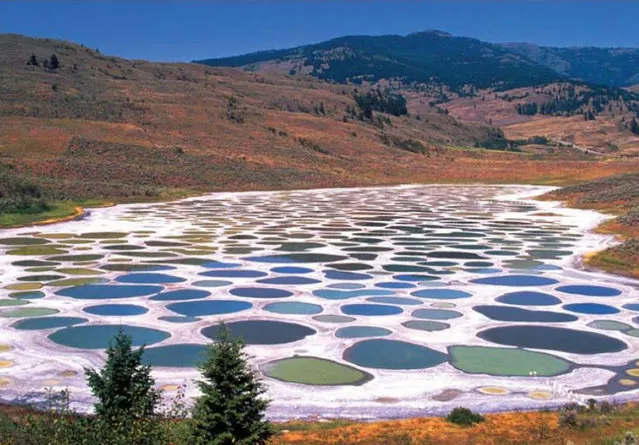
Kliluk, the Spotted Lake, Canada

Originally known to the First Nations of the Okanagan Valley as Khiluk, which was- and remains today revered as a sacred site producing therapeutic waters. During World War I the minerals of Spotted Lake were used in manufacturing ammunition. Later the area came under the control of the Ernest Smith Family, for a term of about 40 years. In 1979 Smith attempted to create interest in a spa at the lake. The First Nations responded with an effort to buy the lake; in October 2001 they finally struck a deal. First Nations arranged the purchase of 22 hectares of land for a total of $720,000, and contributed about 20% of the cost. The Indian Affairs Department paid the remainder.
Details
06 Mar 2015 12:59:00
Pencil Sculptures - by Jennifer Maestre

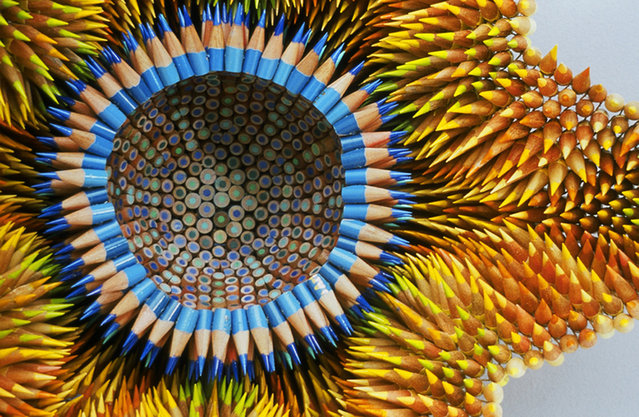
Jennifer Maestre (born 1959 in Johannesburg, South Africa) is a Massachusetts-based artist, internationally known for her unique pencil sculptures.
She derives most of her inspiration from the form and texture of the sea urchin. To make the pencil sculptures, Jennifer makes use of a variety pencils, nails and stitching. She takes hundreds of pencils, cuts them into small 1-inch sections, drills a hole in each section, sharpens them all and sews them together.
Details
22 Aug 2012 13:16:00
Leafy sea dragon

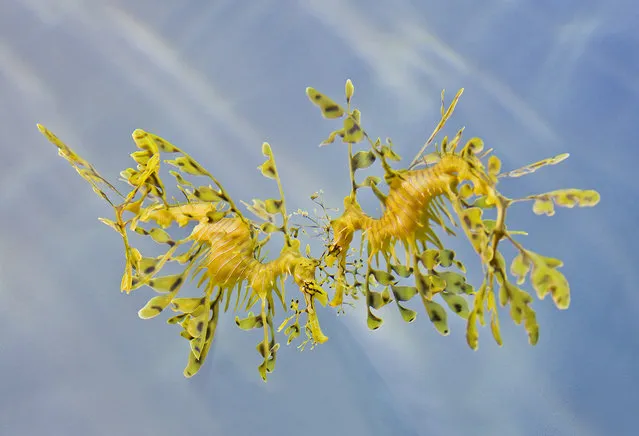
The leafy seadragon or Glauert's seadragon, Phycodurus eques, is a marine fish in the family Syngnathidae, which also includes the seahorses. It is the only member of the genus Phycodurus. It is found along the southern and western coasts of Australia. The name is derived from the appearance, with long leaf-like protrusions coming from all over the body. These protrusions are not used for propulsion; they serve only as camouflage. The leafy seadragon propels itself by means of a pectoral fin on the ridge of its neck and a dorsal fin on its back closer to the tail end. These small fins are almost completely transparent and difficult to see as they undulate minutely to move the creature sedately through the water, completing the illusion of floating seaweed.
Details
05 Sep 2012 08:51:00


A Galapagos Tortoise shell is used as a foot rest at Heathrow Airport's Animal Reception Centre on January 25, 2011 in London, England. Many animals pass through the centre's doors ranging from exotic animals such as snow leopards and elephants, snakes and crocodiles, to the more common such as cats and dogs. In 2010 alone the centre processed approximately 10,500 cats and dogs, 1,300 birds, 105,000 day old chicks, 246,000 reptiles, 230 horses and 29 million fish. Most animals are part of zoo transfer schemes, the pet trade, or are pets in transit. (Photo by Dan Kitwood/Getty Images)
Details
21 Mar 2011 12:30:00
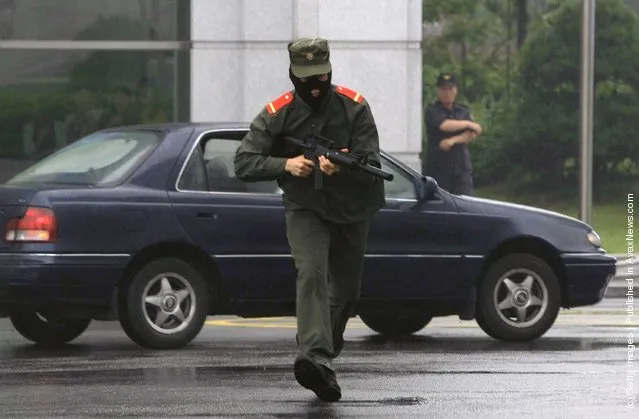
A South Korean soldier wear North Korea's military uniform, acting as North Korean soldier during an anti-terror and anti-chemical drill session

A South Korean soldier wear North Korea's military uniform, acting as North Korean soldier during an anti-terror and anti-chemical drill session held as part of the 2011 Ulchi Freedom Guardian (UFG) event on August 17, 2011 in Seoul, South Korea. The 11-day UGC, which features drills including the handling of chemical and biological attacks, is a regular joint exercise between US and South Korean troops to prepare for potential emergencies on the Korean Peninsula. (Photo by Chung Sung-Jun/Getty Images)
Details
18 Aug 2011 11:27:00
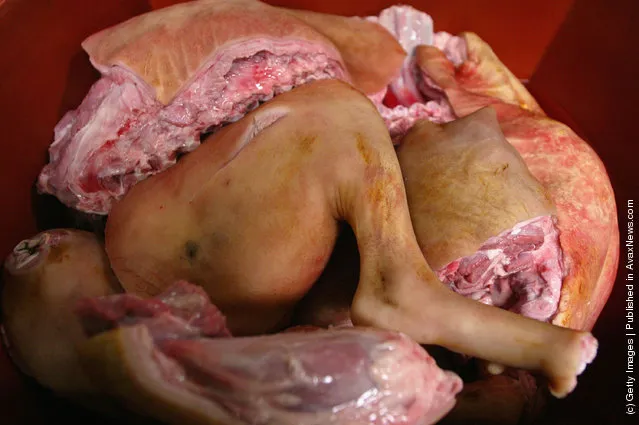
A chef cooks raw dog meat at a restaurant in Gwacheon, South Korea

A chef cooks raw dog meat at a restaurant on July 5, 2005 in Gwacheon, South Korea. Dog meat is a traditional dish in Korea dating back to the Samkuk period (period of the three kingdoms BC 57 – AD 668). Although many recipes existed historically for dog meat, now chefs only make soups, or dishes using boiled or roasted meat. Koreans traditionally eat dog meat on the hottest day of the summer, for it's reputed benefits of virility, invigoration and health. (Photo by Chung Sung-Jun/Getty Images)
Details
21 Feb 2012 12:54:00
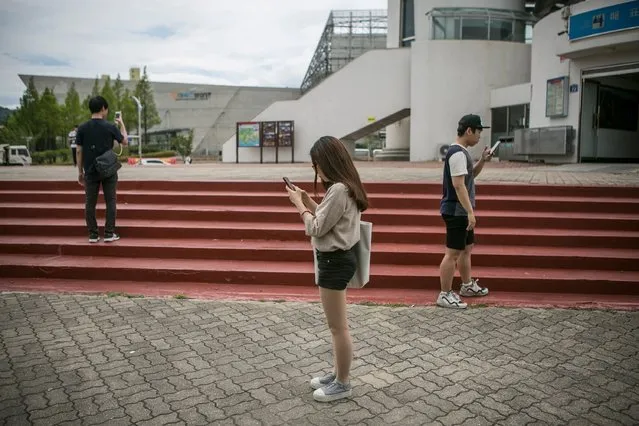
South Korean youths play Pokemon Go on July 15, 2016 in Sokcho, South Korea. (Photo by Jean Chung/Getty Images)

South Korean youths play Pokemon Go on July 15, 2016 in Sokcho, South Korea. South Korea is not one of the initial Pokemon Go released countries, nor is the game likely to be released officially any time soon as the South Korean government does not allow Google to use its map; however, South Korean game enthusiasts are now visiting a handful of loophole areas in the north eastern side of the country near the border of North Korea to join the global frenzy of Pokemon Go. (Photo by Jean Chung/Getty Images)
Details
16 Jul 2016 08:49:00
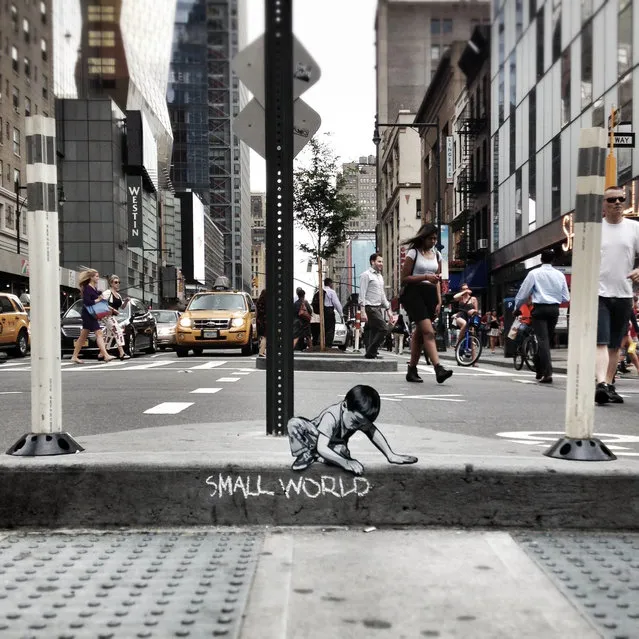
“Small World”. (Photo by Joe Lurato)

New Jersey based artist, Joe Iurato creates art using hand-cut paper and spray paint to make small wood cutout figures and placed in public spaces. According to Iurato, “a puddle can become a lake, a small crack in a cement wall can become a magnificent climb, a planter box can become a place for a child to play, and a shadow might be a tangible space for a few seconds a day”. Photo: “Small World”. (Photo by Joe Lurato)
Details
22 Mar 2014 23:50:00