Loading...
Done
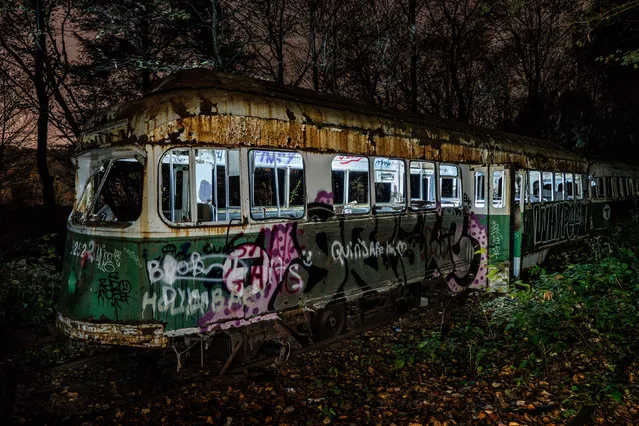
Abandoned trolley graveyard in Pennsylvania. (Photo by Matthew Christopher/Abandoned America/Caters News Agency)

Tucked away in these spooky woodlands, one man has amassed a huge collection of decaying trolley cars. Once a novel mode of public transport in the likes early 20th Century New York, the hauntingly beautiful trolleys are now at one with nature – a scene that abandoned location photographer Matthew Christopher was able to discover in a location not disclosed to the public. Here: Abandoned trolley graveyard in Pennsylvania. (Photo by Matthew Christopher/Abandoned America/Caters News Agency)
Details
27 Mar 2018 00:05:00
Of all the species affected by river regulation in Australia, the ibis is one of the few that has changed its behaviour and moved to coastal cities. (Photo by Rick Stevens/The Guardian)

Tip turkey, dumpster chook, rubbish raptor – the Australian white ibis goes by many unflattering names. But it is a true urban success story, scavenging to survive in cities across Australia as wetlands have been lost. Wildlife photographer Rick Stevens captured them in Sydney. Here: Of all the species affected by river regulation in Australia, the ibis is one of the few that has changed its behaviour and moved to coastal cities. (Photo by Rick Stevens/The Guardian)
Details
11 Apr 2018 00:03:00
Staffie cross looks startled to get a lot of treats. (Photo by Christian Vieler/Caters News Agency)

This adorable gallery reveals the astonished expressions of dozens of puppies as they try to gobble up treats flying through the air toward them. Photographer Christian Vieler, 48, has been documenting pooches, with their eyes bulging, mouths wide open and looks of love on their faces, in his studio as part of the project “Dogs Catching Treats” since 2013. (Photo by Christian Vieler/Caters News Agency)
Details
12 Apr 2019 00:01:00
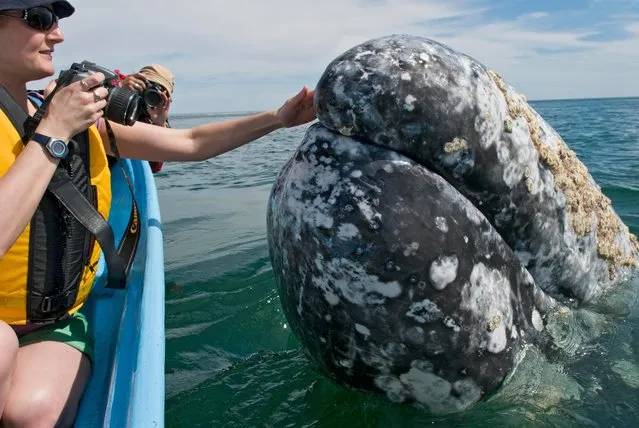
A grey whale greets tourists in boat in, Baja California, Mexico, March 2017. (Photo by  Mark Carwardine/Barcroft Images)

A grey whale greets tourists in boat in, Baja California, Mexico, March 2017. A pair of newly born grey whale calves intrigued by visiting tourists eagerly swim over to the group to get a closer look. Urged on by their mother, the small calves confidently went up to the tour group who were visiting San Ignacio Lagoon in Baja California, Mexico. This adorable moment was captured by zoologist and wildlife photographer, Mark Carwardine on his visit to the area in March 2017. (Photo by Mark Carwardine/Barcroft Images)
Details
11 Jul 2017 06:14:00
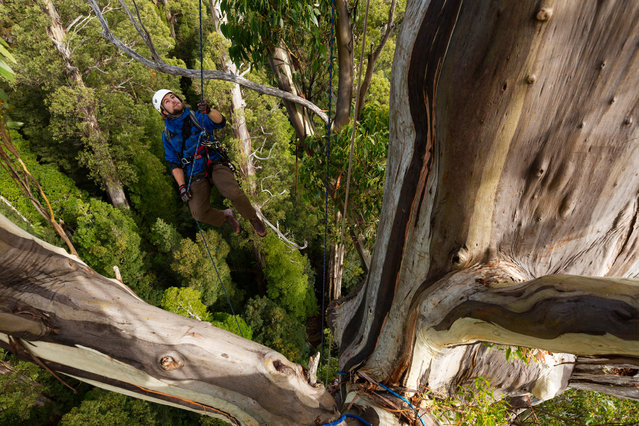
Haley nears the top of the tree. (Photo by Steven Pearce/The Tree Projects/The Guardian)

The Tree Projects team spent 67 days documenting one eucalyptus regnans in the Styx valley of Tasmania. Using a combination of tree-climbing and elaborate arboreal rigging techniques, they produced an intimate portrait from an impossible perspective of one of the world’s largest individual flowering trees, which goes by several common names. These photos document the process that resulted in an extraordinary ultra high-definition photograph. Here: Haley nears the top of the tree. (Photo by Steven Pearce/The Tree Projects/The Guardian)
Details
01 Feb 2017 06:37:00
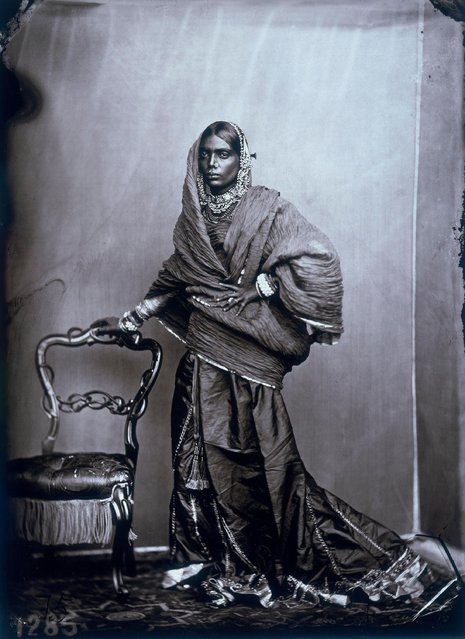
Full portrait of a woman in the harem in the royal palace of Jaipur, India, 1857 – 1865. (Photo by Maharaja Ram Singh III/Alinari via Getty Images)

These images give a rare insight into the life of a 19th Century Indian Maharajah. Maharajah Ram Singh ruled in the famous pink city of Jaipur between 1835 and 1880, and was also a keen photographer. Here: Full portrait of a woman in the harem in the royal palace of Jaipur, India, 1857 – 1865. (Photo by Maharaja Ram Singh III/Alinari via Getty Images)
Details
06 Feb 2017 01:03:00
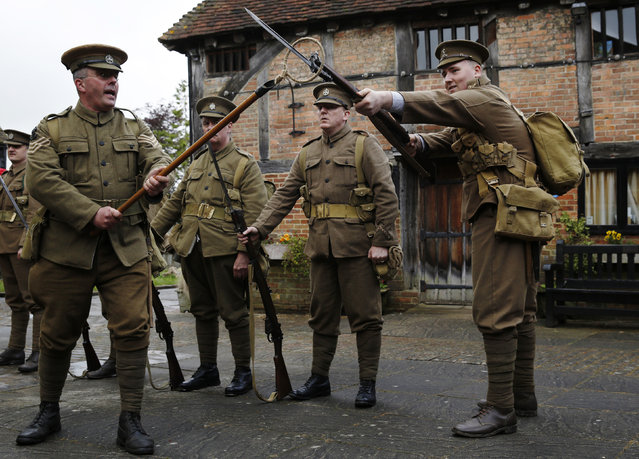
Factory landlord Lawrence Taylor (L), portraying a Colour Sergeant from the King's Royal Rifle Corps, part of the Rifles Living History Society, performs a drill with Connor Young (R) of the Queen's Own Royal West Kent Regiment Living History Group as they recreate the life of a First World War soldier at the Eden Valley Museum in Edenbridge in southeast England May 10, 2014. (Photo by Luke MacGregor/Reuters)

Factory landlord Lawrence Taylor (L), portraying a Colour Sergeant from the King's Royal Rifle Corps, part of the Rifles Living History Society, performs a drill with Connor Young (R) of the Queen's Own Royal West Kent Regiment Living History Group as they recreate the life of a First World War soldier at the Eden Valley Museum in Edenbridge in southeast England May 10, 2014. Lawrence has always had an interest in military history and specifically “The Rifles” – his veteran father's WWII regiment. When he became a re-enactor he chose not to re-enact WWII as many of the veterans are still alive, and he felt uncomfortable as he remembers his father would have flashbacks and nightmares about the war. United by a fascination with military history and a fondness for dressing up, groups such as the Rifles Living History Society and the Queen's Own Royal West Kent Regiment Living History Group get together to recreate aspects of life during the First World War. Reuters photographer Luke MacGregor photographed members of the groups, both as they took part in living history events and at their day jobs. (Photo by Luke MacGregor/Reuters)

Details
26 Aug 2014 10:12:00
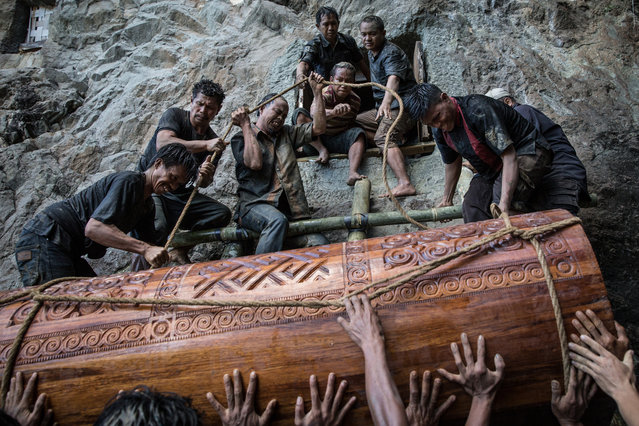
It is said that Torajans are people who “live to die”. For this Indonesian ethnic group, funerals are such extravagant events that they sometimes attract tourists. Families can postpone burials years (and the deceased are considered sick and hosted at home until the funeral) until the family can raise enough money and gather as many relatives as possible. And then it’s a jubilant multiday social event with a parade, dances and animal sacrifices. Agung Parameswara photographed these funerary practices when he traveled to South Sulawesi province, where the Torajans live. But often, their funeral isn’t the last time the dead are seen. In August, crypts are opened, coffins are slid back out and bodies delicately unsheathed. This tender ritual is known as Ma’Nene, which is customarily performed every few years. (Photo by Agung Parameswara/The Washington Post)

It is said that Torajans are people who “live to die”. For this Indonesian ethnic group, funerals are such extravagant events that they sometimes attract tourists. Families can postpone burials years (and the deceased are considered sick and hosted at home until the funeral) until the family can raise enough money and gather as many relatives as possible. And then it’s a jubilant multiday social event with a parade, dances and animal sacrifices. Agung Parameswara photographed these funerary practices when he traveled to South Sulawesi province, where the Torajans live. (Photo by Agung Parameswara/The Washington Post)
Details
06 Oct 2016 09:15:00