Loading...
Done
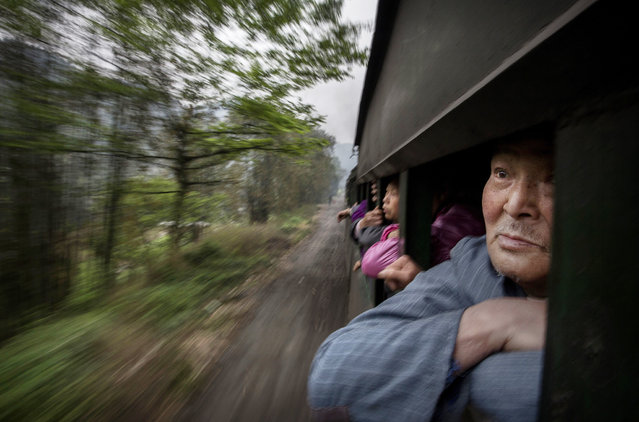
Local villagers ride a local coal powered steam train on March 27, 2015 at a station in the town of Shixi , Sichuan Province, in Southern China. While China boasts the world's most extensive high-speed rail infrastructure. (Photo by Kevin Frayer/Getty Images)

Local villagers ride a local coal powered steam train on March 27, 2015 at a station in the town of Shixi , Sichuan Province, in Southern China. While China boasts the world's most extensive high-speed rail infrastructure with over 16,000 kilometers of track, the Shixi-Bagou railway is still a primary connection for local villagers between towns and is kept alive by tourist cars carrying passengers for ten times the price. The rail line came into service in the late 1950s and the train was initially used to transport coal from a now-shuttered mine before passenger carriages were added. (Photo by Kevin Frayer/Getty Images)
Details
12 May 2015 12:00:00
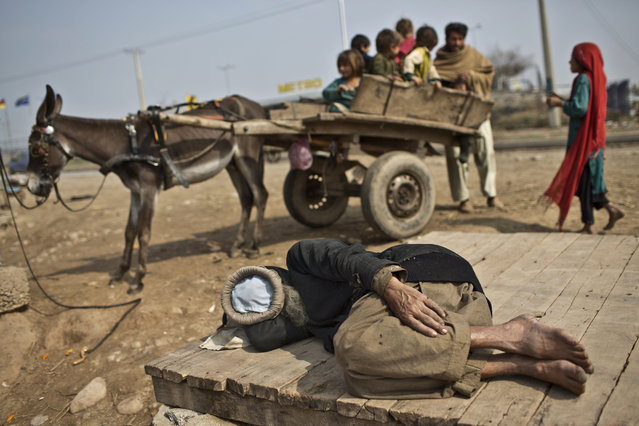
Children play on a donkey cart belonging to an elderly Afghan refugee sleeping on a roadside on the outskirts of Islamabad, Pakistan, Wednesday, February 18, 2015. (Photo by Muhammed Muheisen/AP Photo)

Children play on a donkey cart belonging to an elderly Afghan refugee sleeping on a roadside on the outskirts of Islamabad, Pakistan, Wednesday, February 18, 2015. (Photo by Muhammed Muheisen/AP Photo)
Details
06 Apr 2015 08:57:00
Miss Puerto Rico Stephanie Del Valle (C) reacts after winning in the Grand Final of the Miss World 2016 pageant at the MGM National Harbor December 18, 2016 in Oxon Hill, Maryland. (Photo by Zach Gibson/AFP Photo)

Miss Puerto Rico Stephanie Del Valle (C) reacts after winning in the Grand Final of the Miss World 2016 pageant at the MGM National Harbor December 18, 2016 in Oxon Hill, Maryland. (Photo by Zach Gibson/AFP Photo)
Details
20 Dec 2016 12:40:00
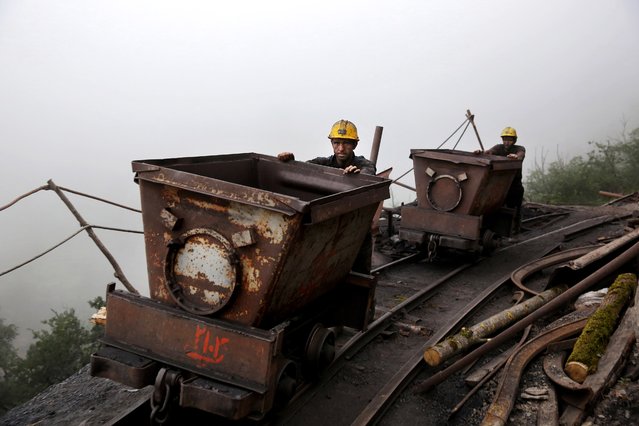
In this Thursday, May 8, 2014 photo, Iranian coal miners push metal carts to be loaded with coal at a mine near the city of Zirab 212 kilometers (132 miles) northeast of the capital Tehran, on a mountain in Mazandaran province, Iran. International sanctions linked to the decade-long dispute over Iran's nuclear program have hindered the import of heavy machinery and modern technology in all sectors, and coal mining is no exception. (Photo by Ebrahim Noroozi/AP Photo)

In this Thursday, May 8, 2014 photo, Iranian coal miners push metal carts to be loaded with coal at a mine near the city of Zirab 212 kilometers (132 miles) northeast of the capital Tehran, on a mountain in Mazandaran province, Iran. International sanctions linked to the decade-long dispute over Iran's nuclear program have hindered the import of heavy machinery and modern technology in all sectors, and coal mining is no exception. (Photo by Ebrahim Noroozi/AP Photo)
Details
28 Sep 2014 11:26:00
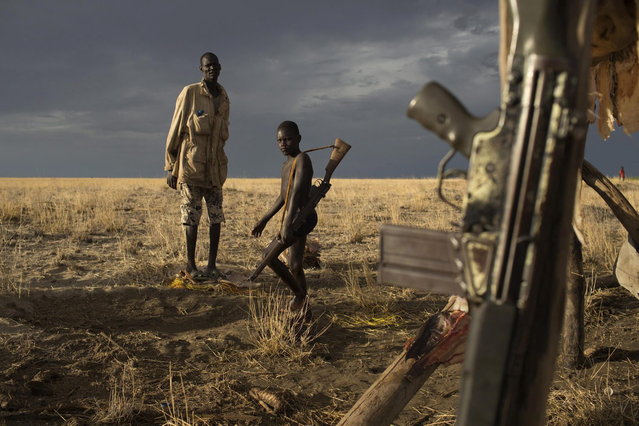
A Turkana man and a boy carrying a gun look on as a G3 battle rifle hangs from a structure used to dry fish at a fishing camp on the shores of Lake Turkana, some kilometres from Todonyang near the Kenya-Ethiopia border in northwestern Kenya October 12, 2013. (Photo by Siegfried Modola/Reuters)

A Turkana man and a boy carrying a gun look on as a G3 battle rifle hangs from a structure used to dry fish at a fishing camp on the shores of Lake Turkana, some kilometres from Todonyang near the Kenya-Ethiopia border in northwestern Kenya October 12, 2013The Turkana are traditionally nomadic pastoralists, but they have seen the pasture that they need to feed their herds suffer from recurring droughts and many have turned to fishing. However, Lake Turkana is overfished, and scarcity of food and pastureland is fuelling long-standing conflict with Ethiopian indigenous Dhaasanac, who have seen grazing grounds squeezed by large-scale government agricultural schemes in southern Ethiopia. The Dhaasanac now venture ever deeper into Kenyan territory in search of fish and grass, clashing with neighbours. Fighting between the communities has a long history, but the conflict has become ever more fatal as automatic weapons from other regional conflicts seep into the area. While the Turkana region is short of basics like grass and ground-water, it contains other resources including oil reserves and massive, newly discovered underground aquifers. (Photo by Siegfried Modola/Reuters)
Details
05 Dec 2013 12:08:00
Ocean voyage

Do you think that history is a science? Well, not exactly. First, and foremost, history is the state's “legend of wars”, it’s official regalia. Of course, public historians are not interested in scientific truth – quite the opposite. In this respect, any attempt to present a state’s history as altruistic and benevolent as possible is welcomed and encouraged – as opposed to any revisionism attempts that may be more accurate. In this matter, Chinese have surpassed us all – they revised in highly creative manner (but rather shamelessly) the technology already invented by Europeans, a process that resulted in oldest state on the planet. Here is an interesting paradox: ask any sinologist about the Middle Kingdom during second century B.C., and he will describe it to you in such a vivid manner as if he has been living there all his life – but as soon as you will ask him to describe Chinese history in the 19-20th centuries… let's say, his eagerness will be greatly diminished. However, we will discuss China in a different article, and in the meantime we will try to understand how exactly historic “legend of wars” is formed and functions – based on a specific and well-known example. A great example is Ferdinand Magellan's first voyage around the world.
Details
14 Nov 2011 09:11:00
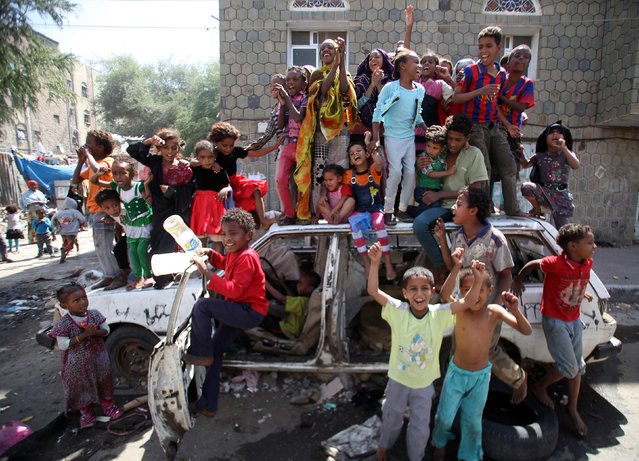
Children play on an abandoned car near a protest, which is against the dissolution of Yemen's parliament and the Shi'ite Muslim Houthi militia's tightening grip on power, in the southwestern city of Taiz, February 13, 2015. (Photo by Mohamed al-Sayaghi/Reuters)

Children play on an abandoned car near a protest, which is against the dissolution of Yemen's parliament and the Shi'ite Muslim Houthi militia's tightening grip on power, in the southwestern city of Taiz, February 13, 2015. (Photo by Mohamed al-Sayaghi/Reuters)
Details
19 Feb 2015 14:08:00
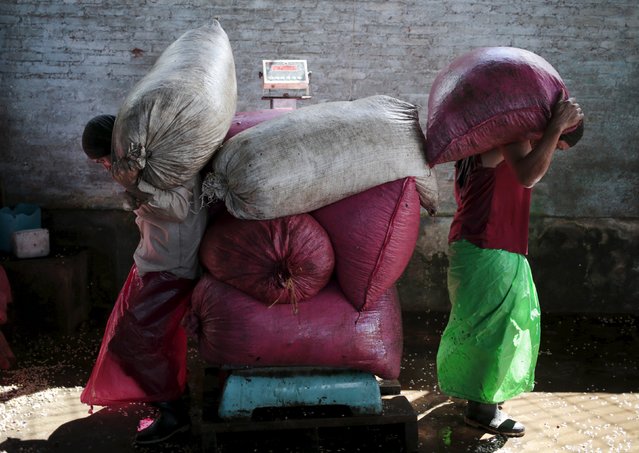
Workers carry sacks of coffee beans at a warehouse at the Nogales farm in Jinotega, Nicaragua January 7, 2016. (Photo by Oswaldo Rivas/Reuters)

Workers carry sacks of coffee beans at a warehouse at the Nogales farm in Jinotega, Nicaragua January 7, 2016. Soaring temperatures in Central America due to climate change are forcing farmers to pull up coffee trees and replace them with cocoa, spurring a revival in the cultivation of a crop once so essential to the region's economy. (Photo by Oswaldo Rivas/Reuters)
Details
20 Jan 2016 08:00:00