Loading...
Done
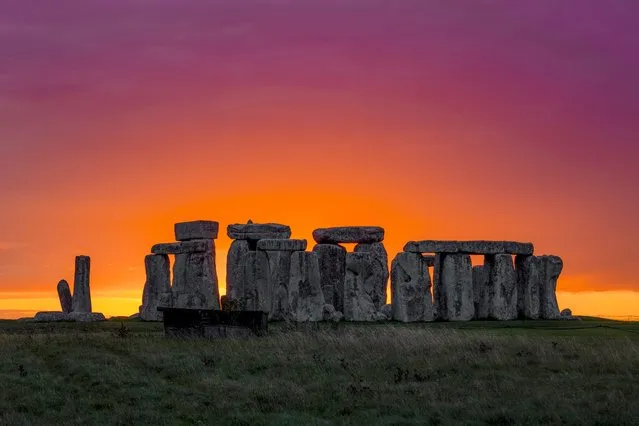
Pictured is the sunset at Stonehenge in Wiltshire on Saturday night, September 24, 2022. (Photo by Nick Bull/pictureexclusive.com)

Pictured is the sunset at Stonehenge in Wiltshire on Saturday night, September 24, 2022. (Photo by Nick Bull/pictureexclusive.com)
Details
12 Dec 2022 04:09:00
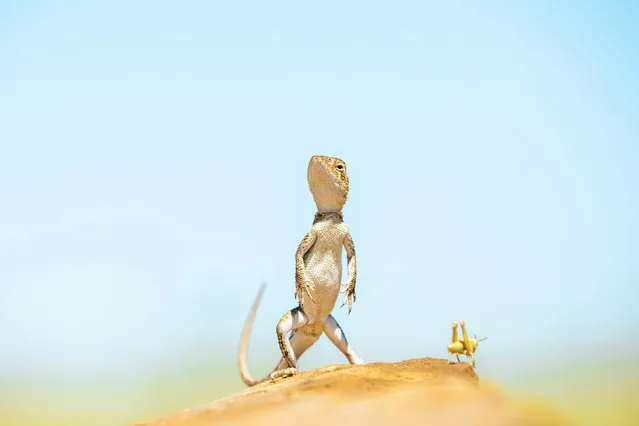
“The Dragon and The Hopper”. Eyrean earless dragon (Tympanocryptis tetraporophora) standing tall on a very hot rock in western Queensland. For a short time it was joined by a hopper, who jumped off before becoming lunch. (Photo by Harrison Warne/Nature Conservancy Australia 2021 Photo Contest)

“The Dragon and The Hopper”. Eyrean earless dragon (Tympanocryptis tetraporophora) standing tall on a very hot rock in western Queensland. For a short time it was joined by a hopper, who jumped off before becoming lunch. (Photo by Harrison Warne/Nature Conservancy Australia 2021 Photo Contest)
Details
01 Oct 2021 08:33:00
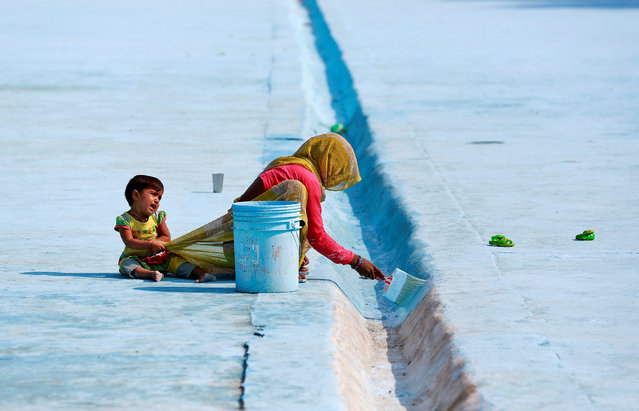
A woman paints the floor of a pond as her child pulls at her saree in Delhi, India November 23, 2016. (Photo by Cathal McNaughton/Reuters)

A woman paints the floor of a pond as her child pulls at her saree in Delhi, India November 23, 2016. (Photo by Cathal McNaughton/Reuters)
Details
29 Nov 2016 13:45:00
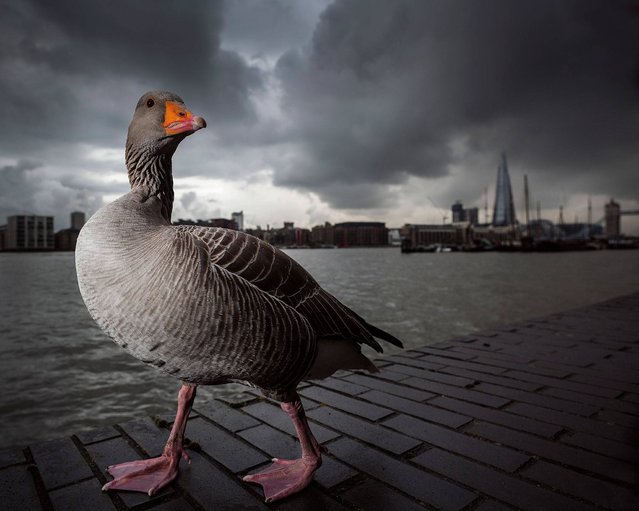
“Urban Tourist (Graylag Goose)”. Urban category and overall winner. (Photo by Lee Acaster/British Wildlife Photography Awards 2014)

The British Wildlife Photography Awards winners have been revealed, with Lee Acaster from Suffolk taking home the top prize for his shot of a Graylag Goose in London. Acaster, who received £5,000, photographed the animal against an ominous London skyline, with The Shard clearly visible in the background. Here: “Urban Tourist (Graylag Goose)”. Urban category and overall winner. (Photo by Lee Acaster/British Wildlife Photography Awards 2014)
Details
02 Sep 2014 12:24:00


“The Red River Hog (Potamochoerus porcus), also known as the Bush Pig (but not to be confused with P. larvatus, common name “Bushpig”), is a wild member of the pig family living in Africa, with most of its distribution in the Guinean and Congolian forests. It is rarely seen away from rainforests, and generally prefers areas near rivers or swamps.

Red River Hogs eat grass, berries, roots, insects, molluscs, small vertebrates and carrion. They are capable of causing damage to plantations. Red River Hogs typically live in herds of 6-20 members led by a dominant boar. Sows rear 3-6 piglets at a time.”

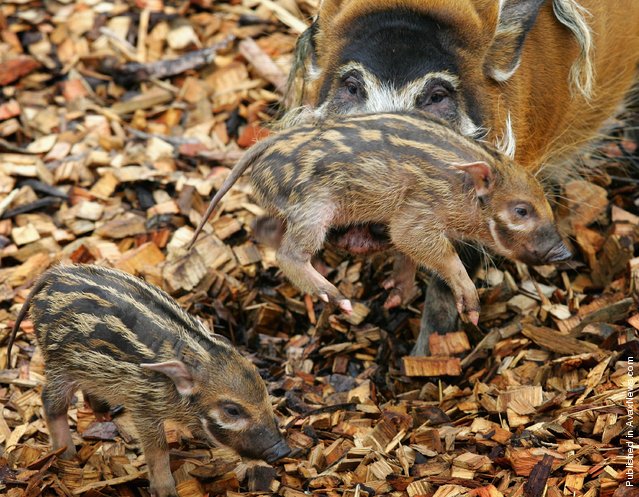
Photo: Two 17 day old red river hoglet twins forage for food next to their mother Bahiti at London Zoo on August 23, 2007 in London, England. Red River hoglets inhabit the forests and swamps of West and Central Africa. The recent additions to the London Zoo pig pen have been eagerly awaited by zoo keepers. (Photo by Chris Jackson/Getty Images)
Details
18 Mar 2011 15:15:00
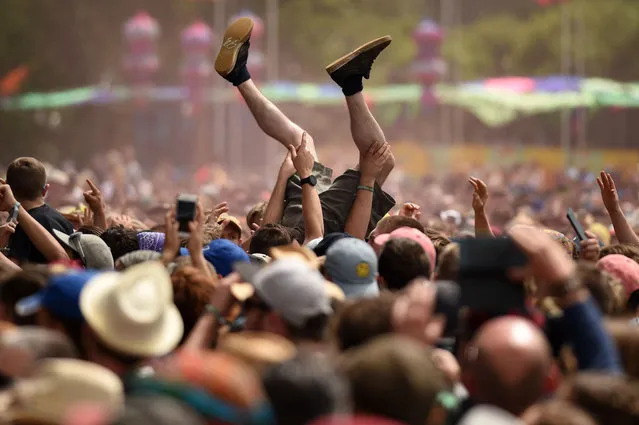
Revellers help a man crowdsurf as they watch The Slaves perform on The Other Stage at the Glastonbury Festival of Music and Performing Arts on Worthy Farm near the village of Pilton in Somerset, South West England, on June 30, 2019. (Photo by Oli Scarff/AFP Photo)

Revellers help a man crowdsurf as they watch The Slaves perform on The Other Stage at the Glastonbury Festival of Music and Performing Arts on Worthy Farm near the village of Pilton in Somerset, South West England, on June 30, 2019. (Photo by Oli Scarff/AFP Photo)
Details
02 Nov 2019 00:05:00
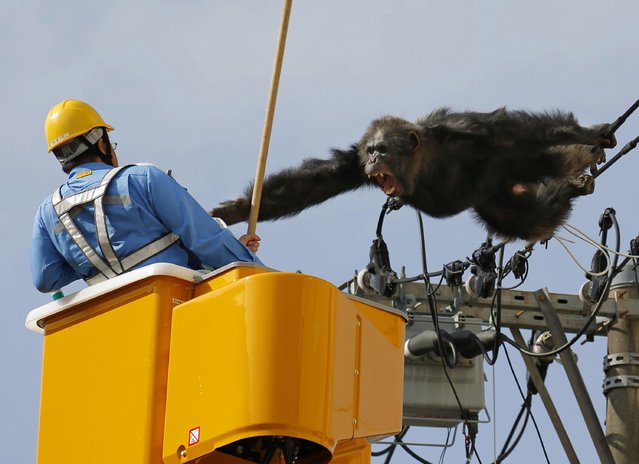
Chacha, the male chimp, screams at a worker in Sendai, northern Japan, Thursday, April 14, 2016 after fleeing from a zoo. The chimpangzee tried desperately to avoid being captured by climbing an electric pole. Chacha was on the loose nearly two hours Thursday after it disappeared from the Yagiyama Zoological Park in Sendai, the city that's hosting finance ministers from the Group of Seven industrialized nations in May. (Photo by Kyodo News via AP Photo)

Chacha, the male chimp, screams at a worker in Sendai, northern Japan, Thursday, April 14, 2016 after fleeing from a zoo. The chimpangzee tried desperately to avoid being captured by climbing an electric pole. Chacha was on the loose nearly two hours Thursday after it disappeared from the Yagiyama Zoological Park in Sendai, the city that's hosting finance ministers from the Group of Seven industrialized nations in May. (Photo by Kyodo News via AP Photo)
Details
15 Apr 2016 11:34:00
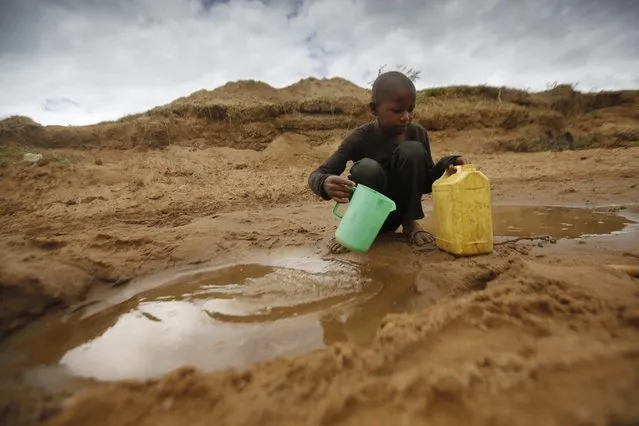
A young boy scoops water from a hand-dug well in the dry riverbed near Matinyani, in the semi-arid Kitui County in southeastern Kenya, 22 March 2015, the World Water Day. Residents of Kitui County and other arid and semi-arid areas of the country have been hard-hit by extremely poor rainfall this year while the government said in previous month that some 1.6 million people countrywide are facing acute starvation due to the drought and will need relief food over the next six months. (Photo by Dai Kurokawa/EPA)

A young boy scoops water from a hand-dug well in the dry riverbed near Matinyani, in the semi-arid Kitui County in southeastern Kenya, 22 March 2015, the World Water Day. Residents of Kitui County and other arid and semi-arid areas of the country have been hard-hit by extremely poor rainfall this year while the government said in previous month that some 1.6 million people countrywide are facing acute starvation due to the drought and will need relief food over the next six months. Residents of Matinyani say they haven't seen a drop of rain in nearly four months. Thousands of Kenyans in rural areas walk tens of kilometers just to fetch water to drink and to be used in their homes. According to an estimate by UNESCO (United Nations Educational, Scientific and Cultural Organization), 17 million people lack access to safe water in Kenya, where the drought is a perennial problem. (Photo by Dai Kurokawa/EPA)
Details
23 Mar 2015 11:01:00