The Prince Albert Cairn, built in 1862 by Queen Victoria, is surrounded by snow and ice, near Balmoral, Aberdeenshire, Scotland, Friday November 22, 2024. (Photo by Jane Barlow/PA Wire via AP Photo)
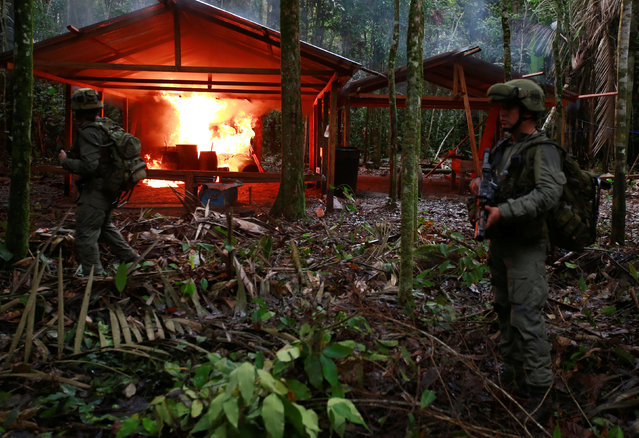
A Colombian anti-narcotics policeman stands guard after burning a cocaine lab, which police said belongs to criminal gangs, in a rural area of Calamar in Guaviare state, Colombia, August 2, 2016. Colombian law enforcement has destroyed 104 cocaine laboratories capable of producing some 100 tonnes of the drug annually, the head of the anti-narcotics police said on Tuesday. (Photo by John Vizcaino/Reuters)
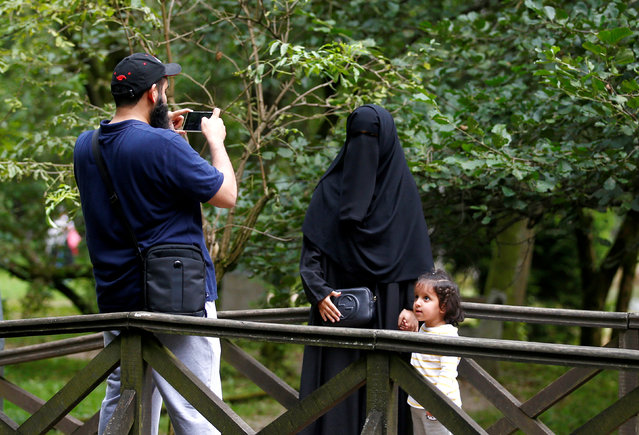
Tourists from the Middle East take pictures at Vrelo Bosne nature park in Ilidza near Sarajevo, Bosnia and Herzegovina, August 19, 2016. They discovered mountainous Bosnia, where half the population is Muslim, after the Arab Spring which destabilized many traditional holiday destinations such as Libya, Tunisia and Egypt. (Photo by Dado Ruvic/Reuters)
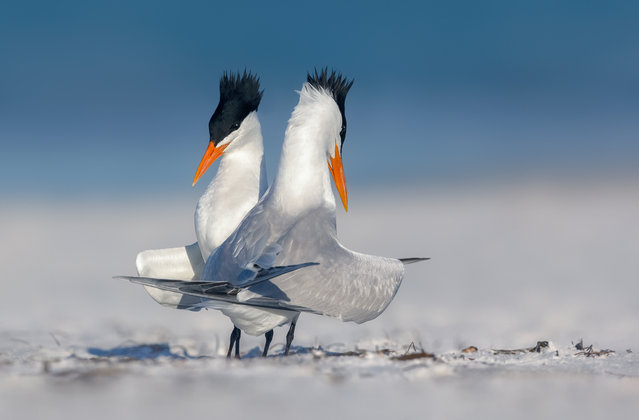
Behaviour winner; Courting Royals: two royal terns in courtship display by Kristian Bell. Another beautiful morning on a beautiful beach on the Gulf Coast of Florida seemed to prompt these two royal terns to commence an intricate courtship dance. The photograph was taken with a Canon 300mm lens and 2x extender. (Photo by Kristian Bell/Deakin University/Royal Society Publishing Photography Competition 2018)
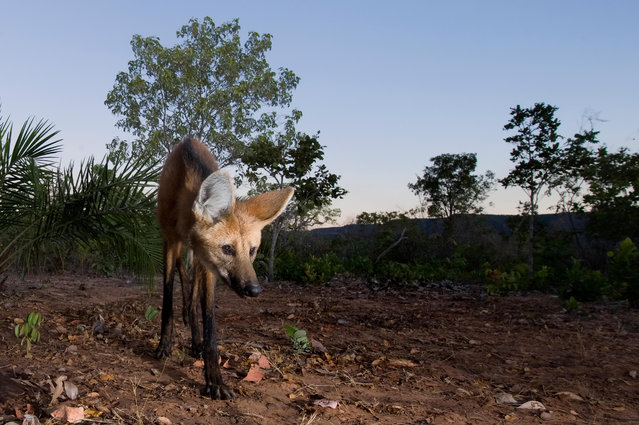
Global wildlife populations will decline by 67% by 2020 unless urgent action is taken to reduce human impact on species and ecosystems, warns the biennial Living Planet Index report from WWF (World Wide Fund for Nature) and ZSL (Zoological Society of London). From elephants to eels, here are some of the wildlife populations most affected by human activity. Here: The maned wolf is among the large mammals in the Brazilian Cerrado that are threatened by the increasing conversion of grasslands into farmland for grazing and growing crops. (Photo by Ben Cranke/Nature Picture Library/Alamy Stock Photo)