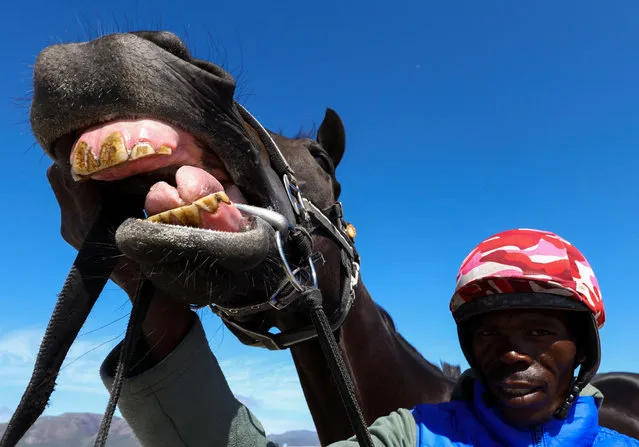
A horse handler poses with a horse during a beach parade at Muizenberg beach, in Cape Town, South Africa on January 5, 2024. (Photo by Esa Alexander/Reuters)
This photo taken on February 10, 2025 shows a captured green iguana being held by hunters after it was brought down by a slingshot in Pingtung. Taiwan's iguana population has exploded since the spikey-backed giant lizards were introduced from Central and South America more than 20 years ago as exotic pets. Many escaped or were dumped by their owners and have bred rapidly in the warm climate of southern Taiwan, invading neighbourhoods and ravaging farmers' crops. (Photo by I-Hwa Cheng/AFP Photo)
A visitor takes pictures among the cherry blossom trees on an early spring morning around University of Canterbury in Christchurch in New Zealand, on September 7, 2024. (Photo by Sanka Vidanagama/AFP Photo)
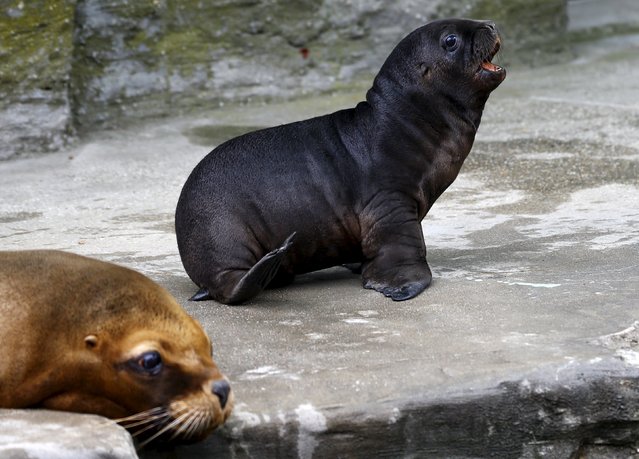
A ten days old South American sea lion pup sits next to its mother Lunita at the “Tiergarten Schoenbrunn” Zoo in Vienna, Austria, July 28, 2015. The pup was born in the zoo and weighs about 14 kilograms (30 pounds). (Photo by Leonhard Foeger/Reuters)
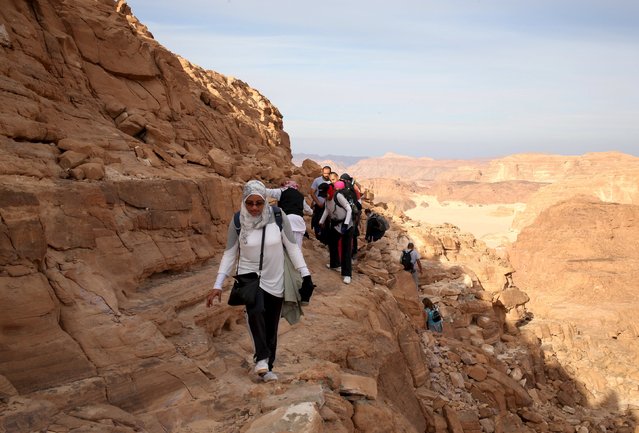
Hikers walk to reach the top of Naqba Rum area in South Sinai, Egypt, November 20, 2015. Bedouins in the "Sinai is Safe" group guided more than 100 hikers over a 25 km (15 mile) trek over the trails of the White Canyon and the Closed Canyon. The NGO aims to challenge mainstream perceptions of the area by encouraging Nile Valley residents to explore the untamed wilderness with the Bedouin tribes. (Photo by Asmaa Waguih/Reuters)
Participants of the “Lady in red“ procession, marking the day of the Summer Solstice, walk on a promenade of the Yenisei River in Krasnoyarsk, Russia on June 22, 2019. (Photo by Ilya Naymushin/Reuters)
Iraqi Kurdish female fighter Haseba Nauzad looks through a pair of binoculars during a deployment near the frontline of the fight against Islamic State militants in Nawaran near Mosul, Iraq, April 20, 2016. (Photo by Ahmed Jadallah/Reuters)
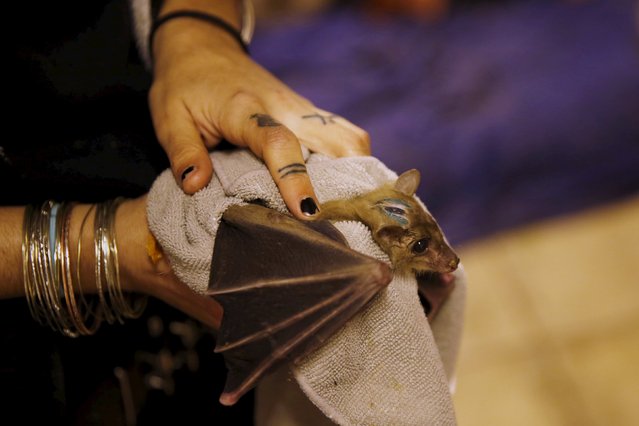
Israeli woman, Nora Lifschitz, 28, holds an injured Egyptian fruit bat at her home in Tel Aviv February 22, 2016. Lifschitz says that she began caring for injured fruit bats from her home two years ago and now has some 70 of the flying mammals which she plans to release back into nature once they are healthy. (Photo by Baz Ratner/Reuters)