Loading...
Done
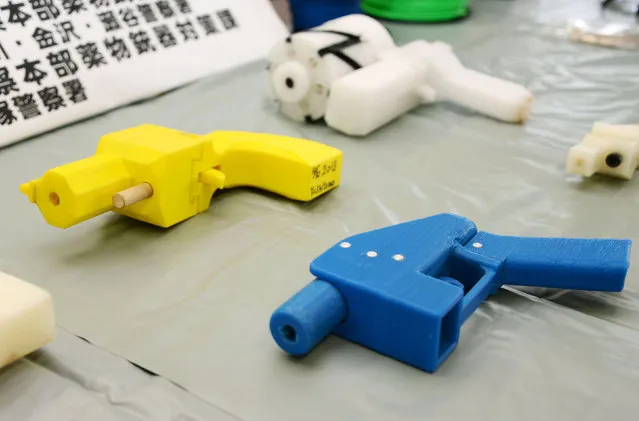
Seized plastic handguns which were created using 3D printing technology are displayed at Kanagawa police station in Yokohama, south of Tokyo, in this photo taken by Kyodo May 8, 2014. (Photo by Reuters/Kyodo)

Seized plastic handguns which were created using 3D printing technology are displayed at Kanagawa police station in Yokohama, south of Tokyo, in this photo taken by Kyodo May 8, 2014. Yoshimoto Imura became the first man to be arrested in Japan for illegal possession of two guns he created himself using 3D printing technology, Japanese media said on Thursday. The 27-year-old, a college employee in the city of Kawasaki, was arrested after police found video online posted by Imura claiming to have produced his own guns. Gun possession is strictly regulated in Japan. Police raided Imura's home and found five guns, two of which could fire real bullets, Japanese media said. (Photo by Reuters/Kyodo)
Details
12 May 2014 10:46:00


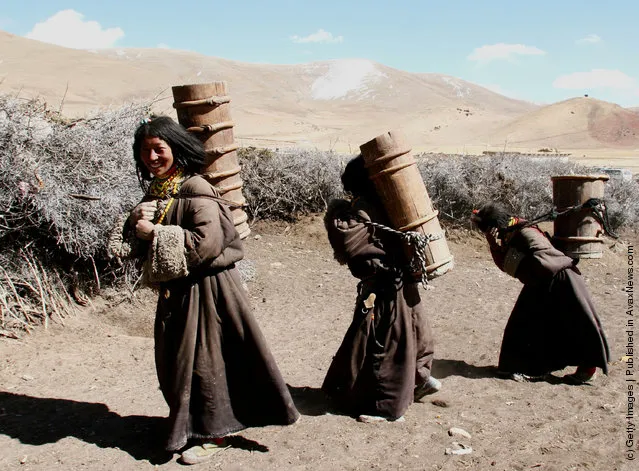
Kangba women carry barrels to fetch water at a village on April 10, 2005 in Zuogong County of Tibet, China. Kangba people began to fetch water with the traditional barrels hundreds of years ago. Kangba people are one of the Tibetan tribes living in Kangba Region, a juncture area of Sichuan and Yunnan Provinces and the Tibet Autonomous Region. Kangba people are famous for their beauty, toughness and straightforwardness. (Photo by China Photos/Getty Images)
Details
31 Mar 2011 10:31:00
Grandpa Dobri - Beggar Charity

98-year-old beggar, the grandfather of the Bulgarian village of Dobri Bail, wearing homespun clothes and old leather shoes he wears in winter and summer, often standing at the Cathedral of St. Alexander Nevsky Cathedral in Sofia. Every day he gets up early and runs 10 kilometers from their village Bail to the Bulgarian capital.
Details
07 Jun 2013 09:35:00
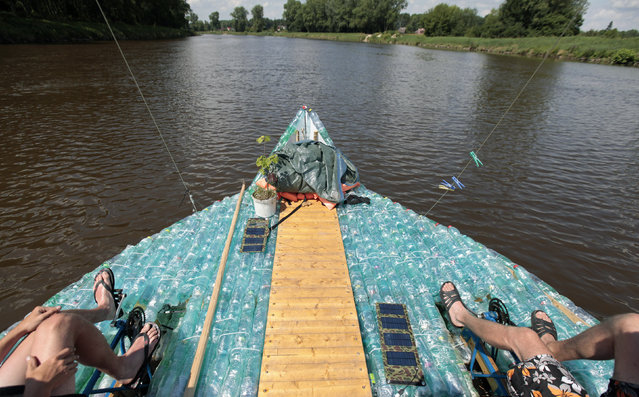
Jan Kara (R) and Jan Holan pedal their boat, made with plastic bottles, on the Elbe river near Kostelec nad Labem July 15, 2014. (Photo by David W. Cerny/Reuters)

Jan Kara (R) and Jan Holan pedal their boat, made with plastic bottles, on the Elbe river near Kostelec nad Labem July 15, 2014. Jan Kara, a 22-year-old student, and Jakub Bures, a 22-year-old car mechanic, built the 10-metre (32.8-feet) long boat from 5000 plastic bottles strapped to a wooden frame. (Photo by David W. Cerny/Reuters)
Details
22 Sep 2014 11:43:00
Men carrying a shrine jump over a bon fire, which means a wish for good luck during a traditional Chinese lunar new year celebration in Jieyang, Guangdong province, China, February 2, 2017. (Photo by Reuters/China Daily)

Men carrying a shrine jump over a bon fire, which means a wish for good luck during a traditional Chinese lunar new year celebration in Jieyang, Guangdong province, China, February 2, 2017. (Photo by Reuters/China Daily)
Details
09 Feb 2017 00:06:00
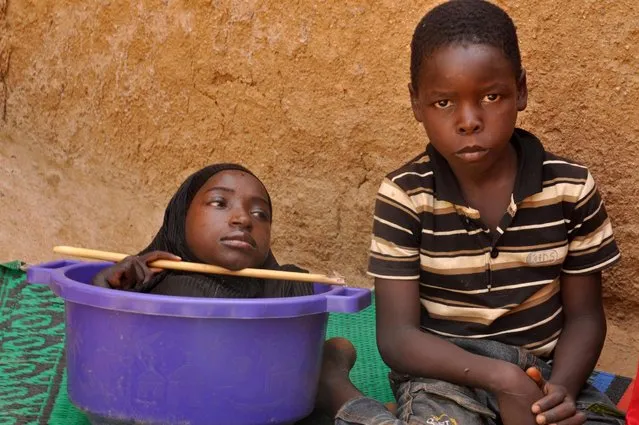
Rahma, 19, pictured with her 10-year old brother Fahad on June 21, 2016 in Kano, Nigeria. A teenage girl born without limbs lives her life in a plastic bowl. Rahma Haruna is a bright, happy girl, despite suffering from a mystery condition that stopped her arms and legs developing properly – leaving her practically limbless and in constant pain. The 19-year- old, from Kano, Nigeria, was born a healthy baby but when she turned six months old her growth came to a sudden halt and she stopped hitting key development milestones. Rahma’s family do their best to provide her with a fulfilling life and transport her around the village in a plastic bowl. Rahma said: “They help me a lot. How do they? They give me anything I need”. Rahma died on 25 December 2016. (Photo by Sani Maikatanga/Barcroft Images)

Rahma, 19 (L), pictured with her 10-year old brother Fahad on June 21, 2016 in Kano, Nigeria. A teenage girl born without limbs lives her life in a plastic bowl. Rahma Haruna is a bright, happy girl, despite suffering from a mystery condition that stopped her arms and legs developing properly – leaving her practically limbless and in constant pain. The 19-year- old, from Kano, Nigeria, was born a healthy baby but when she turned six months old her growth came to a sudden halt and she stopped hitting key development milestones. Rahma’s family do their best to provide her with a fulfilling life and transport her around the village in a plastic bowl. Rahma said: “They help me a lot. How do they? They give me anything I need”. Rahma died on 25 December 2016. (Photo by Sani Maikatanga/Barcroft Images)
Details
30 Dec 2016 10:52:00
Belgium's Davina Philtjens comforts Italy's Manuela Giugliano sitting on the ground at the end of the Women Euro 2022 group D soccer match between Italy and Belgium at the Manchester City Academy Stadium, in Manchester, England, Monday, July 18, 2022. Belgium won 1-0 to advance to the quarterfinals. (Photo by Jon Super/AP Photo)

Belgium's Davina Philtjens comforts Italy's Manuela Giugliano sitting on the ground at the end of the Women Euro 2022 group D soccer match between Italy and Belgium at the Manchester City Academy Stadium, in Manchester, England, Monday, July 18, 2022. Belgium won 1-0 to advance to the quarterfinals. (Photo by Jon Super/AP Photo)
Details
26 Jul 2022 05:37:00
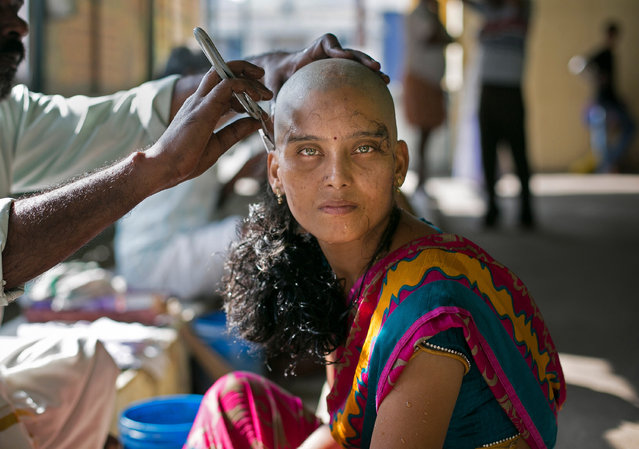
28 year old Rupa has her hair shaven to donate to the Gods at the Thiruthani Murugan Temple November 10, 2016 in Thiruttani, India. Rupa donated her hair with the wish that her daughter's illness is cured. The process of shaving ones hair and donating it to the Gods is known as tonsuring. It is common for Hindu believers to tonsure their hair at a temple as a young child, and also to celebrate a wish coming true, such as the birth of a baby or the curing of an illness. The “temple hair”, as it's known, is then auctioned off to a processing plant and then sold as pricey wigs and weaves in the US, Europe and Africa. (Photo by Allison Joyce/Getty Images)

28 year old Rupa has her hair shaven to donate to the Gods at the Thiruthani Murugan Temple November 10, 2016 in Thiruttani, India. Rupa donated her hair with the wish that her daughter's illness is cured. The process of shaving ones hair and donating it to the Gods is known as tonsuring. It is common for Hindu believers to tonsure their hair at a temple as a young child, and also to celebrate a wish coming true, such as the birth of a baby or the curing of an illness. The “temple hair”, as it's known, is then auctioned off to a processing plant and then sold as pricey wigs and weaves in the US, Europe and Africa. (Photo by Allison Joyce/Getty Images)
Details
21 Nov 2016 10:30:00