Loading...
Done


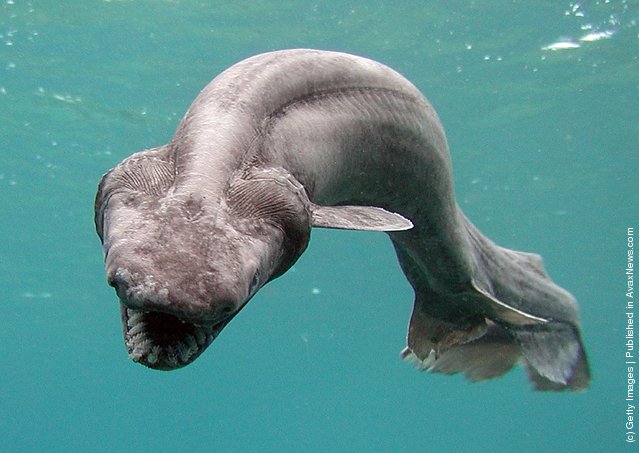
“The frilled shark (Chlamydoselachus anguineus) is one of two extant species of shark in the family Chlamydoselachidae, with a wide but patchy distribution in the Atlantic and Pacific Oceans. This uncommon species is found over the outer continental shelf and upper continental slope, generally near the bottom though there is evidence of substantial upward movements. It has been caught as deep as 1,570 m (5,150 ft), whereas in Suruga Bay, Japan it is most common at depths of 50–200 m (160–660 ft). Exhibiting several “primitive” features, the frilled shark has often been termed a «living fossil»”. – Wikipedia

Photo: A 1.6 meter long Frill shark swims in a tank after being found by a fisherman at a bay in Numazu, on January 21, 2007 in Numazu, Japan. The frill shark, also known as a Frilled shark usually lives in waters of a depth of 600 meters and so it is very rare that this shark is found alive at sea-level. It's body shape and the number of gill are similar to fossils of sharks which lived 350,000,000 years ago. (Photo by Awashima Marine Park/Getty Images)
Details
05 May 2011 10:01:00
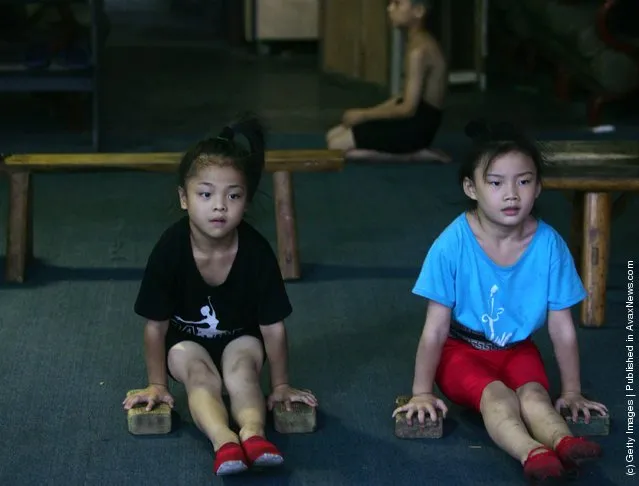
Students practice acrobatic skills in the Sichuan Provincial Art School in Chengdu of Sichuan Province, China

Young girls practice acrobatic skills in the Sichuan Provincial Art School July 14, 2008 in Chengdu of Sichuan Province, China. (Photo by China Photos/Getty Images)
Details
07 Dec 2011 13:48:00
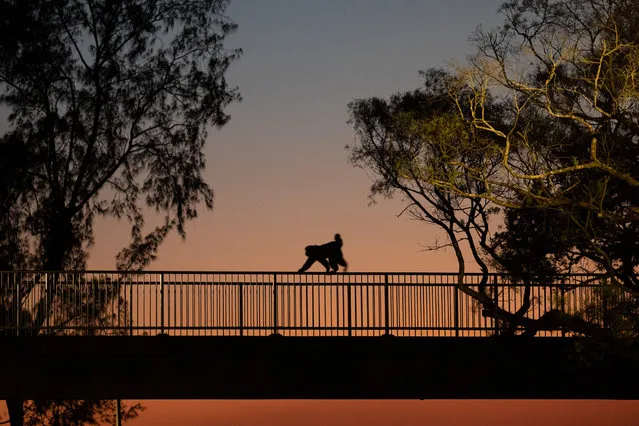
A macaque crosses a pedestrian overpass in Hong Kong, China, 08 November 2021. According the Agriculture, Fisheries and Conservation Department, AFCD, the total population of wild monkeys in Hong Kong is about 1,800, distributed in 30 social troops. (Photo by Jerome Favre/EPA/EFE)

A macaque crosses a pedestrian overpass in Hong Kong, China, 08 November 2021. According the Agriculture, Fisheries and Conservation Department, AFCD, the total population of wild monkeys in Hong Kong is about 1,800, distributed in 30 social troops. (Photo by Jerome Favre/EPA/EFE)
Details
15 Nov 2021 08:44:00
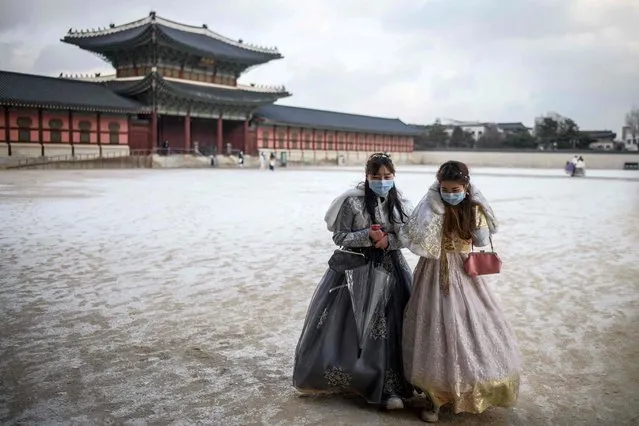
Visitors wear traditional hanbok dress as they walk on the grounds of the Gyeongbokgung Palace after a snowfall in Seoul on January 17, 2022. (Photo by Anthony Wallace/AFP Photo)

Visitors wear traditional hanbok dress as they walk on the grounds of the Gyeongbokgung Palace after a snowfall in Seoul on January 17, 2022. (Photo by Anthony Wallace/AFP Photo)
Details
25 Jan 2022 06:11:00
In this photograph taken on August 20, 2022 a woman dances with a child alongside the Garonne river in Toulouse, southern France. (Photo by Charly Triballeau/AFP Photo)

In this photograph taken on August 20, 2022 a woman dances with a child alongside the Garonne river in Toulouse, southern France. (Photo by Charly Triballeau/AFP Photo)
Details
08 Oct 2022 03:00:00
Young female Ibex on the fork of Disteis (2,200 m), near the top of the Jof di Montasio (Friuli, Italy). (Photo by Stefano Zocca)

Young female Ibex on the fork of Disteis (2,200 m), near the top of the Jof di Montasio (Friuli, Italy). (Photo by Stefano Zocca)
Details
17 Jan 2014 11:12:00
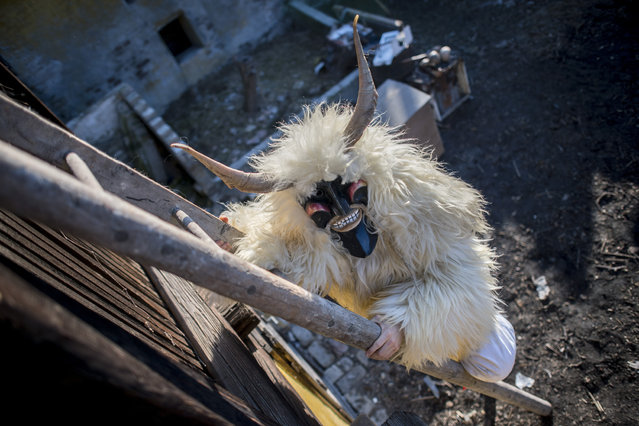
A man wears a busho mask and a costume made of sheep pelt while climbing up a ladder outside a barn in Mohacs, Hungary, 20 February 2020, on the first day of carnival. The traditional Busho carnival, which marks the end of winter, dates back to the 16th century. According to local legend, members of an ethnic South Slavic group living in Mohacs at the time dressed up in similar costumes and wore wooden masks to scare away Ottoman invaders, who mistook them for demons. (Photo by Tamas Soki/EPA/EFE)

A man wears a busho mask and a costume made of sheep pelt while climbing up a ladder outside a barn in Mohacs, Hungary, 20 February 2020, on the first day of carnival. The traditional Busho carnival, which marks the end of winter, dates back to the 16th century. According to local legend, members of an ethnic South Slavic group living in Mohacs at the time dressed up in similar costumes and wore wooden masks to scare away Ottoman invaders, who mistook them for demons. (Photo by Tamas Soki/EPA/EFE)
Details
23 Feb 2020 00:07:00
A resident (unseen) uses a belt to get vegetables in Wuhan, in China's central Hubei province on March 13, 2020. China reported just eight cases of the coronavirus on March 13, with no new domestic infections outside the epicentre of Hubei province. (Photo by AFP Photo/China Stringer Network)

A resident (unseen) uses a belt to get vegetables in Wuhan, in China's central Hubei province on March 13, 2020. China reported just eight cases of the coronavirus on March 13, with no new domestic infections outside the epicentre of Hubei province. (Photo by AFP Photo/China Stringer Network)
Details
15 Mar 2020 00:07:00