Loading...
Done
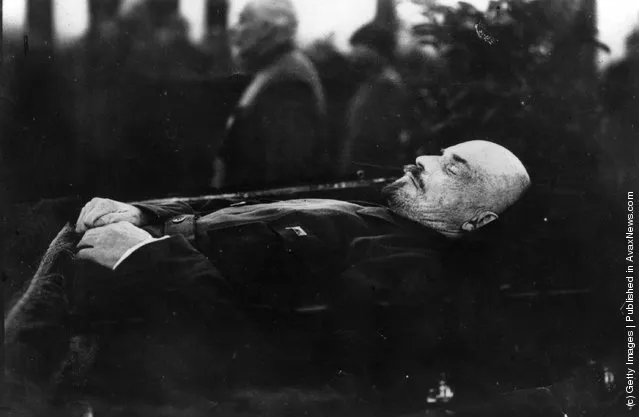
1924:  Vladimir Ilyich Lenin lying in state in the Kremlin

Photo: Vladimir Ilyich Lenin (1870 – 1924) lying in state in the Kremlin. (Photo by Hulton Archive/Getty Images). 1924

Important! For the same article in Russian language click here.

Something quite intriguing is happening within Russian-speaking internet during the last few – should you type a fully academic inquiry (at least, according to Russian academic requirements) in national search engines for "Lenin's mausoleum" – the first thing you get (even in top 10 searches) is website pages talking about black magic and occult. Website authors view this construction differently, but unconditionally agree on one thing: the mausoleum of the "leader of the world proletariat” – the essence of a magical artifact, a sort of “energy vampire”. It was built with a certain purpose: to drain the energy out of miserable Soviet citizens on one hand; and to poison the anthroposphere of one-sixth part of the earth with its vibes (the exact territory that was occupied by the former Soviet Union), depriving the Russian people of will to resist on the other hand. Complete nonsense? No doubt. Nevertheless, an intriguing one. Well, probably because some oddities do exist in mausoleum's history. These oddities are the thing we are going to discuss this time. First, let me refresh you memory on the subject.
Details
16 Oct 2011 11:27:00
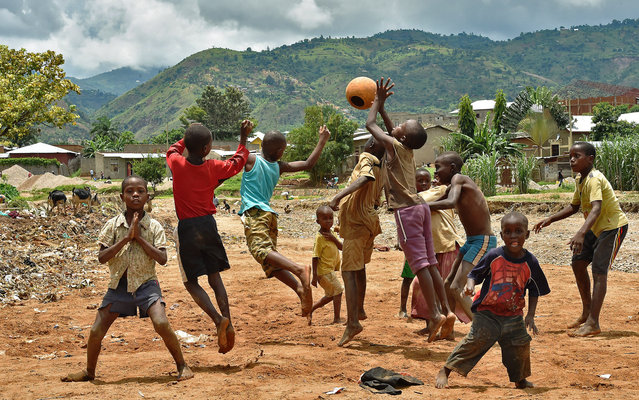
Children play football in Bujumbura, Burundi on March 19, 2015. (Photo by Carl de Souza/AFP Photo)

Children play football in Bujumbura, Burundi on March 19, 2015. (Photo by Carl de Souza/AFP Photo)
Details
21 Mar 2015 12:25:00
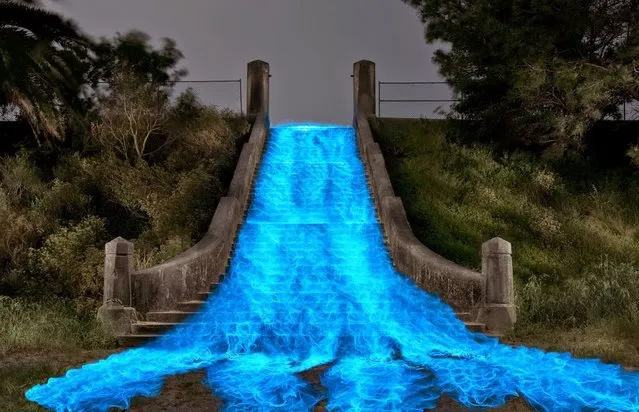
Winner of the NSW (New South Wales) prize: Peter Solness said: “I wanted to re-imagine the lost waterways, so I got my light-painting tools to work. In this image, water is being released from the top of the historic Centennial Park No. 2 Reservoir, which was built in 1925 and holds 90 megalitres of water. After 89 years of incarceration these waters now run free!”. (Photo by Peter Solness/Head On)

Touching and dramatic portraits and landscape shots have won prizes at Australia's prestigious photography prize. Photo: Winner of the NSW (New South Wales) prize: Peter Solness said: “I wanted to re-imagine the lost waterways, so I got my light-painting tools to work. In this image, water is being released from the top of the historic Centennial Park No. 2 Reservoir, which was built in 1925 and holds 90 megalitres of water. After 89 years of incarceration these waters now run free!”. (Photo by Peter Solness/Head On)
Details
21 May 2014 11:11:00
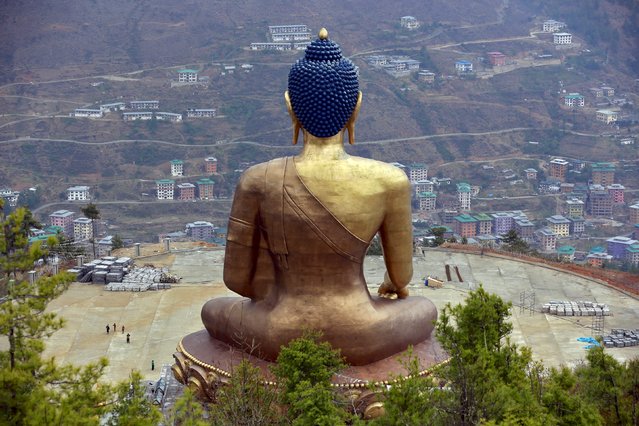
The Buddha Dordenma statue overlooks the town of Thimphu, Bhutan, April 16, 2016. (Photo by Cathal McNaughton/Reuters)

The Buddha Dordenma statue overlooks the town of Thimphu, Bhutan, April 16, 2016. (Photo by Cathal McNaughton/Reuters)
Details
17 Apr 2016 10:49:00
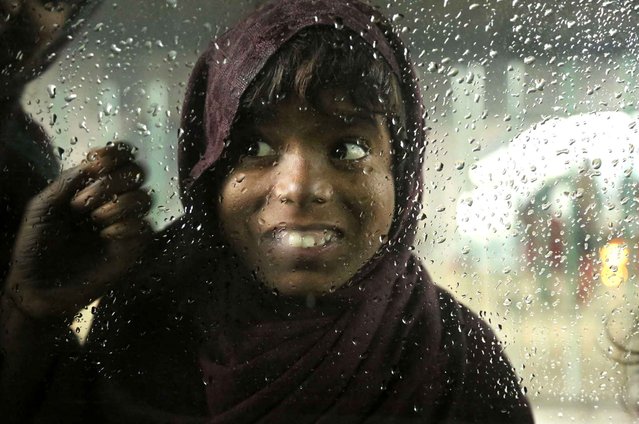
A homeless street child looks in the window of a car in Jammu, India, Friday, January 6, 2017. Some 800 million people in the country live in poverty, many of them migrating to big cities in search of a livelihood and often ending up on the streets. (Photo by Channi Anand/AP Photo)

A homeless street child looks in the window of a car in Jammu, India, Friday, January 6, 2017. Some 800 million people in the country live in poverty, many of them migrating to big cities in search of a livelihood and often ending up on the streets. (Photo by Channi Anand/AP Photo)
Details
02 Feb 2017 04:34:00
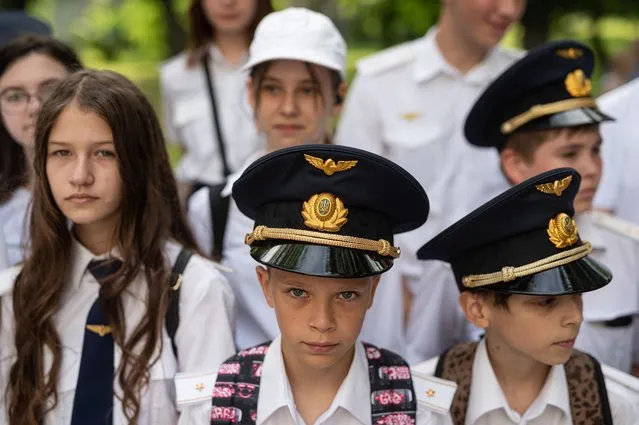
Young conductors stand in line during the steam locomotive presentation at the Kyiv Children's Railway Station on July 3, 2022 in Kyiv, Ukraine. According to the railway's operators, the Gr-336 locomotive was built in Germany in 1951 and brought to Kyiv as part of reparations in the wake of World War II. (Photo by Alexey Furman/Getty Images)

Young conductors stand in line during the steam locomotive presentation at the Kyiv Children's Railway Station on July 3, 2022 in Kyiv, Ukraine. According to the railway's operators, the Gr-336 locomotive was built in Germany in 1951 and brought to Kyiv as part of reparations in the wake of World War II. (Photo by Alexey Furman/Getty Images)
Details
10 Aug 2022 05:20:00
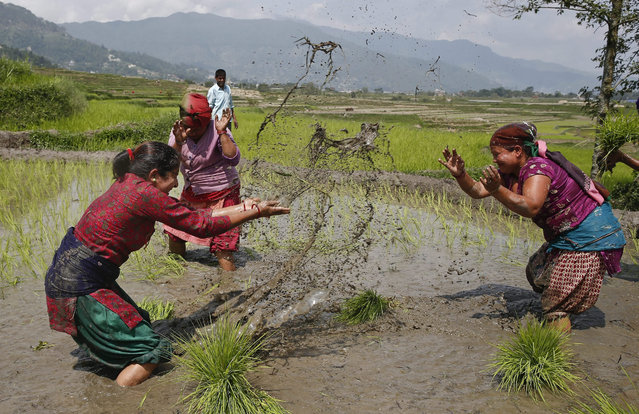
Nepalese women farmers spray mud water at each other while planting rice in a paddy field during the National Paddy Day in the village of Jitpur in Kathmandu, Nepal, 30 June 2015. On this day, known as Asar Pandra, farmers begin the annual rice planting season and mark the day with various festivities such as preparing rice meals with muddy water, spreads mud among farmers. (Photo by Narendra Shrestha/EPA)

Nepalese women farmers spray mud water at each other while planting rice in a paddy field during the National Paddy Day in the village of Jitpur in Kathmandu, Nepal, 30 June 2015. On this day, known as Asar Pandra, farmers begin the annual rice planting season and mark the day with various festivities such as preparing rice meals with muddy water, spreads mud among farmers. The Mud being a symbol for a prosperous season. The agricultural sector contributes about 60 per cent to Nepal's gross domestic product. (Photo by Narendra Shrestha/EPA)
Details
01 Jul 2015 13:16:00
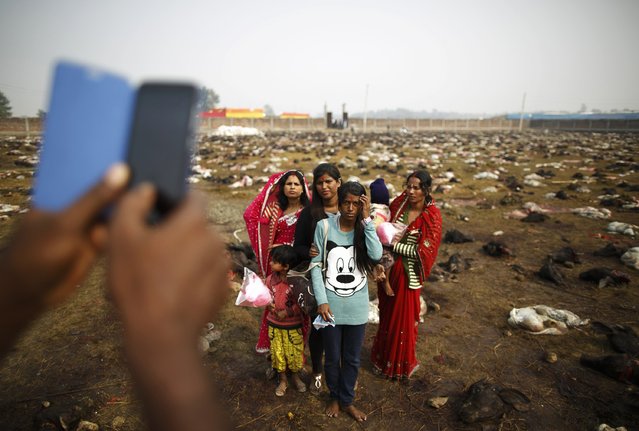
A family poses for a picture in front of the carcasses of sacrificed buffalos a day after the sacrificial ceremony of the “Gadhimai Mela” festival held in Bariyapur November 29, 2014. Sword-wielding Hindu devotees in Nepal began slaughtering thousands of animals and birds in a ritual sacrifice on Friday, ignoring calls by animal rights activists to halt what they described as the world's largest such exercise. (Photo by Navesh Chitrakar/Reuters)

A family poses for a picture in front of the carcasses of sacrificed buffalos a day after the sacrificial ceremony of the “Gadhimai Mela” festival held in Bariyapur November 29, 2014. Sword-wielding Hindu devotees in Nepal began slaughtering thousands of animals and birds in a ritual sacrifice on Friday, ignoring calls by animal rights activists to halt what they described as the world's largest such exercise. (Photo by Navesh Chitrakar/Reuters)
Details
30 Nov 2014 12:35:00