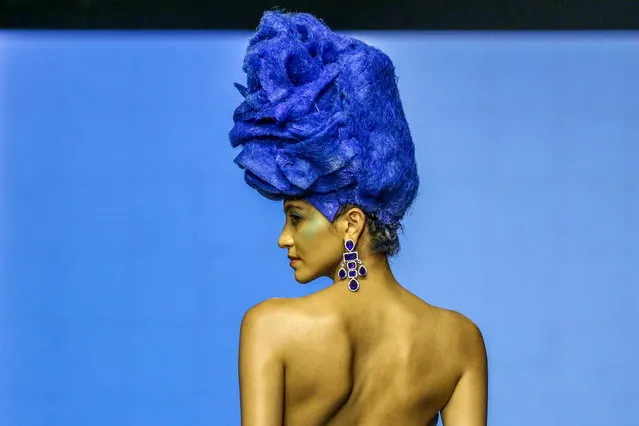
A model presents creations by Indian designers Paras and Shalini during the Fashion Design Council of India (FDCI) Lakme Fashion Week (LFW) in Mumbai, India, 15 March 2024. The FDCI x Lakme Fashion Week runs from 13 to 17 March 2024. (Photo by Divyakant Solanki/EPA)
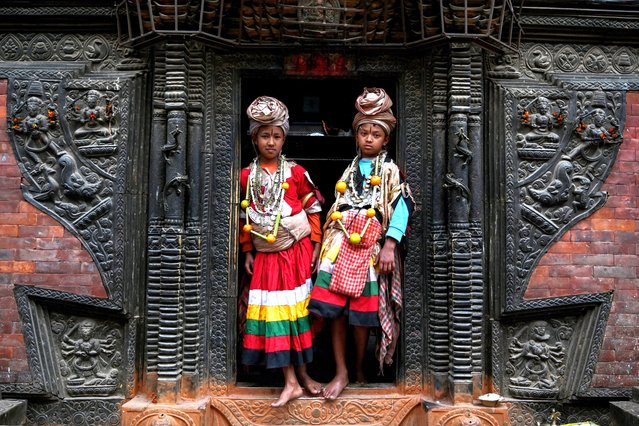
Traditional dancers with their masks look on before their performance during “Nawa Durga Nach” Hindu dance festival in Bhaktapur on the outskirts of Kathmandu on March 28, 2024. (Photo by Prakash Mathema/AFP Photo)
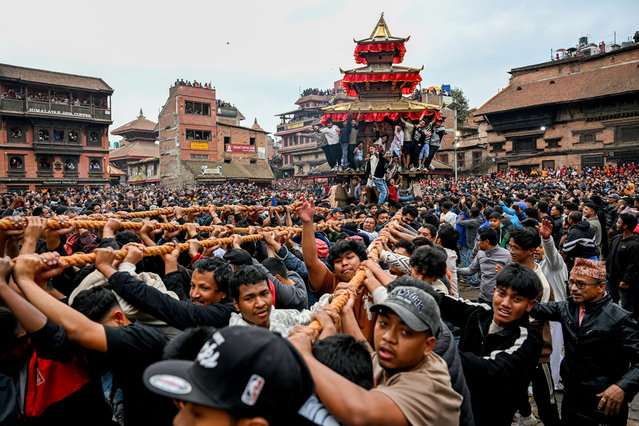
Devotees pull a wooden chariot carrying an idol of the Hindu deity Bhairav during 'Bisket Jatra' festival to mark the Nepali New Year, in Bhaktapur, on the outskirts of Kathmandu, on April 10, 2025. (Photo by Prakash Mathema/AFP Photo)
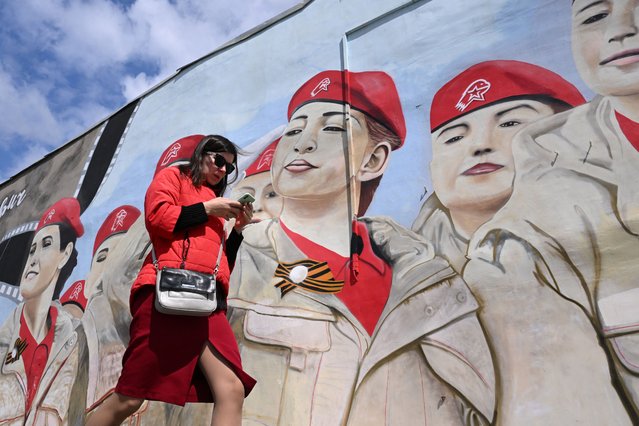
A woman uses her smartphone walking past a mural depicting members of Russia's Yunarmiya (Young Army) youth patriotic movement in Moscow on May 14, 2024. (Photo by Natalia Kolesnikova/AFP Photo)
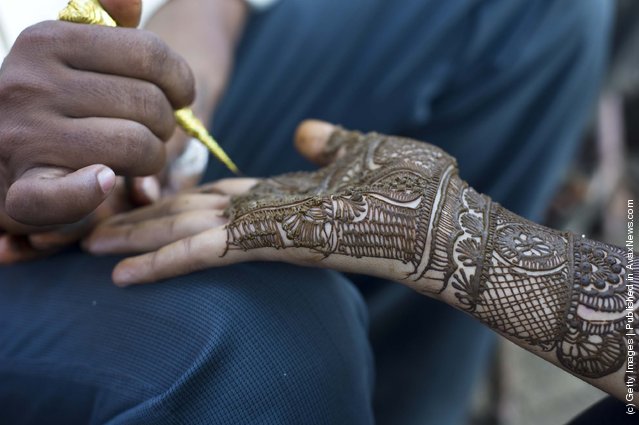
“Mehndi or menhdi is the application of henna as a temporary form of skin decoration in India, as well as by expatriate communities from the country. The word mehndi is derived from the Sanskrit word mendhikā. The use of mehndi and turmeric is described in the earliest Vedic ritual books. Haldi (Staining oneself with turmeric paste) as well as mehndi are important Vedic customs as a symbolic representation of the Outer and the Inner Sun. Vedic customs are meant to awaken the “inner light” and so the gold of the inner Sun has an important symbolic function”. – Wikipedia
Photo: Application of henna or “Mehndi” to a girls hand in a market on October 18, 2010 in Jaipur, India. (Photo by Simon de Trey-White/Getty Images)
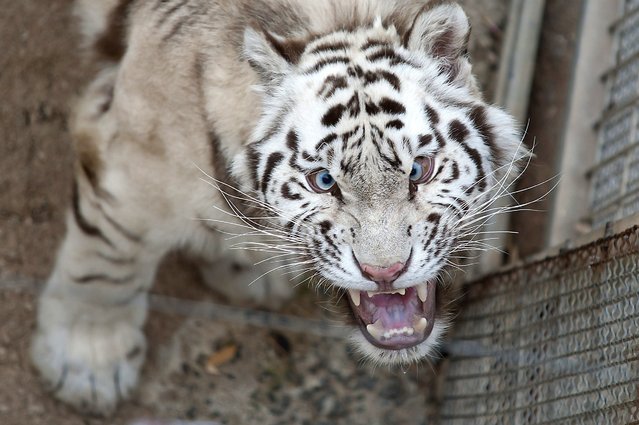
A Siberian tiger at a photographer for getting too much in its face during the presentation of two new Siberian tigers at Cabarceno Natural Reserve in Cabarceno, northern Spain, 21 July 2014. (Photo by Pedro Puente Hoyos/EPA)