Loading...
Done
Pawel Karpinski and Nadine Kinczel of Poland dance as they compete during IPC Wheelchair Dance Sport European Championships in Lomianki near Warsaw, November 9, 2014. (Photo by Kacper Pempel/Reuters)

Pawel Karpinski and Nadine Kinczel of Poland dance as they compete during IPC Wheelchair Dance Sport European Championships in Lomianki near Warsaw, November 9, 2014. (Photo by Kacper Pempel/Reuters)
Details
12 Nov 2014 13:48:00
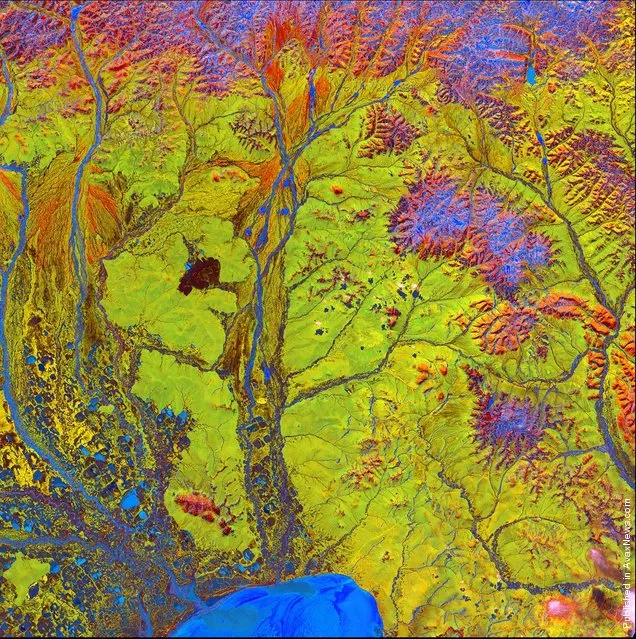
Vivid colors and bizarre shapes come together in a false-color image that could be an illustration for a fantasy story

Vivid colors and bizarre shapes come together in a false-color image that could be an illustration for a fantasy story. This labyrinth of exotic features winds its way along the edge of Russia’s Chaunskaya Bay in northeastern Siberia, seen as a vivid blue half-circle at the bottom of the image Two major rivers, the Chaun and Palyavaam, flow into the bay, which in turn opens into the Arctic Ocean. Ribbon lakes and bogs are present throughout the area, created by depressions left by receding glaciers. (Photo by USGS/NASA)
Details
14 Apr 2012 11:02:00
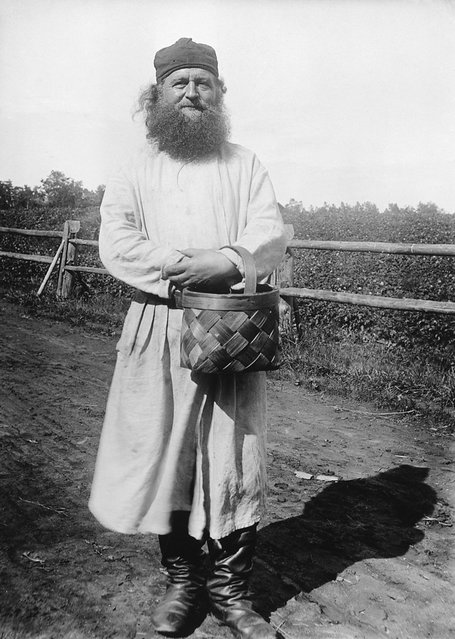
Priest, Valamo Monastery, Karelia, Russia (then Finland), 1930s. Father Venerius with a birchbark basket. (Photo by Einar Erici)

“Einar Erici (1885–1965) was a physician by profession, working at a tuberculosis hospital in Stockholm, even running a private medical practice. He was by then the most renowned Swedish expert of church organs and organ builders, and his archival collection is today held by the Swedish National Heritage Board. This archive includes mostly writings, such as letters and manuscripts for published articles and essays, but also more than 2 000 black and white photos – original prints, glass plates and film negatives”. – Swedish National Heritage Board

Photo: Priest, Valamo Monastery, Karelia, Russia (then Finland), 1930s. Father Venerius with a birchbark basket. (Photo by Einar Erici)
Details
09 Dec 2012 11:41:00
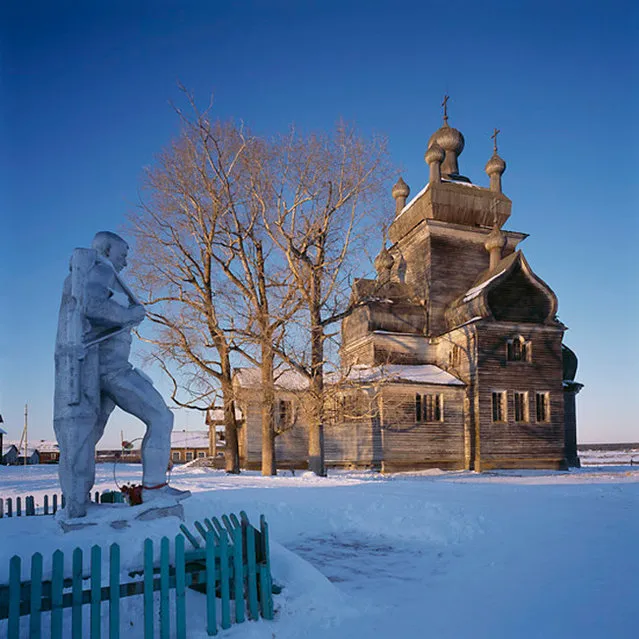
Wooden Churches - Travelling In The Russian North By Richard Davies Part 2

While communism, collectivism, worms, dry rot and casual looting failed to destroy the majestic wooden churches of Russia, it may be ordinary neglect that finally does them in. Dwindled now to several hundred remaining examples, these glories of vernacular architecture lie scattered amid the vastness of the world’s largest country. Just over a decade ago, Richard Davies, a British architectural photographer, struck out on a mission to record the fragile and poetic structures. Austerely beautiful and haunting, “Wooden Churches: Traveling in the Russian North” (White Sea Publishing; $132) is the result. Covering thousands of miles, Mr. Davies described how he and the writer Matilda Moreton tracked down the survivors from among the thousands of onion-domed structures built after Prince Vladimir converted to Christianity in 988.

See also: Wooden Churches Part1


Details
28 Nov 2013 12:13:00
“Unexpected x2 (a.k.a. “how much is that doggie in the window”)”. Taiwan, 2011. (Asian (Street) Impressions)

“Unexpected x2 (a.k.a. “how much is that doggie in the window”)”. Taiwan, 2011. (Photo and caption by Asian (Street) Impressions)
Details
13 Oct 2013 10:34:00
A three-year-old girl smokes a cigar during the Saint Simon celebrations in San Andres Itzapa, Guatemala, on October 28, 2019. Thousands believe that the saint helps people find work, solves family problems and cures illnesses. (Photo by Orlando Estrada/AFP Photo)

A three-year-old girl smokes a cigar during the Saint Simon celebrations in San Andres Itzapa, Guatemala, on October 28, 2019. Thousands believe that the saint helps people find work, solves family problems and cures illnesses. (Photo by Orlando Estrada/AFP Photo)
Details
18 Dec 2019 00:01:00
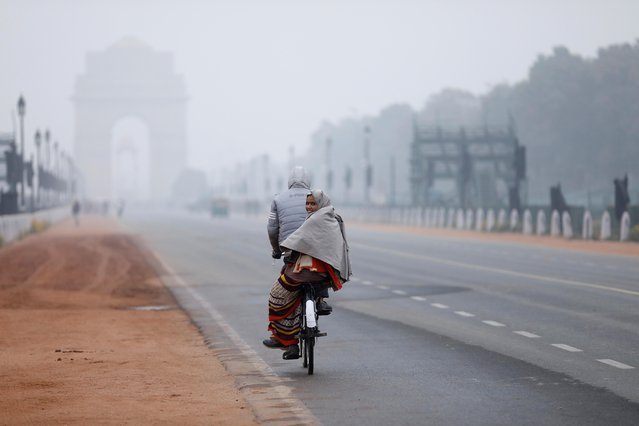
A woman sits behind a bicycle on a cold winter morning in New Delhi, December 31, 2019. (Photo by Anushree Fadnavis/Reuters)

A woman sits behind a bicycle on a cold winter morning in New Delhi, December 31, 2019. (Photo by Anushree Fadnavis/Reuters)
Details
06 Jan 2020 00:01:00
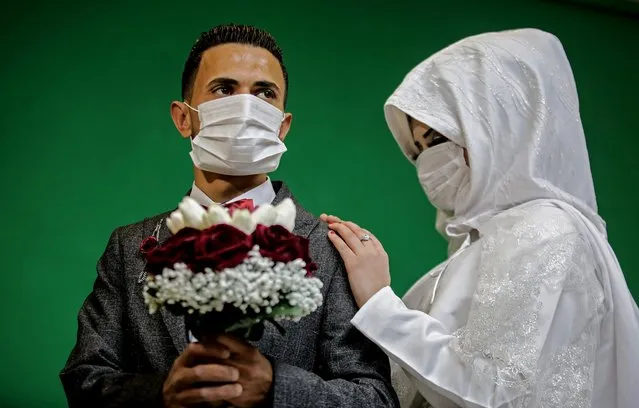
Palestinian groom Mohamed abu Daga and his bride Israa wear face masks amid the COVID-19 epidemic, during a photoshoot at a studio before their wedding ceremony in Khan Yunis in the southern Gaza Strip, on March 23, 2020. Authorities in Gaza confirmed on March 22 the first two cases of novel coronavirus, identifying them as Palestinians who had travelled to Pakistan and were being held in quarantine since their return, as the United Nations warned of potential disastrous outcomes to an outbreak given the high poverty rates and weak health system in the coastal strip, under Israeli blockade since 2007. (Photo by Said Khatib/AFP Photo)

Palestinian groom Mohamed abu Daga and his bride Israa wear face masks amid the COVID-19 epidemic, during a photoshoot at a studio before their wedding ceremony in Khan Yunis in the southern Gaza Strip, on March 23, 2020. Authorities in Gaza confirmed on March 22 the first two cases of novel coronavirus, identifying them as Palestinians who had travelled to Pakistan and were being held in quarantine since their return, as the United Nations warned of potential disastrous outcomes to an outbreak given the high poverty rates and weak health system in the coastal strip, under Israeli blockade since 2007. (Photo by Said Khatib/AFP Photo)
Details
27 Mar 2020 00:07:00