Loading...
Done
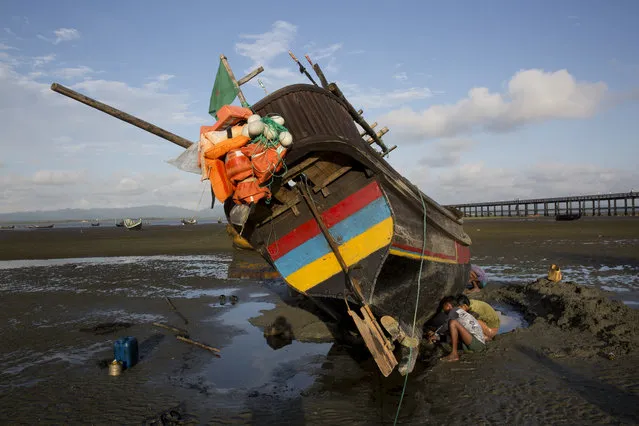
In this September 21, 2017, local villagers repair a fishing boat in Shah Porir Dwip, an island by the Bay of Bengal at Bangladesh’s southern tip. This island can mean both hope and death for the Rohingya Muslims who are desperate to escape the violence that has engulfed their lives in Myanmar’s Rakhine state. High tide or low, day or night, rough waters or calm, when they can find a boat, the Rohingya take their chance to flee to Bangladesh. More than 430,000 have left Myanmar in less than a month. (Photo by Bernat Armangue/AP Photo)

In this September 21, 2017, local villagers repair a fishing boat in Shah Porir Dwip, an island by the Bay of Bengal at Bangladesh’s southern tip. This island can mean both hope and death for the Rohingya Muslims who are desperate to escape the violence that has engulfed their lives in Myanmar’s Rakhine state. High tide or low, day or night, rough waters or calm, when they can find a boat, the Rohingya take their chance to flee to Bangladesh. More than 430,000 have left Myanmar in less than a month. (Photo by Bernat Armangue/AP Photo)
Details
02 Dec 2017 07:52:00
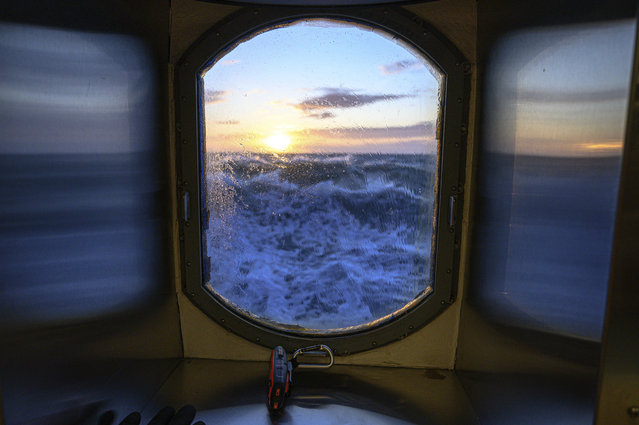
This November 8, 2019, photo provided by John Guillote shows a view from the main lab of the Sikuliaq in the Chukchi Sea. University of Washington scientists onboard the research vessel are studying the changes and how less sea ice will affect coastlines, which already are vulnerable to erosion because increased waves delivered by storms. More erosion would increase the chance of winter flooding in villages and danger to hunters in small boats. (Photo by John Guillote via AP Photo)

This November 8, 2019, photo provided by John Guillote shows a view from the main lab of the Sikuliaq in the Chukchi Sea. University of Washington scientists onboard the research vessel are studying the changes and how less sea ice will affect coastlines, which already are vulnerable to erosion because increased waves delivered by storms. More erosion would increase the chance of winter flooding in villages and danger to hunters in small boats. (Photo by John Guillote via AP Photo)
Details
26 Aug 2021 08:22:00
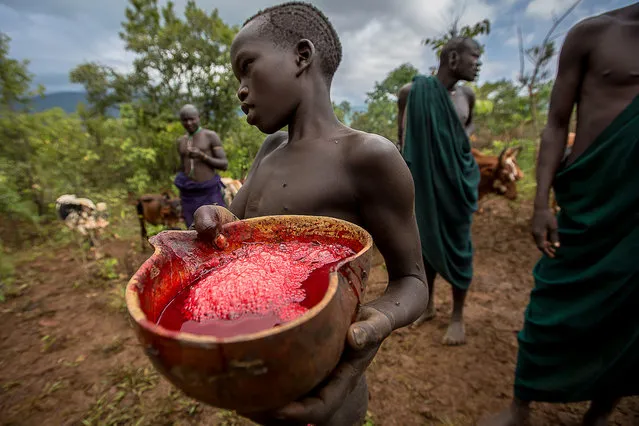
Surma tribe at a blood drinking ritual

“Suri tribes boys are collecting the blood of a cow in a calabash the vein of the animal was opened with a bow and an arrow. Like most pastoralists the Surma people are drinking fresh blood which is from the cow vein. Only some minutes after the wound at the vein is closed again the animals are back with their herd”. (Photo and caption by Anthony Pappone)
Details
17 Nov 2013 11:12:00
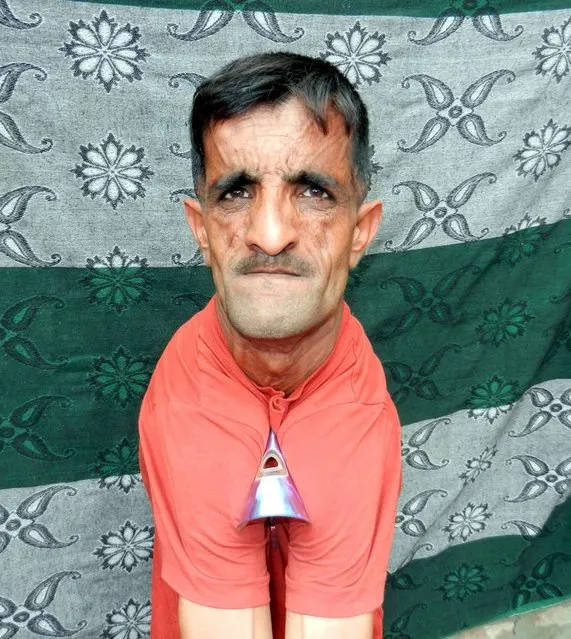
Rammehar Punia A Rubber Man

35-year old farmer Rammehar Punia has been named as ‘Rubber Man’. Thanks to his remarkable ability to make his shoulders meet in front of his chest. He has used his flex!bil!ty to smash the Guinness World record for the number of CD’s broken between the shoulders. He broke 60 CDs in just a minute.
Details
10 Aug 2015 10:45:00
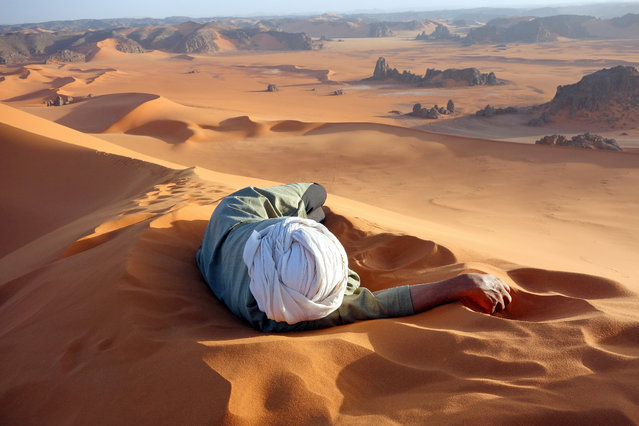
“A Well Earned Rest in the Sahara”. This photo of Moussa Macher, our Tuareg guide, was taken at the summit of Tin-Merzouga, the largest dune (or erg) in the Tadrat region of the Sahara desert in southern Algeria. Moussa rested while waiting for us to finish our 45-minute struggle to the top. Photo location: Summit of Tin-Merzouga, Tadrat, Tassili N'Ajjer National Park, Algeria. (Photo and caption by Evan Cole/National Geographic Photo Contest)

Merit Prize Winner: “A Well Earned Rest in the Sahara”. This photo of Moussa Macher, our Tuareg guide, was taken at the summit of Tin-Merzouga, the largest dune (or erg) in the Tadrat region of the Sahara desert in southern Algeria. Moussa rested while waiting for us to finish our 45-minute struggle to the top. It only took ten minutes of rolling, running, and jumping to get back down. The Tadrat is part of the Tassili N'Ajjer National Park World Heritage area, famous for its red sand and engravings and rock paintings of cattle, elephants, giraffes, and rhinos that lived there when the climate was milder. Photo location: Summit of Tin-Merzouga, Tadrat, Tassili N'Ajjer National Park, Algeria. (Photo and caption by Evan Cole/National Geographic Photo Contest)
Details
01 Aug 2014 11:38:00
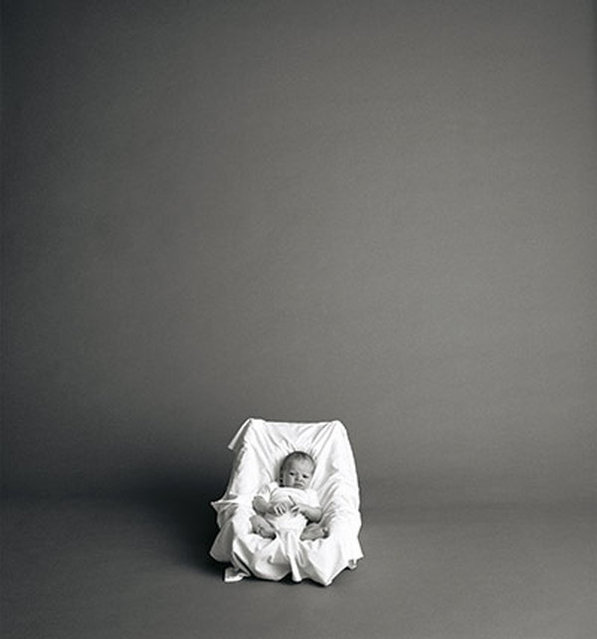
Zed Nelson by The Family

Zed Nelson has photographed the same family, once a year on the same day, for 20 years. I take hundreds of photo’s of my extended family all year round, some just languish on my computer screen unseen by anyone, some get printed, some framed. What is really interesting about this project is not only the obvious time scale but his “ analytical approach“. The same plain background is used for each session and he chooses only 1 frame to represent that years image. My many photographs are a mishmash of family events, his create a family history unfolding . Perhaps less really is more.
Details
22 Jun 2015 10:27:00
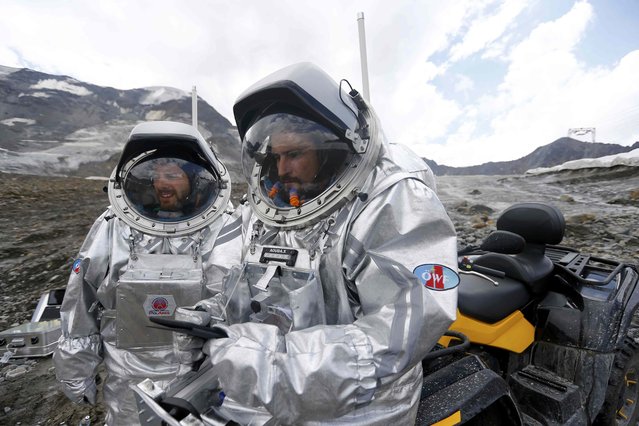
Stefan Dobrovolny of Austria and Inigo Munoz Elorza of Spain (R) stand in front of a quad bike during a simulated Mars mission on Tyrolean glaciers in Kaunertal, Austria, August 7, 2015. (Photo by Dominic Ebenbichler/Reuters)

Stefan Dobrovolny of Austria and Inigo Munoz Elorza of Spain (R) stand in front of a quad bike during a simulated Mars mission on Tyrolean glaciers in Kaunertal, Austria, August 7, 2015. The Austrian Space Forum is sending some of its researchers to practice weight-less walking in spacesuits on a glacier which resembles the terrain on Mars. (Photo by Dominic Ebenbichler/Reuters)
Details
08 Aug 2015 12:32:00
A dancer performs before a judging panel during the World Irish Dancing Championships in Dublin, Ireland on April 11, 2017. (Photo by Clodagh Kilcoyne/Reuters)

A dancer performs before a judging panel during the World Irish Dancing Championships in Dublin, Ireland on April 11, 2017. The April 9-16 event draws some 5,000 performers from Ireland and overseas, including from both the Irish diaspora in places like the United States and Australia as well as less likely countries such as Russia and Japan. (Photo by Clodagh Kilcoyne/Reuters)
Details
13 Apr 2017 09:33:00