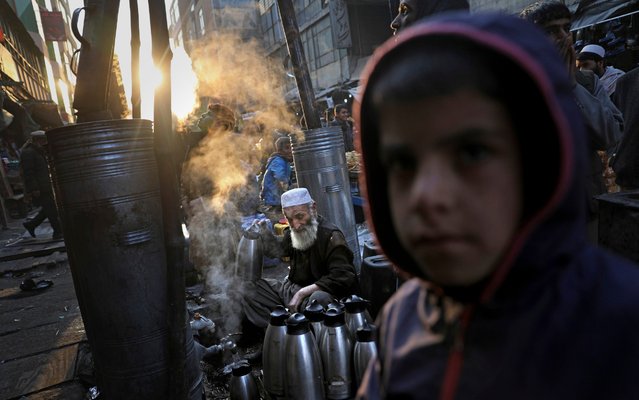
Afghan tea seller Farooq Shah, center, fills kettles with tea for customers at a market place in Kabul, Afghanistan, Wednesday, December 4, 2019. (Photo by Altaf Qadri/AP Photo)
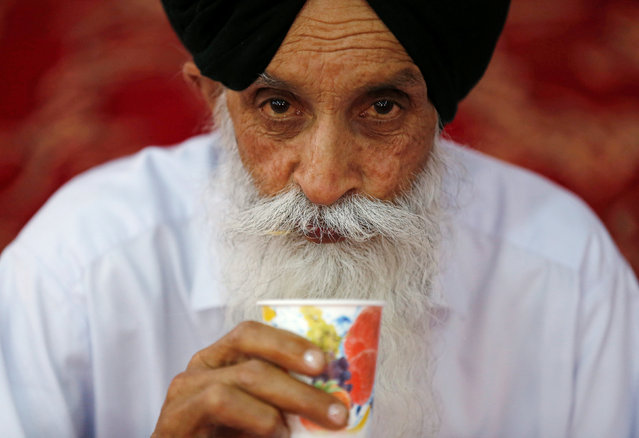
An Afghan Sikh man drinks from a cup inside a Gurudwara, or a Sikh temple, during a religious ceremony in Kabul, Afghanistan June 8, 2016. (Photo by Mohammad Ismail/Reuters)
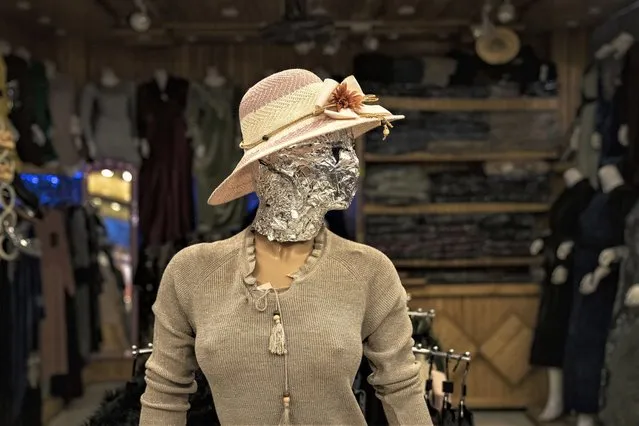
A mannequin's head is covered in a woman dress shop in Kabul, Afghanistan, Monday, December 26, 2022. Under the Taliban, the mannequins in women's dress shops across the Afghan capital Kabul are a haunting sight, their heads cloaked in cloth sacks or wrapped in black plastic bags. The hooded mannequins are one symbol of the Taliban's puritanical rule over Afghanistan. (Photo by Ebrahim Noroozi/AP Photo)
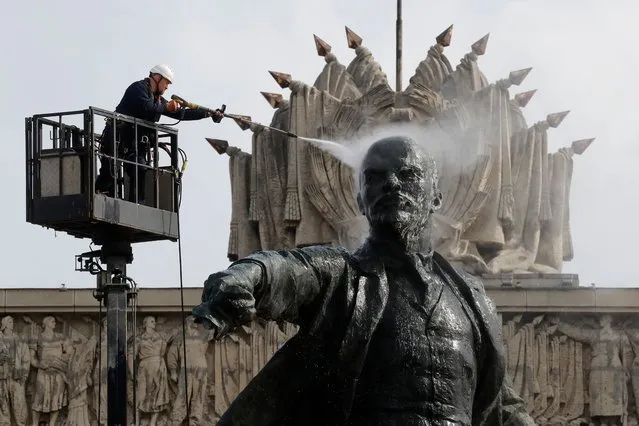
A municipal worker cleans the monument of Soviet state founder Vladimir Lenin from a crane during preparations for the 153th anniversary of Lenin's birthday in St. Petersburg, Russia, 18 April 2023. The monument to Vladimir Lenin at the Moscow Square was installed in 1970. It was made according to the project of the sculptor Mikhail Anikushin and is the tallest monument to Lenin in St. Petersburg. (Photo by Anatoly Maltsev/EPA/EFE/Rex Features/Shutterstock)
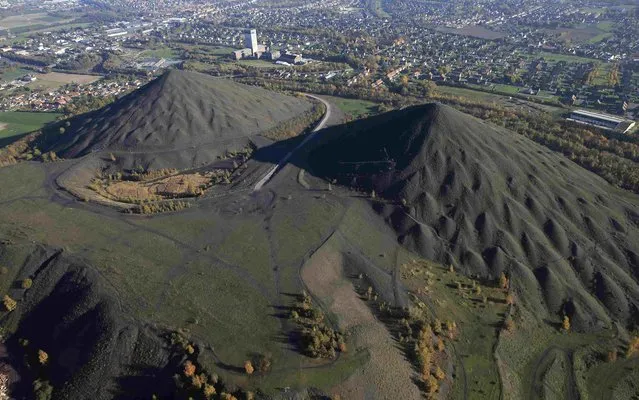
An aerial view shows the 11/19 pit and twin slag heaps at the former coal mine site in Loos-en-Gohelle, northern France, November 1, 2015. Loos-en-Gohelle, a town of 7000 inhabitants in the North of France, marked by the closure of coal mines in 1970, has demonstrated a successful transition from coal to a green economy. (Photo by Pascal Rossignol/Reuters)
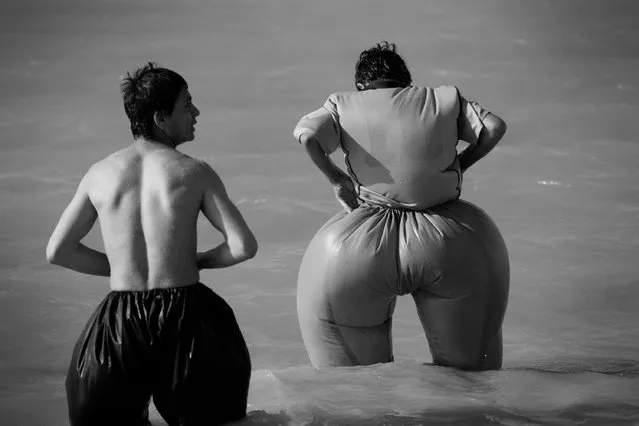
“Life in War” (FotoEvidence Press) by Iranian photographer Majid Saeedi is probably the only book about Afghanistan that doesn’t show images of war. For ten years his camera photographed daily life in the context of war. His photographs reveal the humanity of a people living through decades of war. Here: Afghan men escape increasing summer temperatures by wading in the Qarga reservoir on July 9, 2010 in a suburb of Kabul, Afghanistan. (Photo by Majid Saeedi/Getty Images)
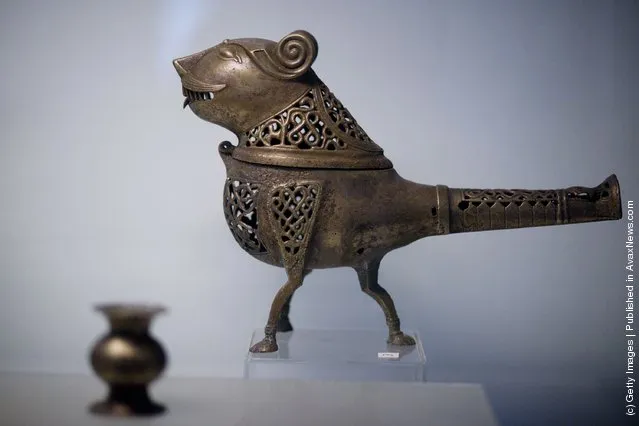
An ancient sculpture is displayed in the Kabul Museum August 4, 2011 in Kabul, Afghanistan. The sculptures, which had been destroyed by Islamists during the Taliban regime, were repaired after the collapse of the hardliners in 2001. Portions of the collection have been exhibited in seven countries. (Photo by Majid Saeedi/Getty Images)
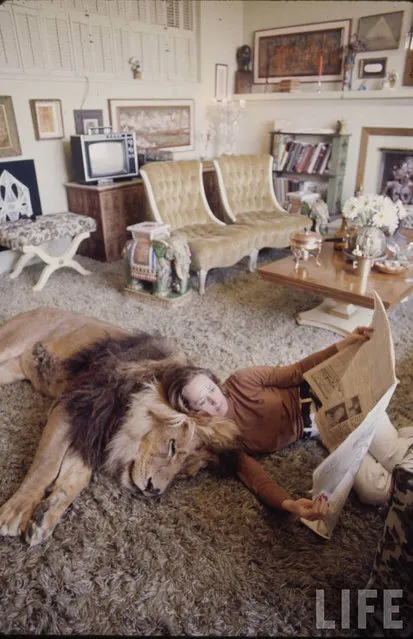
In the 1970′s, actress and model Tippi Hedren (mother of actress Melanie Griffith) created the Shambala Preserve after producing the film Roar. The preserve rescued exotic big cats living in captivity that had been abused or were in need of help, one of which the family created a close bond with. Neil the lion lived with the family in their home, and played an active role in the day to day activities of the preserve.