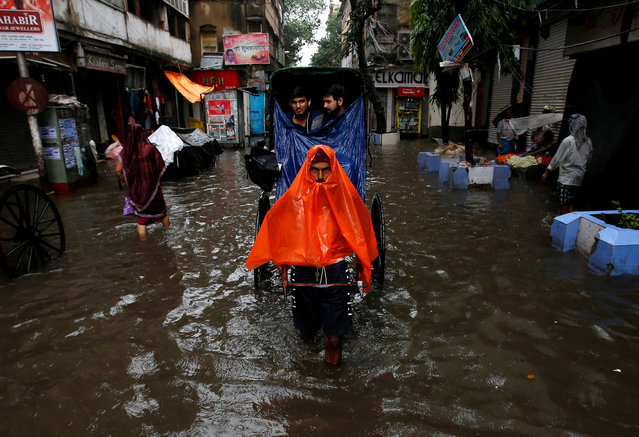
A rickshaw puller transports passengers through a water-logged street after heavy rain in Kolkata, India on June 26, 2018. (Photo by Rupak De Chowdhuri/Reuters)
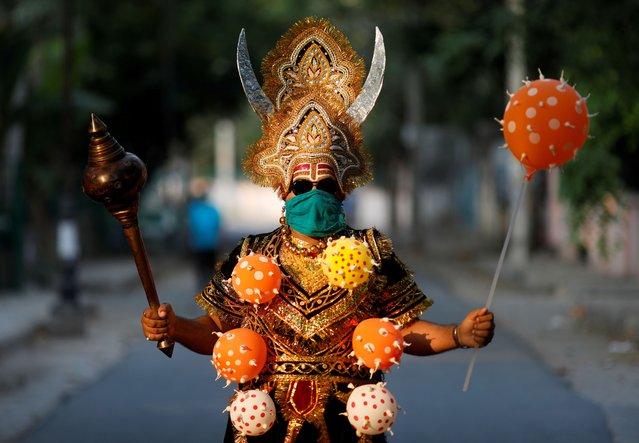
A local resident dressed as Yamraj or Hindu god of death, wearing a novel coronavirus-themed balloon necklace, gestures as he poses during an awareness about social distancing and staying at home organised by Delhi police during a nationwide lockdown to slow the spreading of the coronavirus disease (COVID-19), in New Delhi, India, April 28, 2020. (Photo by Adnan Abidi/Reuters)
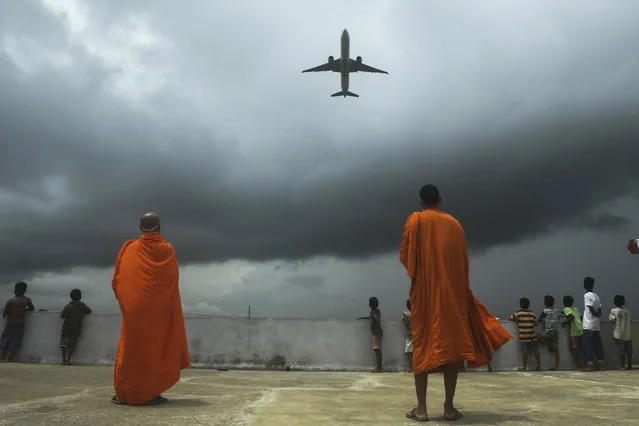
Buddhists monks and children look out from the rooftop at a Buddhist mission hostel and school for underprivileged children as an international passenger flight takes off at the Netaji Subhash Chandra Bose International Airport as the authorities eased restrictions imposed as a preventive measure against the spread of the COVID-19 coronavirus, in Kolkata on July 5, 2020. (Photo by Dibyangshu Sarkar/AFP Photo)
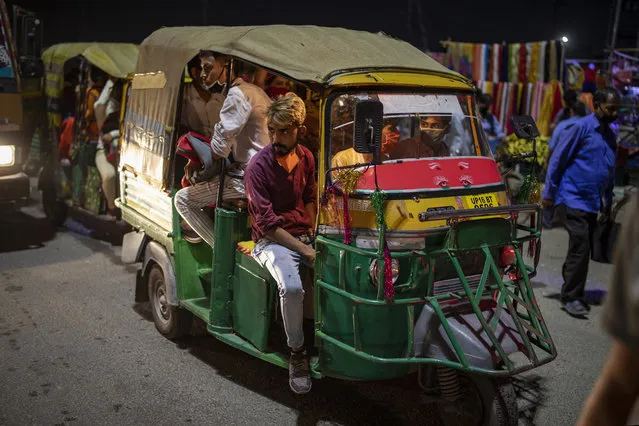
Commuters, some of them wearing masks as a precaution against the coronavirus ride an auto-rickshaw in Noida, outskirts of New Delhi, India, Thursday, July 16, 2020. (Photo by Altaf Qadri/AP Photo)
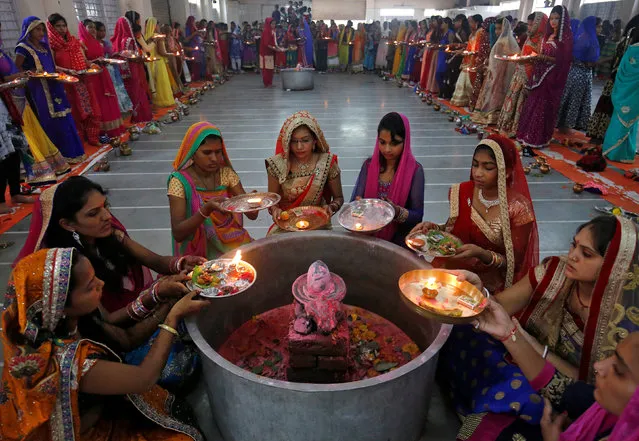
Hindu women perform a ritual known as Aarti around a Shivling (a symbol of Lord Shiva) on the last day of Jaya Parvati Vrat festival in Ahmedabad, India, July 10, 2017. (Photo by Amit Dave/Reuters)
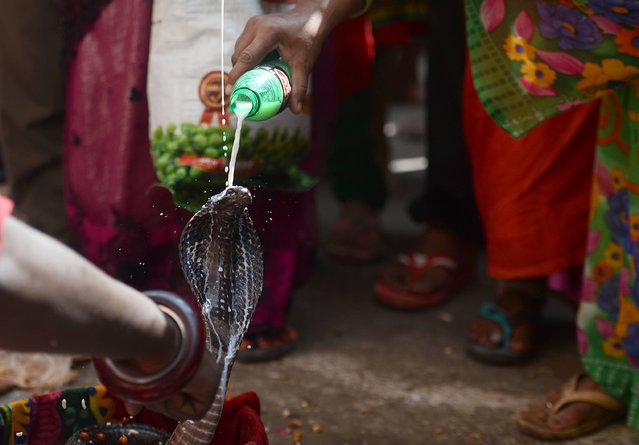
An Indian Hindu devotee pours milk on a snake as an offering during the annual Nag Panchami festival, dedicated to the worship of snakes outside the Nagvasuki temple, in Allahabad, on July 28, 2017. Officially the snake charmers' profession is banned in India, but many in the country offered prayers and milk blessings to cobras and other deadly serpents on July 28 in an annual tribute. The 800,000 charmers and their young apprentices come to the fore for the Nag Panchami festival which dates back several centuries. (Photo by Sanjay Kanojia/AFP Photo)