Loading...
Done
Forgotten Guerrero. A female member of the community defence force holds her weapon. Since early 2019, the village has been attacked repeatedly by Los Ardillos cartel, prompting residents to take action. Rincón de Chautla, Guerrero, 10 June 2019. (Photo by Alfredo Bosco/Luz with the support of Le Figaro Magazine, Winner of the 2020 Humanitarian Visa d’or award, International Committee of the Red Cross/International Festival of Photojournalism 2020)

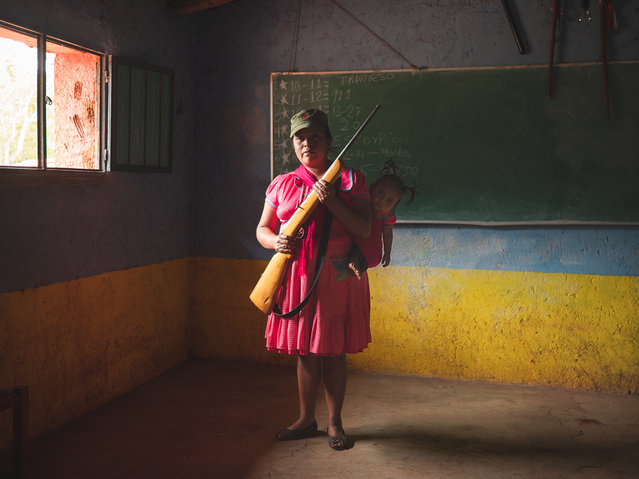
Forgotten Guerrero. A female member of the community defence force holds her weapon. Since early 2019, the village has been attacked repeatedly by Los Ardillos cartel, prompting residents to take action. Rincón de Chautla, Guerrero, 10 June 2019. (Photo by Alfredo Bosco/Luz with the support of Le Figaro Magazine, Winner of the 2020 Humanitarian Visa d’or award, International Committee of the Red Cross/International Festival of Photojournalism 2020)
Details
02 Sep 2020 00:05:00
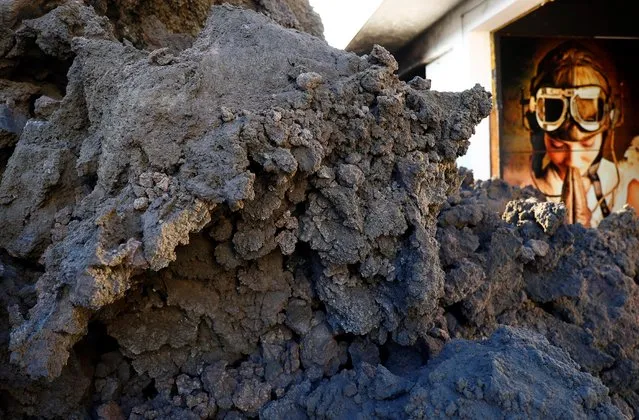
The lava of the Cumbre Vieja volcano reaches the door of a tattoo shop in La Laguna neighborhood, on the Canary Island of La Palma, Spain, December 14, 2021. (Photo by Borja Suarez/Reuters)

The lava of the Cumbre Vieja volcano reaches the door of a tattoo shop in La Laguna neighborhood, on the Canary Island of La Palma, Spain, December 14, 2021. (Photo by Borja Suarez/Reuters)
Details
24 Dec 2021 07:55:00
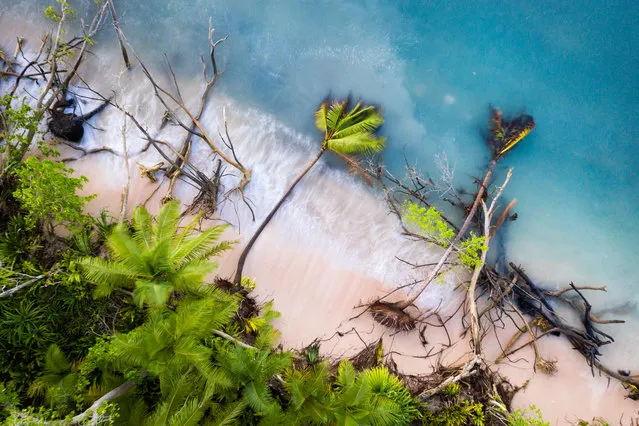
Tuvalu Beneath the Rising Tide by Sean Gallagher, Tuvalu. Changing environments prize: Fallen trees lie on a beach as the waves from the Funafuti lagoon in Tuvalu lap around them. Land erosion has always been a problem for the South Pacific country but problems are intensifying as sea levels rise. Rising seas are on the verge of completely submerging the tiny archipelago’s islands. (Photo by Sean Gallagher/CIWEM Environmental Photographer of the Year 2019)

Tuvalu Beneath the Rising Tide by Sean Gallagher, Tuvalu. Changing environments prize: Fallen trees lie on a beach as the waves from the Funafuti lagoon in Tuvalu lap around them. Land erosion has always been a problem for the South Pacific country but problems are intensifying as sea levels rise. Rising seas are on the verge of completely submerging the tiny archipelago’s islands. (Photo by Sean Gallagher/CIWEM Environmental Photographer of the Year 2019)
Details
26 Sep 2019 00:03:00
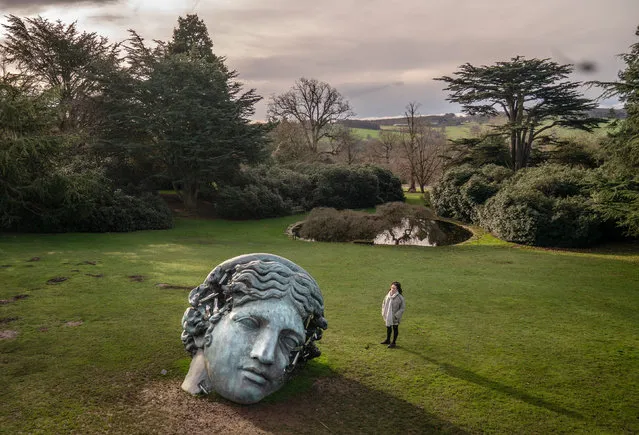
Dominique Lynch on Tuesday, February 20, 2024 views Daniel Arsham's Unearthed, Bronze Eroded Melpomene, on display during Daniel Arsham: Relics in the Landscape exhibition, the first UK museum display of work by the highly acclaimed North American, at the Yorkshire Sculpture Park in Wakefield, West Yorkshire. (Photo by Danny Lawson/PA Images via Getty Images)

Dominique Lynch on Tuesday, February 20, 2024 views Daniel Arsham's Unearthed, Bronze Eroded Melpomene, on display during Daniel Arsham: Relics in the Landscape exhibition, the first UK museum display of work by the highly acclaimed North American, at the Yorkshire Sculpture Park in Wakefield, West Yorkshire. (Photo by Danny Lawson/PA Images via Getty Images)
Details
14 Mar 2024 06:45:00
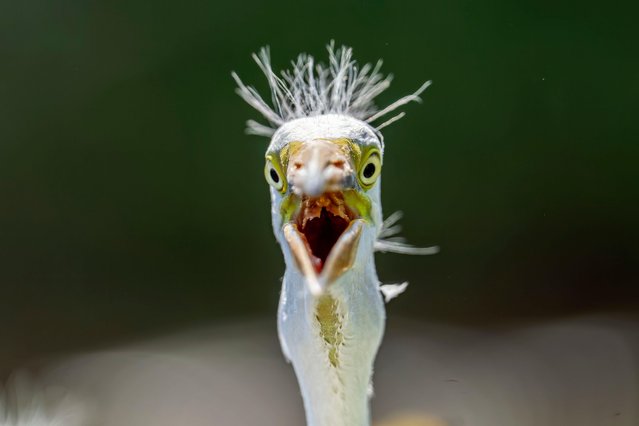
An egret in the second decade of April 2025 cools off in the Florida heat by gular fluttering, rapidly vibrating its throat muscles with an open beak. The mechanism helps to dissipate heat through evaporation. (Photo by Ronen Tivony/ZUMA Press Wire/Alamy Live News)

An egret in the second decade of April 2025 cools off in the Florida heat by gular fluttering, rapidly vibrating its throat muscles with an open beak. The mechanism helps to dissipate heat through evaporation. (Photo by Ronen Tivony/ZUMA Press Wire/Alamy Live News)
Details
11 May 2025 03:40:00
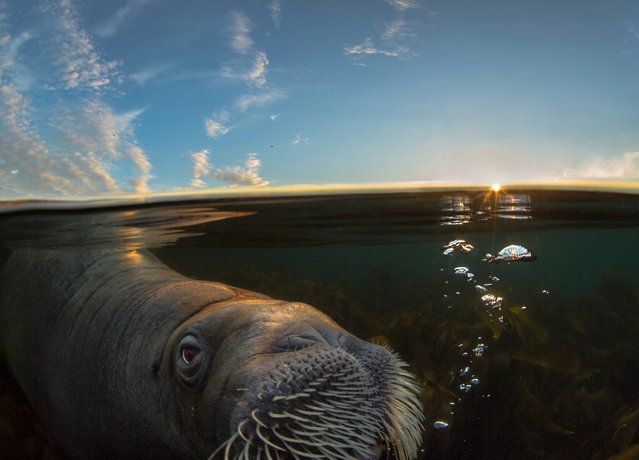
The Wildscreen festival is the world’s biggest celebration of screen-based natural history storytelling which takes place every two years in Bristol. Here: “Walrus in Midnight Sun”. Walrus feed mostly on bivalves in productive, shallow and often sandy habitats in the Arctic. This individual, though, arrived on a beach outside Tromsø, northern Norway, and found comfort on a stranded dead sperm whale. After two weeks he approached Audun, and only half a metre away he stretched his tusk forward and touched his hand gently. “This was one of the most memorable moments of my life”, Rikardsen says. He named the 500kg male Buddy. After two months, the dead whale was decomposed and Buddy suddenly disappeared. (Photo by Audun Rikardsen/Wildscreen 2016)

The Wildscreen festival is the world’s biggest celebration of screen-based natural history storytelling which takes place every two years in Bristol. Here: “Walrus in Midnight Sun”. Walrus feed mostly on bivalves in productive, shallow and often sandy habitats in the Arctic. This individual, though, arrived on a beach outside Tromsø, northern Norway, and found comfort on a stranded dead sperm whale. After two weeks he approached Audun, and only half a metre away he stretched his tusk forward and touched his hand gently. “This was one of the most memorable moments of my life”, Rikardsen says. He named the 500kg male Buddy. After two months, the dead whale was decomposed and Buddy suddenly disappeared. (Photo by Audun Rikardsen/Wildscreen 2016)
Details
07 Oct 2016 10:02:00
Is it a leaf? Is it tree bark? No, it’s the Satanic leaf-tailed gecko. Cleverly disguised as a rotting leaf, Madagascar’s camouflage king has red eyes, pointy horns and a taste for night hunting: it’s nature’s most devilish deceiver. (Photo by Thomas Marent/ARDEA)

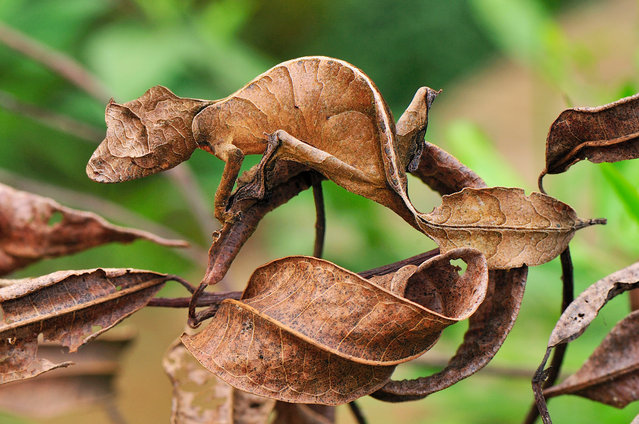
Is it a leaf? Is it tree bark? No, it’s the Satanic leaf-tailed gecko. Cleverly disguised as a rotting leaf, Madagascar’s camouflage king has red eyes, pointy horns and a taste for night hunting: it’s nature’s most devilish deceiver. The twisted body and veiny skin echo the detail of a dry leaf, which ensures the gecko blends in with its forest home. The mottled tail appears to have sections missing, as though it has withered over time. This mini-monster epitomises survival of the fittest, having adapted gradually to become today’s extraordinary leaf impersonator. (Photo by Thomas Marent/ARDEA)
Details
20 Nov 2015 08:03:00
In this Thursday, May 31, 2018 photo, a temporary worker using a lantern collects white asparagus from a field in Caparroso, around 85 km (52 miles) from Pamplona, northern Spain. (Photo by Alvaro Barrientos/AP Photo)

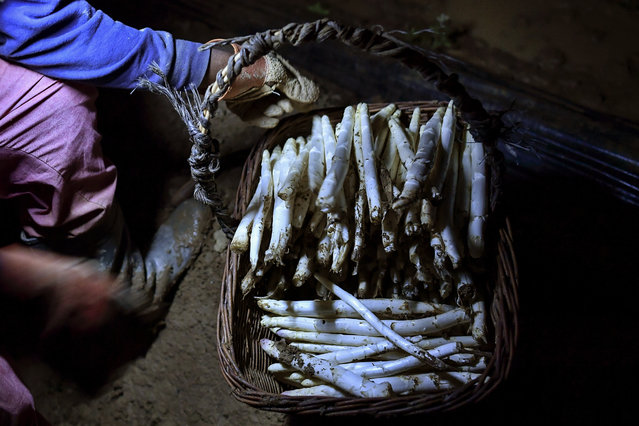
In this Thursday, May 31, 2018 photo, a temporary worker using a lantern collects white asparagus from a field in Caparroso, around 85 km (52 miles) from Pamplona, northern Spain. Dubbed the “white gold” of these northern Spanish farms because of their color and the high price they fetch in markets and restaurants around the world, the stringy delicacy is planted every fall and picked each year between April and June, at the height of the spring. (Photo by Alvaro Barrientos/AP Photo)
Details
09 Jun 2018 00:03:00