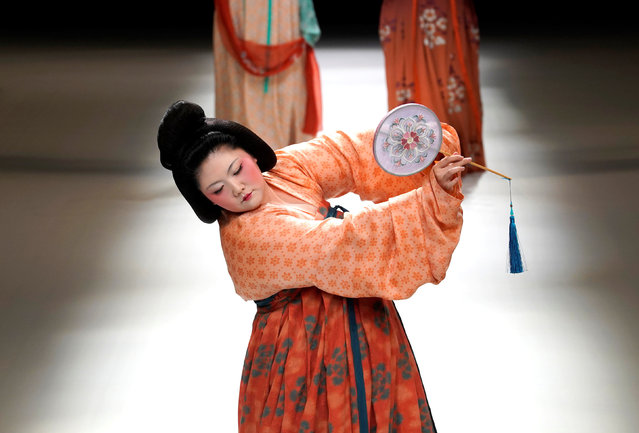
A woman dressed in a Tang-dynasty costume performs at a show by designer Chu Yan at China Fashion Week in Beijing, China, October 30, 2018. (Photo by Jason Lee/Reuters)
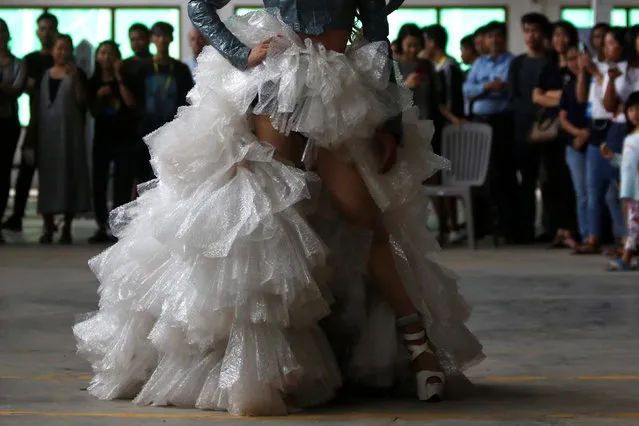
A model wears a dress made out of recycled material during a show organised by LGBT fashion designers to battles discrimination in Phnom Penh, Cambodia, October 24, 2018. (Photo by Samrang Pring/Reuters)
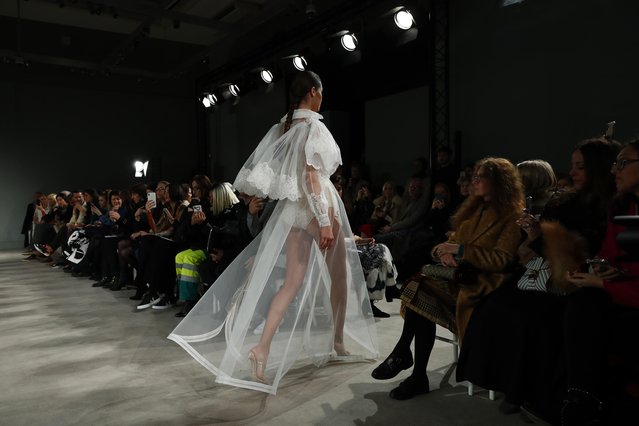
A model presents a creation by designer Alexis Mabille as part of his Haute Couture Spring/Summer 2020 collection show in Paris, France, January 21, 2020. (Photo by Francois Lenoir/Reuters)
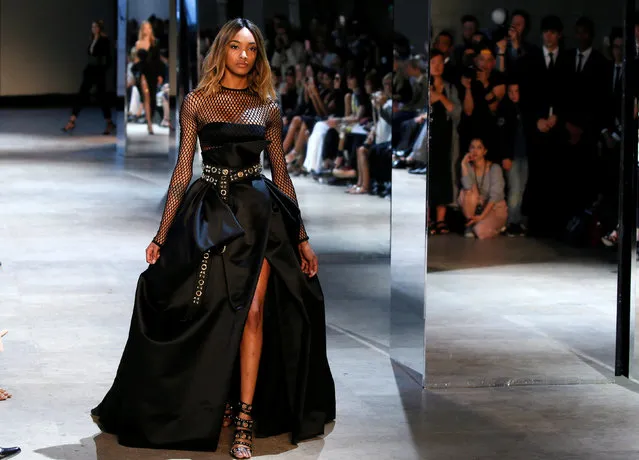
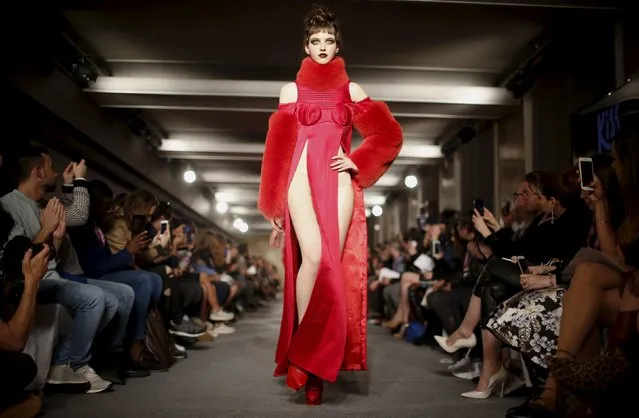
A model presents a creation by French designer Alexandre Vauthier as part of his Haute Couture Fall/Winter 2016/2017 collection in Paris, France, July 5, 2016. (Photo by Gonzalo Fuentes/Reuters)
A model presents a creation by designer Nadir Tati, as part of her Summer 2016 collection, during Lisbon Fashion Week, Portugal, October 11, 2015. (Photo by Rafael Marchante/Reuters)
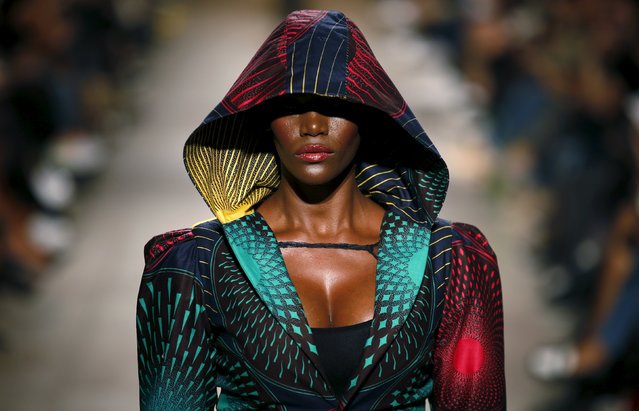
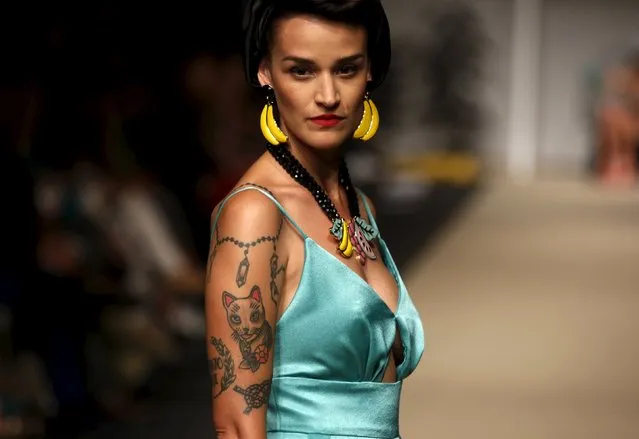
A model wears a creation by Peruvian designer Jessica Butrich during Lima Fashion Week, LIF Week Summer 15-16 in Lima October 28, 2015. (Photo by Mariana Bazo/Reuters)
A model presents a creation by designer David Ferreira, as part of his Fall/Winter 2016/17 collection, during Lisbon Fashion Week, Portugal, March 11, 2016. (Photo by Rafael Marchante/Reuters)
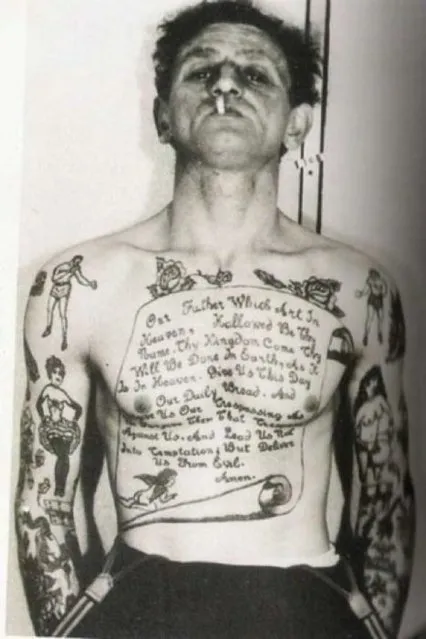
Tattoos are commonly used among criminals to show gang membership and record the wearer's personal history—such as his or her skills, specialties, accomplishments and convictions. They are also used as a means of personal expression. Certain designs have developed recognized coded meanings. The code systems can be quite complex and because of the nature of what they encode, the tattoo designs are not widely recognized.