Loading...
Done
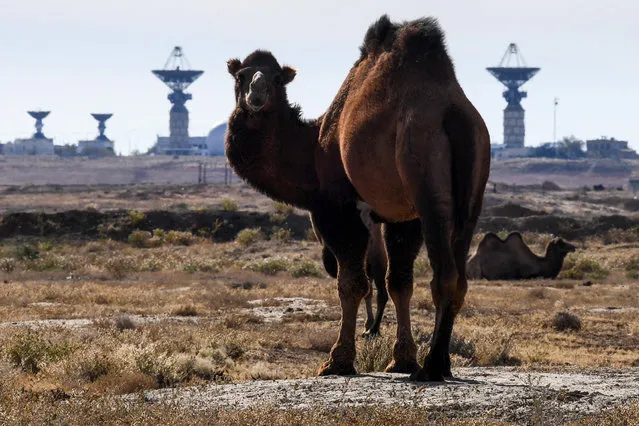
A camel is pictured in front of the Saturn tracking complex at the Russian-leased Baikonur cosmodrome in Kazakhstan on October 9, 2018. An astronaut and cosmonaut are due to travel to the ISS on October 11 aboard a Russian Soyuz MS-10 spacecraft from the Baikonur Cosmodrome in Kazakhstan. (Photo by Kirill Kudryavtsev/AFP Photo)

A camel is pictured in front of the Saturn tracking complex at the Russian-leased Baikonur cosmodrome in Kazakhstan on October 9, 2018. An astronaut and cosmonaut are due to travel to the ISS on October 11 aboard a Russian Soyuz MS-10 spacecraft from the Baikonur Cosmodrome in Kazakhstan. (Photo by Kirill Kudryavtsev/AFP Photo)
Details
08 Feb 2019 00:01:00
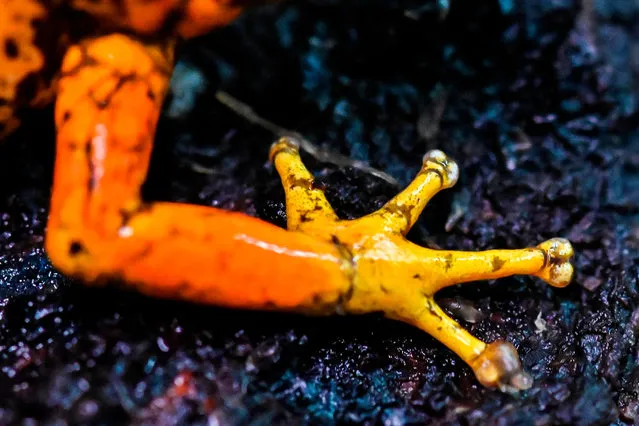
A leg of a “diablito” frog (Oophaga sylvatica) is photographed in a laboratory at a laboratory in the zoo of Cali, Colombia, on July 19, 2019. Colombia is the second country with the largest number of amphibians in the world after Brazil. More than 40% of amphibian species worldwide are in danger of extinction. (Photo by Luis Robayo/AFP Photo)

A leg of a “diablito” frog (Oophaga sylvatica) is photographed in a laboratory at a laboratory in the zoo of Cali, Colombia, on July 19, 2019. Colombia is the second country with the largest number of amphibians in the world after Brazil. More than 40% of amphibian species worldwide are in danger of extinction. (Photo by Luis Robayo/AFP Photo)
Details
28 Nov 2020 00:03:00
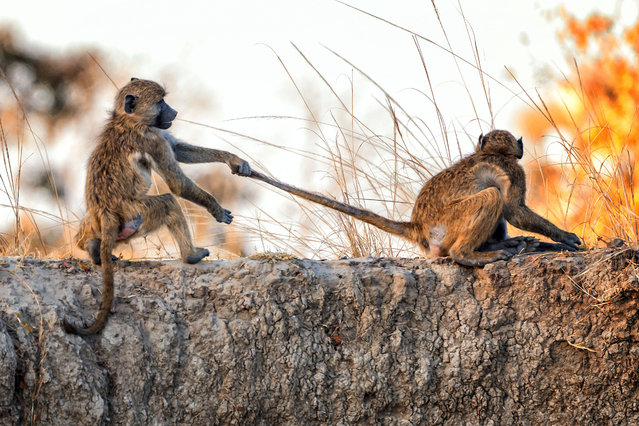
Going toe-to-toe, these fighting primates could give Floyd Mayweather a run for his money. The amazing images – captured by Australian tourist Julie Rathbone on the banks of the Zambezi river in Africa – show the pair engaging in a few fisticuffs. The Chacma baboons appeared to settle a disagreement by fighting - before a senior baboon plays referee and steps in to break it up. Nurse unit manager Julie Rathbone, 59, from New South Wales, was on a cruise down the river when she spotted the fracas unfolding. (Photo by Julie Rathbone/Caters News)

Going toe-to-toe, these fighting primates could give Floyd Mayweather a run for his money. The amazing images – captured by Australian tourist Julie Rathbone on the banks of the Zambezi river in Africa – show the pair engaging in a few fisticuffs. The Chacma baboons appeared to settle a disagreement by fighting – before a senior baboon plays referee and steps in to break it up. Nurse unit manager Julie Rathbone, 59, from New South Wales, was on a cruise down the river when she spotted the fracas unfolding. (Photo by Julie Rathbone/Caters News)
Details
28 Mar 2015 12:05:00
A woman takes a selfie in front of a sculpture of a rooster that local media say bears resemblance to U.S. President-elect Donald Trump, outside a shopping mall in Taiyuan, Shanxi province, China December 30, 2016. (Photo by Jon Woo/Reuters)

A woman takes a selfie in front of a sculpture of a rooster that local media say bears resemblance to U.S. President-elect Donald Trump, outside a shopping mall in Taiyuan, Shanxi province, China December 30, 2016. (Photo by Jon Woo/Reuters)
Details
11 Jan 2017 14:52:00
Race goers are pictured during the Investec Ladies Day at Epsom Downs Racecourse on June 2, 2017 in Epsom, England. (Photo by News Group Newspapers Ltd)

Race goers are pictured during the Investec Ladies Day at Epsom Downs Racecourse on June 2, 2017 in Epsom, England. (Photo by News Group Newspapers Ltd)
Details
04 Jun 2017 07:52:00
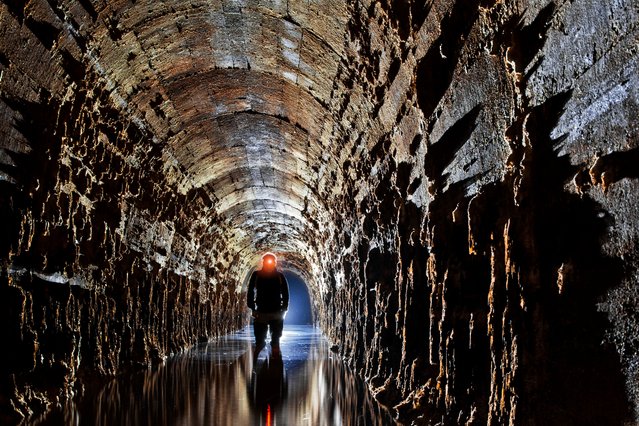
Regenwurmlager, Poland. The Regenwurmlager is an extensive underground fortification area constructed by Germany in 1920s-1940s, now in western Poland, near the city of Międzyrzecz. (Photo by Anna Arinova/Caters News)

Stunning silhouettes under European cities reveal the size and splendor of the continent’s urban foundations. Photographer and content-manager Anna Arinova, 28, from Moscow, captured the awe-inspiring labyrinths in Russia and Germany. Here: Regenwurmlager, Poland. The Regenwurmlager is an extensive underground fortification area constructed by Germany in 1920s-1940s, now in western Poland, near the city of Międzyrzecz. (Photo by Anna Arinova/Caters News)
Details
29 Dec 2016 07:53:00
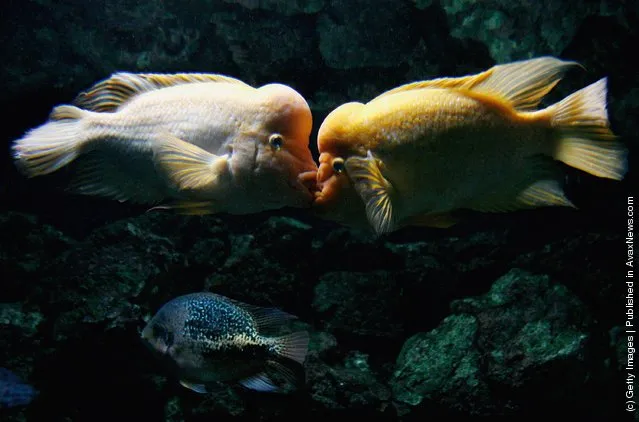
Midas Cichlid a.k.a. Amphilophus Citrinellus

“Amphilophus citrinellus is a large cichlid fish endemic to the San Juan River and adjacent watersheds in Costa Rica and Nicaragua. In the aquarium trade A. citrinellus is often sold under the trade name of Midas cichlid. A. citrinellus are omnivorous and their diet consists of plant material, molluscs and smaller fish”. – Wikipedia

Photo: Two Midas Cichlid (lat: amphilophus citrinellus) fish are seen in an aquarium at Hellabrunn zoo on December 23, 2009 in Munich, Germany. (Photo by Alexandra Beier/Getty Images)
Details
17 Aug 2011 11:29:00
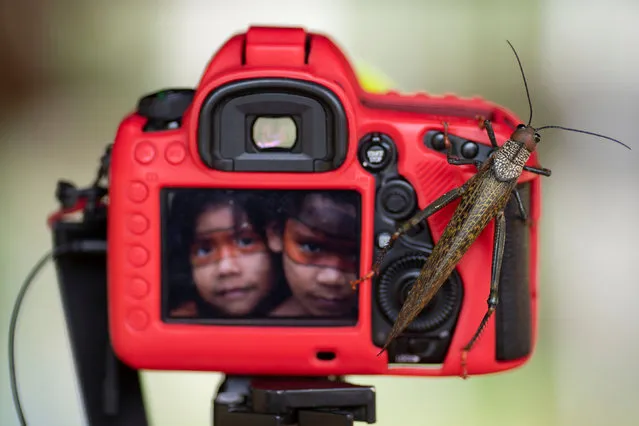
A grasshopper rests on a photographic camera during a meeting in the village of Alto Jamari called to face the threat of armed land grabbers invading the Uru-eu-wau-wau Indigenous Reservation near Campo Novo de Rondonia, Brazil on January 30, 2019. (Photo by Ueslei Marcelino/Reuters)

A grasshopper rests on a photographic camera during a meeting in the village of Alto Jamari called to face the threat of armed land grabbers invading the Uru-eu-wau-wau Indigenous Reservation near Campo Novo de Rondonia, Brazil on January 30, 2019. (Photo by Ueslei Marcelino/Reuters)
Details
16 Mar 2019 00:03:00