Loading...
Done
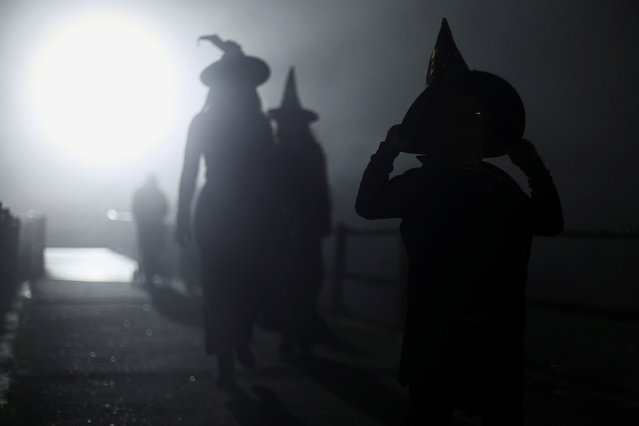
People walk on the street before the opening ceremony of the Witches and Wizards Convention, in the Paranapiacaba village, in Santo Andre, Brazil on May 16, 2025. (Photo by Jean Carniel/Reuters)

People walk on the street before the opening ceremony of the Witches and Wizards Convention, in the Paranapiacaba village, in Santo Andre, Brazil on May 16, 2025. (Photo by Jean Carniel/Reuters)
Details
10 Jul 2025 03:53:00
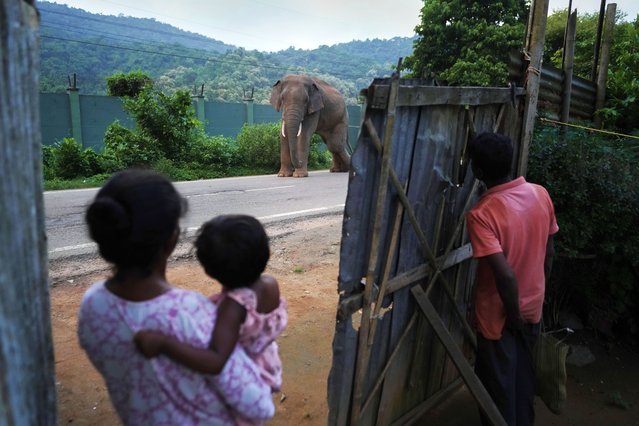
Residents look at an injured wild elephant walking outside their house in a village near Amchang wildlife sanctuary on the outskirts of Guwahati, Saturday, August 9, 2025. (Photo by Anupam Nath/AP Photo)

Residents look at an injured wild elephant walking outside their house in a village near Amchang wildlife sanctuary on the outskirts of Guwahati, Saturday, August 9, 2025. (Photo by Anupam Nath/AP Photo)
Details
24 Aug 2025 04:04:00
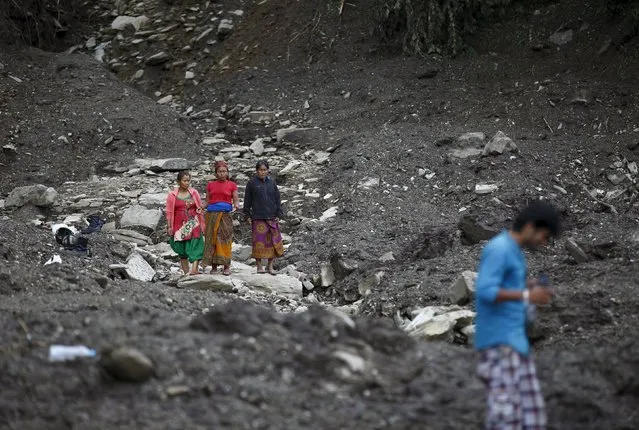
People observe the landslide-affected area after the landslide at Lumle village in Kaski district July 30, 2015. (Photo by Navesh Chitrakar/Reuters)

People observe the landslide-affected area after the landslide at Lumle village in Kaski district July 30, 2015. Landslides triggered by torrential rain in Nepal swept through villages on Thursday, killing at least 30 people close to the nation's most popular trekking circuit, home ministry officials said. (Photo by Navesh Chitrakar/Reuters)
Details
31 Jul 2015 11:31:00
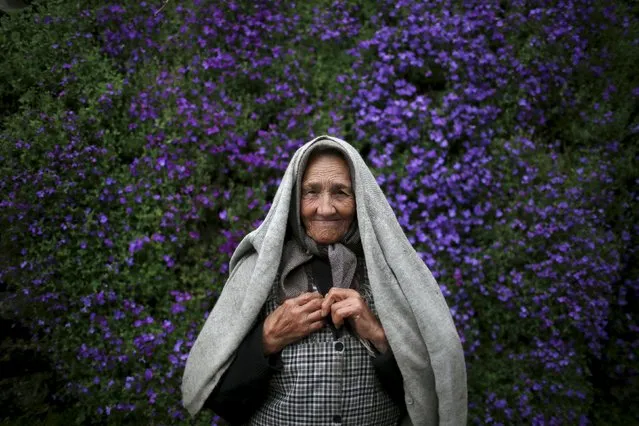
Zulmira Jesus poses for a portrait at a street in Povoa de Agracoes, near Chaves, Portugal April 19, 2016. (Photo by Rafael Marchante/Reuters)

Zulmira Jesus poses for a portrait at a street in Povoa de Agracoes, near Chaves, Portugal April 19, 2016. In the villages of Agracoes and Povoa de Agracoe, the steady drip-drip of emigration has brought down population numbers from more than 50 residents to fewer than a dozen each. These remaining villagers share the same glum acceptance that, after they have gone, their villages will die out too. It is the same desolate picture in scores of other backwater settlements in Portugal's interior, north to south. (Photo by Rafael Marchante/Reuters)
Details
29 Apr 2016 12:05:00
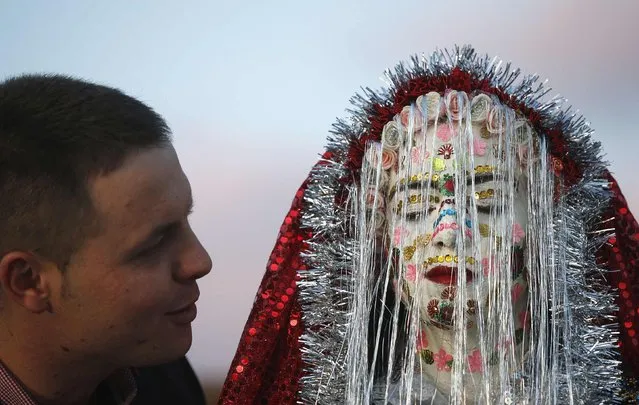
Bulgarian Muslims Azim Liumankov and his bride Fikrie Bindzheva pose in front of their house during their wedding ceremony in the village of Ribnovo, in the Rhodope Mountains, February 15, 2015. (Photo by Stoyan Nenov/Reuters)

Bulgarian Muslims Azim Liumankov and his bride Fikrie Bindzheva pose in front of their house during their wedding ceremony in the village of Ribnovo, in the Rhodope Mountains, February 15, 2015. The remote mountain village of Ribnovo in southwest Bulgaria has kept its traditional winter marriage ceremony alive despite decades of Communist persecution, followed by poverty that forced many men to seek work abroad. (Photo by Stoyan Nenov/Reuters)
Details
17 Feb 2015 12:46:00
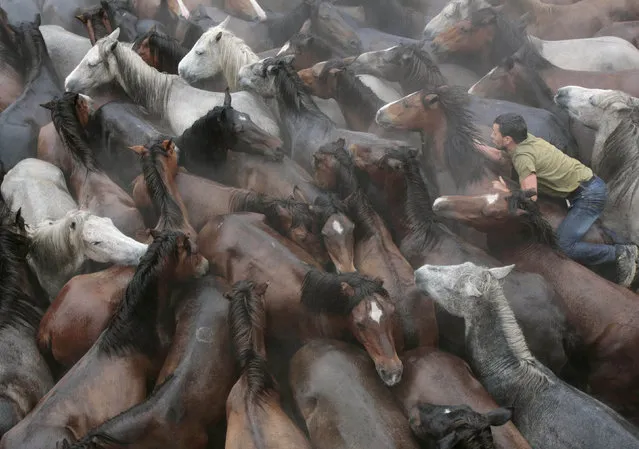
A reveller tries to hold on to a wild horse during the “Rapa Das Bestas” traditional event in the Spanish northwestern village of Sabucedo July 5, 2014. (Photo by Miguel Vidal/Reuters)

A reveller tries to hold on to a wild horse during the “Rapa Das Bestas” traditional event in the Spanish northwestern village of Sabucedo July 5, 2014. On the first weekend of the month of July, hundreds of wild horses are rounded up, trimmed and groomed in different villages in the Spanish northwestern region of Galicia. (Photo by Miguel Vidal/Reuters)
Details
07 Jul 2014 12:58:00
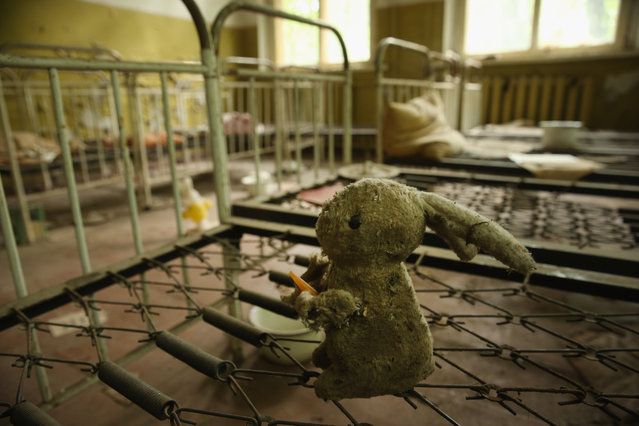
A stuffed rabbit doll sits among children's beds standing in the abandoned kindergarten of Kopachi village located inside the Chernobyl Exclusion Zone on September 29, 2015 near Chornobyl, Ukraine. Kopachi, a village that before 1986 had a population of 1,114, lies only a few kilometers south of the former Chernobyl nuclear power plant, where in 1986 workers inadvertantly caused reactor number four to explode, creating the worst nuclear accident in history. Radiation fallout was so high that authorities bulldozed and buried all of Kopachi's structures except for the kindergarten. (Photo by Sean Gallup/Getty Images)

A stuffed rabbit doll sits among children's beds standing in the abandoned kindergarten of Kopachi village located inside the Chernobyl Exclusion Zone on September 29, 2015 near Chornobyl, Ukraine. Kopachi, a village that before 1986 had a population of 1,114, lies only a few kilometers south of the former Chernobyl nuclear power plant, where in 1986 workers inadvertantly caused reactor number four to explode, creating the worst nuclear accident in history. (Photo by Sean Gallup/Getty Images)
Details
27 Apr 2016 09:28:00
A woman poses for a picture as bunches of paprika hang on the walls of her house to dry in the village of Donja Lakosnica, Serbia October 6, 2016. Donja Lokosnica is the Serbian “capital of paprika”, since almost all of the 1300 inhabitants are involved in growing paprika. As autumn approaches, the whole village turns red, because of many threads of dried peppers, that hang around Lokosnica, waiting for their winter use. Each of these paprika threads is handmade, still dried according to traditional techniques, assisted solely by the sun and fresh air. (Photo by Marko Djurica/Reuters)

A woman poses for a picture as bunches of paprika hang on the walls of her house to dry in the village of Donja Lakosnica, Serbia October 6, 2016. Donja Lokosnica is the Serbian “capital of paprika”, since almost all of the 1300 inhabitants are involved in growing paprika. As autumn approaches, the whole village turns red, because of many threads of dried peppers, that hang around Lokosnica, waiting for their winter use. Each of these paprika threads is handmade, still dried according to traditional techniques, assisted solely by the sun and fresh air. (Photo by Marko Djurica/Reuters)
Details
08 Oct 2016 12:04:00