Carved pumpkins designed by US pumpkin artist Ray Villafane are pictured during a pumpkin exhibition in Ludwigsburg, southern Germany, on September 8, 2017. (Photo by Sebastian Gollnow/AFP Photo/DPA)
A model displays a creation by Portuguese fashion designer Filipe Faisca in his runway show at Lisbon Fashion Week, at Carlos Lopes Pavillion in Lisbon, Portugal, 08 October 2017. (Photo by Miguel A. Lopes/EPA/EFE)
A model poses with her bodypainting designed by bodypainting artist Arianna Barlini from Italy, in the 2016 World Bodypainting Festival, 2016 in Poertschach am Woerthersee, Austria. (Photo by Didier Messens/Getty Images)
Models present creations by fashion design students of the Taiwanese Shih Chien university at the Berlin Fashion Week Autumn/Winter 2016 in Berlin, Germany, January 22, 2016. (Photo by Fabrizio Bensch/Reuters)
A home-made steam train, designed by Pavel Chilin, rides on a make-shift railway across country house neighborhood in the settlement of Ulyanovka in Leningrad region, Russia on November 4, 2019. (Photo by Anton Vaganov/Reuters)
Swedish actress Malin Akerman arrives at the 2025 Baby2Baby gala on Saturday, November 8, 2025, at Pacific Design Center in West Hollywood, Calif. (Photo by Jordan Strauss/Invision/AP Photo)
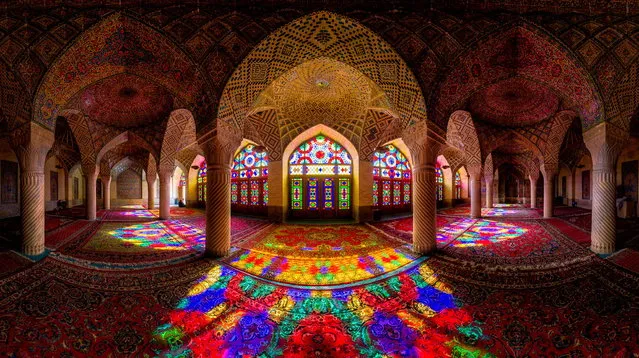
The Nasīr al-Mulk Mosque or Pink Mosque is a traditional mosque in Shiraz, Iran, located in Goade-e-Araban place (near the famous Shah Cheragh mosque). The mosque was built during the Qājār era, and is still in use under protection by Nasir al Mulk's Endowment Foundation. It was built by the order of Mirza Hasan Ali Nasir al Molk, one of the lords of the Qajar Dynasty, in 1876 and was finished in 1888. The designers were Muhammad Hasan-e-Memar and Muhammad Reza Kashi Paz-e-Shirazi. The mosque extensively uses colored glass in its facade, and displays other traditional elements such as panj kāseh-i (five concaves) in its design, it is also named in popular culture as Pink Mosque due to the usage of beautiful pink color tiles for its interior design.