Loading...
Done
Tridacna Gigas, or Giant Clams

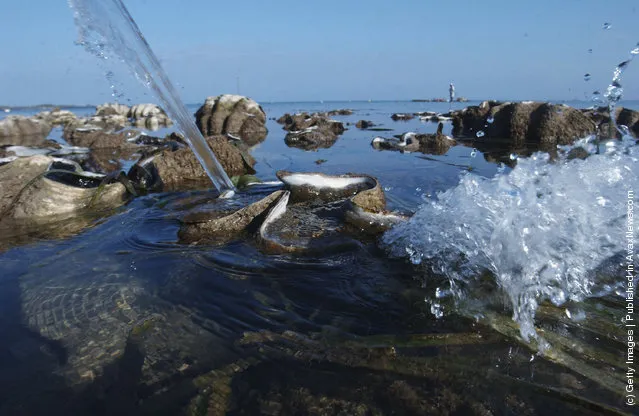
“The giant clam, Tridacna gigas (known as pā’ua in Cook Islands Māori), is the largest living bivalve mollusc. T. gigas is one of the most endangered clam species. It was mentioned as early as 1825 in scientific reports. One of a number of large clam species native to the shallow coral reefs of the South Pacific and Indian oceans, they can weigh more than 200 kilograms (440 lb) measure as much as 120 cm (47 in) across, and have an average lifespan in the wild of 100 years or more”. – Wikipedia

Photo: Tridacna Gigas, or Giant Clams spew water as a traditional fisherman passes by a small sanctuary on January 23, 2004 near Bolinao in the Northern Philippines. The clams, prime builders for coral reefs and providing shelter for spawning fish and other marine life, are exposed by low tides in the sanctuary. Overfishing and pollution throughout the country are not only threatening food security, but are also starting to choke one of the few working clam sanctuaries in the world. (Photo by David Greedy/Getty Images)
Details
01 Oct 2011 13:10:00
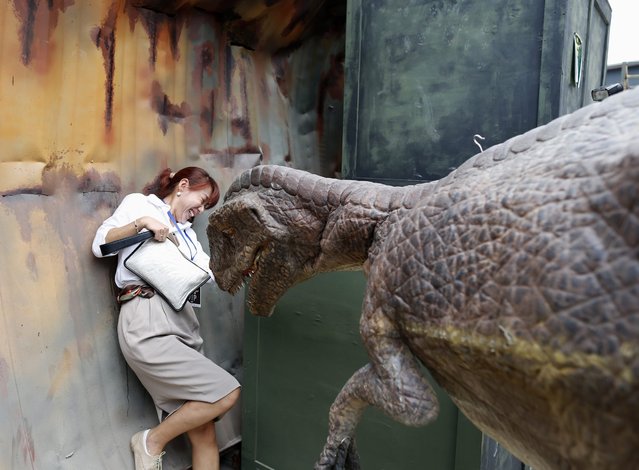
A Thai visitor appears to be frightened by a life-size Velociraptor model also known as Raptor at the Dinosaur Planet theme park in Bangkok, Thailand, 25 March 2016. The 500 million baht (14 million US dollars or 12 million euro) theme park opening in the Thai capital aimed to attract more than 15,000 visitors a day featuring a chance to experience more than 200 dinosaurs from various species that are brought back to life. (Photo by Rungroj Yongrit/EPA)

A Thai visitor appears to be frightened by a life-size Velociraptor model also known as Raptor at the Dinosaur Planet theme park in Bangkok, Thailand, 25 March 2016. The 500 million baht (14 million US dollars or 12 million euro) theme park opening in the Thai capital aimed to attract more than 15,000 visitors a day featuring a chance to experience more than 200 dinosaurs from various species that are brought back to life. (Photo by Rungroj Yongrit/EPA)
Details
26 Mar 2016 13:33:00
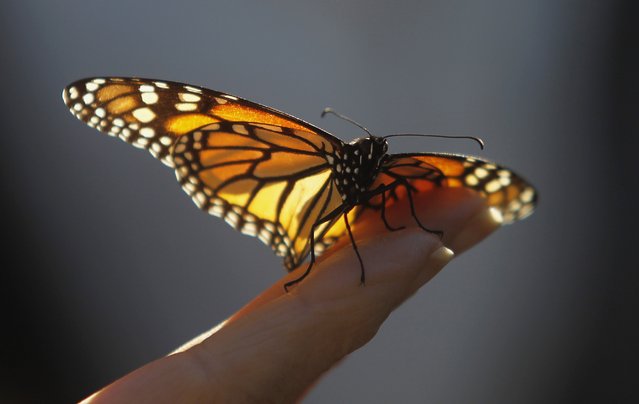
A monarch butterfly rests on a visitor's hand at the Monarch Grove Sanctuary in Pacific Grove, California December 30, 2014. Monarch butterflies may warrant U.S. Endangered Species Act protection because of farm-related habitat loss blamed for sharp declines in cross-country migrations of the orange-and-black insects, the U.S. Fish and Wildlife Service said. (Photo by Michael Fiala/Reuters)

A monarch butterfly rests on a visitor's hand at the Monarch Grove Sanctuary in Pacific Grove, California December 30, 2014. Monarch butterflies may warrant U.S. Endangered Species Act protection because of farm-related habitat loss blamed for sharp declines in cross-country migrations of the orange-and-black insects, the U.S. Fish and Wildlife Service said. (Photo by Michael Fiala/Reuters)
Details
01 Jan 2015 14:08:00
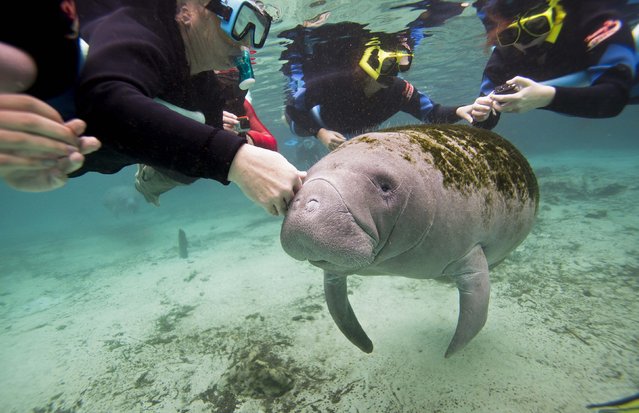
Snorkelers interact with a Florida Manatee inside of the Three Sisters Springs in Crystal River, Florida January 15, 2015. On winter days, Florida manatees flock by the hundreds to the balmy waters of Three Sisters Springs, drawing crowds of snorkelers and kayakers to the U.S. sanctuary, where people may swim with the endangered species. (Photo by Scott Audette/Reuters)

Snorkelers interact with a Florida Manatee inside of the Three Sisters Springs in Crystal River, Florida January 15, 2015. On winter days, Florida manatees flock by the hundreds to the balmy waters of Three Sisters Springs, drawing crowds of snorkelers and kayakers to the U.S. sanctuary, where people may swim with the endangered species. But as tolerant as the gentle, whiskered sea giants can be of the accidental kicks and splashes of delighted tourists, wild life regulators want to ban most canoes and paddle boards and create people-free zones to protect the wintering “sea cow”. Proposed limitations for this winter are awaiting approval by the U.S. Fish and Wildlife Service. (Photo by Scott Audette/Reuters)
Details
22 Jan 2015 13:34:00
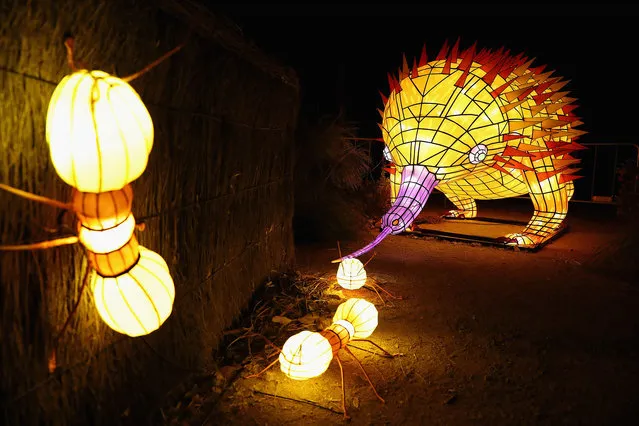
An echidna light sculpture eating ants is displayed during a media preview of Vivid Sydney illuminated displays at Taronga Zoo on May 24, 2016 in Sydney, Australia. Vivid is lighting up at Taronga Zoo for the first time with ten giant animal sculptures representing critical species the zoo is committed to protecting. Held annually, Vivid Sydney is the world's largest festival of light, music and ideas running for 23 days. (Photo by Cameron Spencer/Getty Images)

An echidna light sculpture eating ants is displayed during a media preview of Vivid Sydney illuminated displays at Taronga Zoo on May 24, 2016 in Sydney, Australia. Vivid is lighting up at Taronga Zoo for the first time with ten giant animal sculptures representing critical species the zoo is committed to protecting. Held annually, Vivid Sydney is the world's largest festival of light, music and ideas running for 23 days. (Photo by Cameron Spencer/Getty Images)
Details
25 May 2016 13:23:00
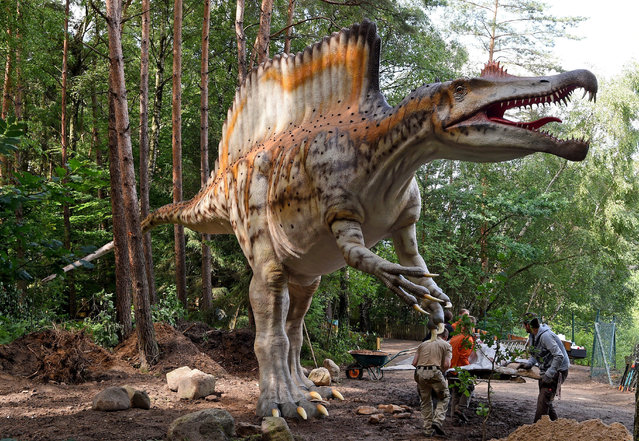
A picture made available in 01 July 2016 shows a 16-meter-long and 6.5-meter-high model of a Spinosaurus installed by employees of the dinosaur park in Muenchenhagen in the region of Hannover, Germany, 28 June 2016. The model is considered the only replica of this dinosaur species worldwide. The outdoor museum at Lake Steinhude shows more than 230 true-to-scale replica of dinosaurs. (Photo by Holger Hollemann/EPA)

A picture made available in 01 July 2016 shows a 16-meter-long and 6.5-meter-high model of a Spinosaurus installed by employees of the dinosaur park in Muenchenhagen in the region of Hannover, Germany, 28 June 2016. The model is considered the only replica of this dinosaur species worldwide. The outdoor museum at Lake Steinhude shows more than 230 true-to-scale replica of dinosaurs. (Photo by Holger Hollemann/EPA)
Details
02 Jul 2016 13:28:00
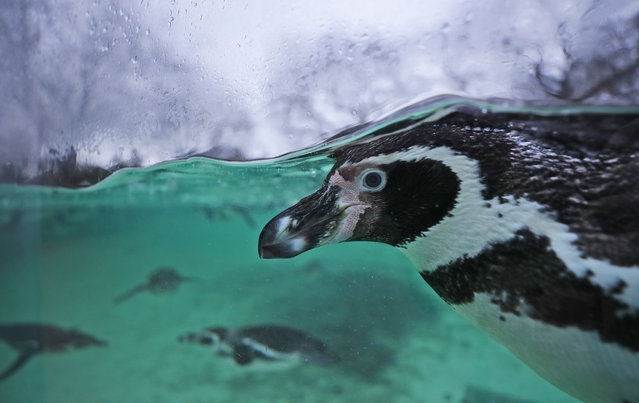
A Humboldt penguin swims in a pool during the annual stock take at ZSL London Zoo in London, Thursday, January 2, 2020. Caring for more than 500 different species, ZSL London Zoo's keepers face the challenging task of tallying up every animal large and small, every mammal, bird, reptile, fish and invertebrate at the Zoo. (Photo by Frank Augstein/AP Photo)

A Humboldt penguin swims in a pool during the annual stock take at ZSL London Zoo in London, Thursday, January 2, 2020. Caring for more than 500 different species, ZSL London Zoo's keepers face the challenging task of tallying up every animal large and small, every mammal, bird, reptile, fish and invertebrate at the Zoo. (Photo by Frank Augstein/AP Photo)
Details
05 Jan 2020 00:03:00
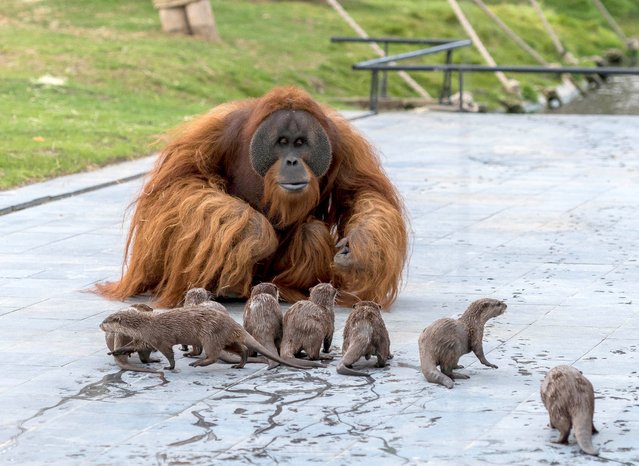
The three orangutans at Pairi Daiza zoo, Belgium, developed a “special bond” with the otters after their river was run through the ape enclosure on March 2020. The zoo said it enriched both species’ environments. An animal – and this is even more the case of orangutans, with whom humans share 97 per cent of their DNA – must be entertained, occupied, challenged and kept busy mentally, emotionally and physically at all times. (Photo by Pascale Jones/The Sun)

The three orangutans at Pairi Daiza zoo, Belgium, developed a “special bond” with the otters after their river was run through the ape enclosure on March 2020. The zoo said it enriched both species’ environments. An animal – and this is even more the case of orangutans, with whom humans share 97 per cent of their DNA – must be entertained, occupied, challenged and kept busy mentally, emotionally and physically at all times. (Photo by Pascale Jones/The Sun)
Details
05 Apr 2020 00:01:00