Loading...
Done
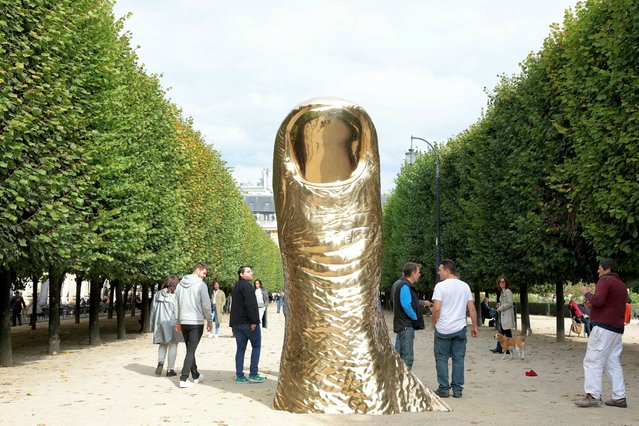
This photograph shows the installation of French artist Cesar Baldaccini, titled “Cesar's Pouce”, at Palais-Royal Garden public park, in Paris, on October 15, 2024, as part of the Art Basel Paris 2024’s Public Program. (Photo by Thomas Samson/AFP Photo)

This photograph shows the installation of French artist Cesar Baldaccini, titled “Cesar's Pouce”, at Palais-Royal Garden public park, in Paris, on October 15, 2024, as part of the Art Basel Paris 2024’s Public Program. (Photo by Thomas Samson/AFP Photo)
Details
26 Oct 2024 02:58:00
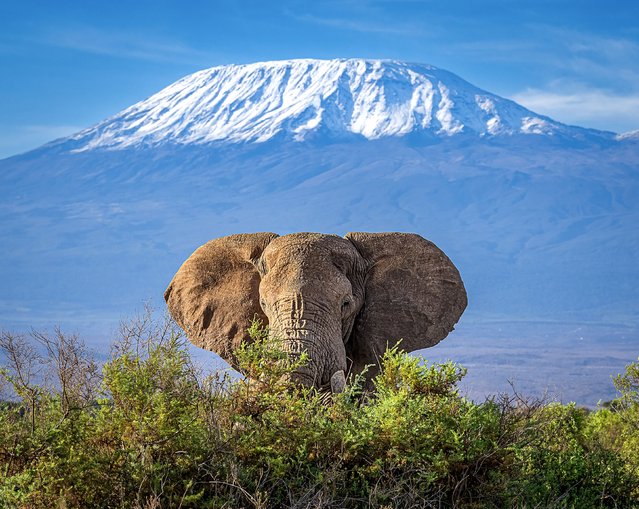
Mount Kilimanjaro looms behind an elephant at Amboseli National Park in southern Kenya, 2024. (Photo byYaron Schmid/YS Wildlife Photography/Solent News)

Mount Kilimanjaro looms behind an elephant at Amboseli National Park in southern Kenya, 2024. (Photo byYaron Schmid/YS Wildlife Photography/Solent News)
Details
03 Feb 2025 03:08:00
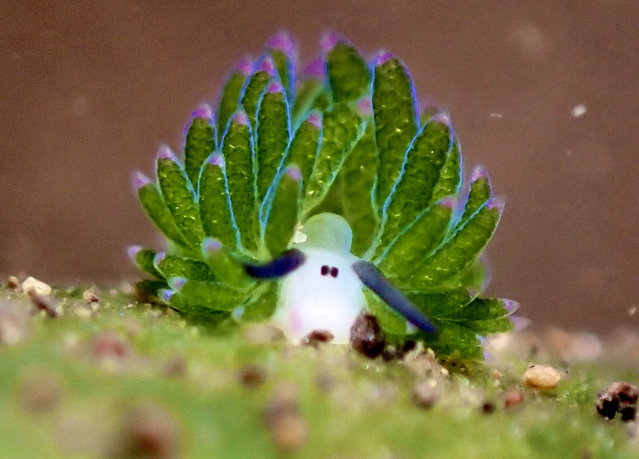
Keen diver Yusuke Fukami fulfilled a personal dream by snapping a cartoon-like Costasiella sea slug while in Bali in the last decade of December 2024. (Photo by Yusuke Fukami/South West News Service)

Keen diver Yusuke Fukami fulfilled a personal dream by snapping a cartoon-like Costasiella sea slug while in Bali in the last decade of December 2024. (Photo by Yusuke Fukami/South West News Service)
Details
01 Jun 2025 03:10:00
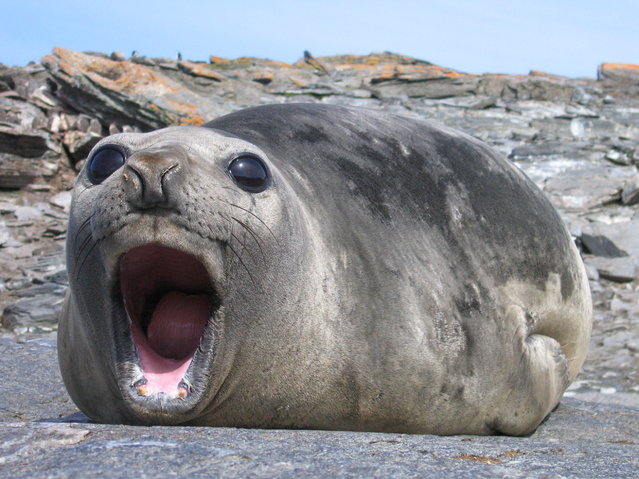
Weddell seal numbers in 2025 have declined sharply on Signy Island, part of the South Orkney Islands in the Southern Ocean, where British Antarctic Survey researchers have tracked seal populations for nearly 50 years to understand the impact of melting sea ice. (Photo by Michael Dunn/The Times)

Weddell seal numbers in 2025 have declined sharply on Signy Island, part of the South Orkney Islands in the Southern Ocean, where British Antarctic Survey researchers have tracked seal populations for nearly 50 years to understand the impact of melting sea ice. (Photo by Michael Dunn/The Times)
Details
06 Jul 2025 03:34:00
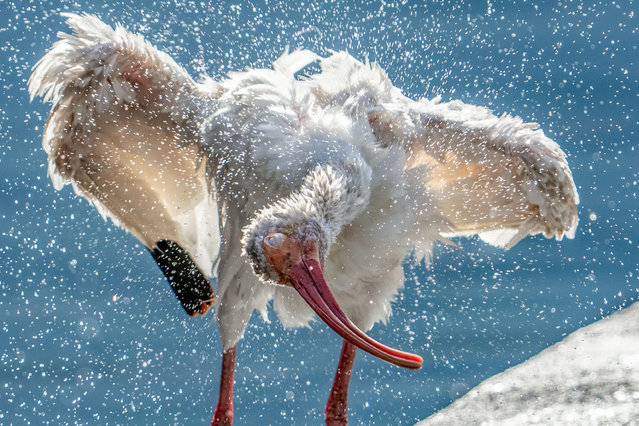
A white ibis takes a shower at Lake Eola in Orlando, Florida, US on September 29, 2025. (Photo byRonen Tivony/NurPhoto/Rex Features/Shutterstock)

A white ibis takes a shower at Lake Eola in Orlando, Florida, US on September 29, 2025. (Photo byRonen Tivony/NurPhoto/Rex Features/Shutterstock)
Details
12 Oct 2025 04:36:00
File photo taken on July 24, 2011 shows the scenery of karst landform in Dacai Township under Maonan Autonomous County of Huaijiang, south China's Guangxi Zhuang Autonomous Region. The World Heritage Committee on Monday inscribed an extension of South China Karst, a natural World Heritage Site since 2007, into the UNESCO's World Heritage List. (Photo by Wang Xiufa/Xinhua)

File photo taken on July 24, 2011 shows the scenery of karst landform in Dacai Township under Maonan Autonomous County of Huaijiang, south China's Guangxi Zhuang Autonomous Region. The World Heritage Committee on Monday inscribed an extension of South China Karst, a natural World Heritage Site since 2007, into the UNESCO's World Heritage List. (Photo by Wang Xiufa/Xinhua)
Details
07 Aug 2014 10:19:00
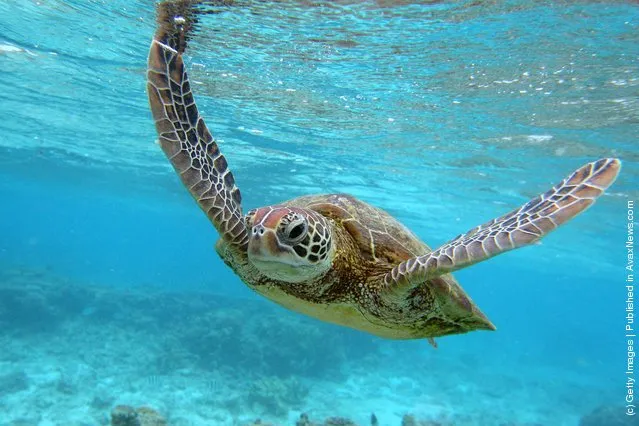
A Hawksbill sea turtle is seen swimming in Lady Elliot Island, Australia

“The Great Barrier Reef is one of the most important sea turtle habitats in the world, with Lady Elliot Island being a key part of that habitat. Every year between November and March the green and loggerhead turtles lumber up the same beach on which they were born more than 50 years ago. These turtles nest on Lady Elliot Island up to nine times in a season, laying between 80 and 120 eggs per clutch. About eight weeks later, young hatchlings leave their nests and head towards the ocean (January to April)”. – Wikipedia

Photo: A Hawksbill sea turtle is seen swimming on January 15, 2012 in Lady Elliot Island, Australia. (Photo by Mark Kolbe/Getty Images)
Details
02 Feb 2012 11:28:00
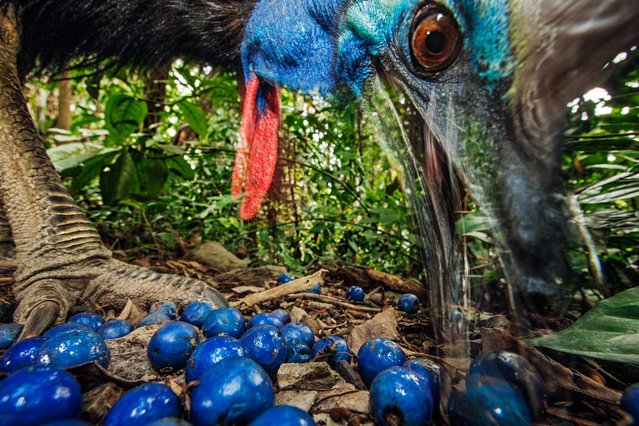
“Cassowaries are large, flightless birds related to emus and (more distantly) to ostriches, rheas, and kiwis”, writes Olivia Judson in the September issue of National Geographic magazine. (Photo by Christian Ziegler/National Geographic)

“Cassowaries are large, flightless birds related to emus and (more distantly) to ostriches, rheas, and kiwis”, writes Olivia Judson in the September issue of National Geographic magazine. How large? People-size: Adult males stand well over five foot five and top 110 pounds. Females are even taller, and can weigh more than 160 pounds. Dangerous when roused, they’re shy and peaceable when left alone. But even birds this big and tough are prey to habitat loss. The dense New Guinea and Australia rain forests where they live have dwindled. Today cassowaries might number 1,500 to 2,000. And because they help shape those same forests – by moving seeds from one place to another – “if they vanish”, Judson writes, “the structure of the forest would gradually change” too. (Photo by Christian Ziegler/National Geographic)

Details
06 Jan 2014 12:21:00