Loading...
Done
Boats of fishermen are seen on the dried Poopo lakebed in the Oruro Department, south of La Paz, Bolivia, December 17, 2015. (Photo by David Mercado/Reuters)

Boats of fishermen are seen on the dried Poopo lakebed in the Oruro Department, south of La Paz, Bolivia, December 17, 2015. Lake Poopo in Bolivia, the Andean nation's formerly second largest after the famed Titicaca, has dried up entirely. With the water now gone, animals have died off in the millions, according to studies. And the local families, having lost much of their sustenance, have been forced to migrate. (Photo by David Mercado/Reuters)
Details
20 Dec 2015 08:04:00
His goal with the project is to make the invisible visible. (Photo by Luis Hernan)

Luis Hernan was always curious about how wireless technologies like radio are transmitted through the air. So after finishing up his studies in architecture, computer science, and design, Hernan decided to research these invisible signals through a PhD at Newcastle University. Hernan set up a system that turned the wireless signals around him into colourful, ghostlike images using long-exposure photography, allowing people to see the strength of the signals around them. (Photo by Luis Hernan)
Details
13 Aug 2014 09:38:00
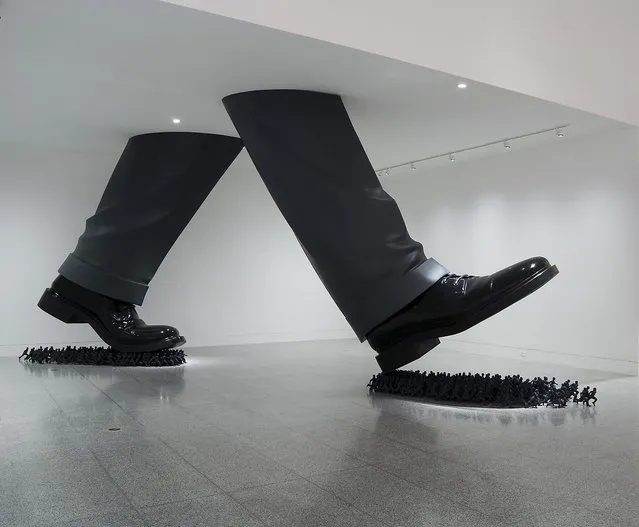
Amazing Sculptures by Korean Artist Do-Ho Suh

Suh was born in Seoul, South Korea in 1962. After earning his Bachelor of Fine Arts and Master of Fine Arts in Oriental Painting from Seoul National University, and fulfilling his term of mandatory service in the South Korean military, Suh relocated to the United States to continue his studies at the Rhode Island School of Design and Yale University.


Details
07 Mar 2013 11:35:00
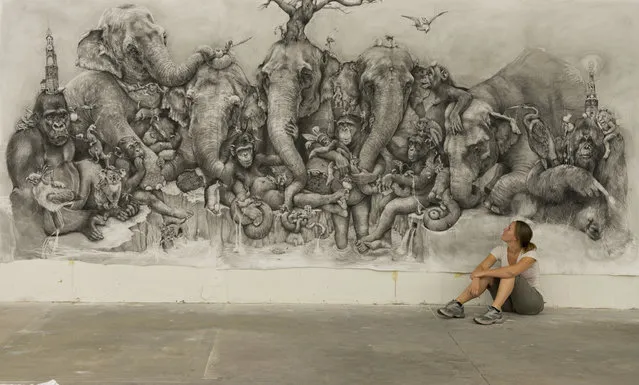
Adonna Khare and her Pencil

Originally hailing from a small town in Iowa, Adonna Khare was this year’s recipient of the Art Prize 2012 for her amazingly detailed large-scale pencil on paper works. All of Khare’s work evolve naturally without much pre-planning, essentially building her pieces as she continues to work.
Details
29 May 2015 15:02:00
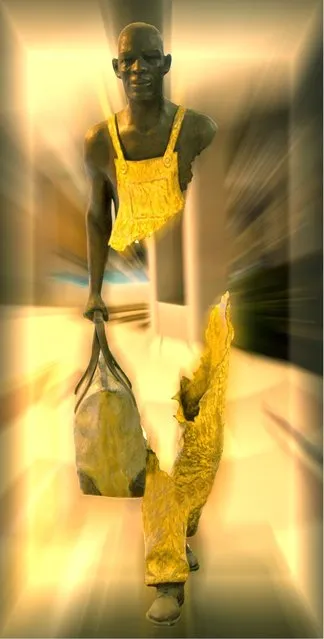
Sculptures by Bruno Catalano

French sculptor Bruno Catalano works in bronze sculpture, with a reoccuring motif. His figures are always lacking mid sections, and seem to be eerily suspended in mid air. Each of his sculptures feature somebody with a suitcase in hand, usually with an introspective or uncertain expression. The lack of midsection represents Bruno Catalano's invitation to viewers of his works to simply fill in the blanks. Lovely use of negative space and a masterful use of bronze working. Check out more of his unique works after the break!
Details
20 Jul 2012 14:48:00
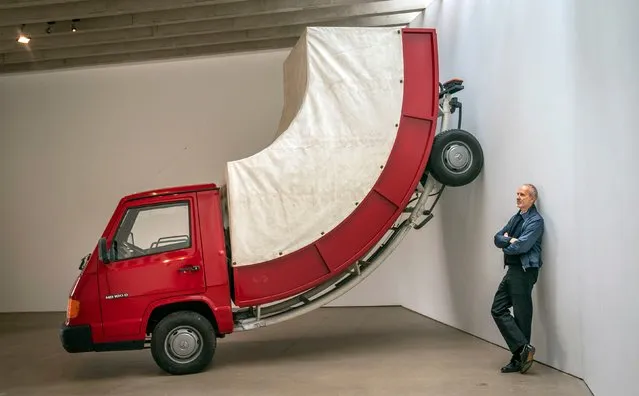
Austrian artist Erwin Wurm on Thursday, June 8, 2023 with his work Truck II, 2011, as he presents first UK museum exhibition and his largest show to date featuring over 100 works indoors and in the landscape at Yorkshire Sculpture Park, Wakefield. (Photo by Danny Lawson/PA Images via Getty Images)

Austrian artist Erwin Wurm on Thursday, June 8, 2023 with his work Truck II, 2011, as he presents first UK museum exhibition and his largest show to date featuring over 100 works indoors and in the landscape at Yorkshire Sculpture Park, Wakefield. (Photo by Danny Lawson/PA Images via Getty Images)
Details
12 Jul 2023 03:15:00
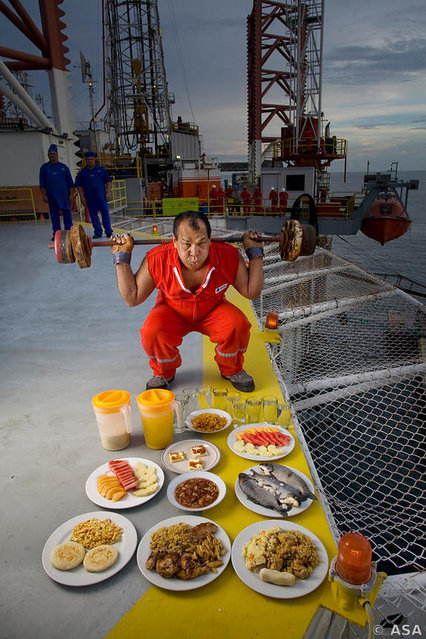
What the World Eats By Peter Menzel And Faith D'Aluisio Part 1

A stunning photographic collection featuring portraits of people from 30 countries and the food they eat in one day. In this fascinating study of people and their diets, 80 profiles are organized by the total number of calories each person puts away in a day. Featuring a Japanese sumo wrestler, a Massai herdswoman, world-renowned Spanish chef Ferran Adria, an American competitive eater, and more, these compulsively readable personal stories also include demographic particulars, including age, activity level, height, and weight. Essays from Harvard primatologist Richard Wrangham, journalist Michael Pollan, and others discuss the implications of our modern diets for our health and for the planet. This compelling blend of photography and investigative reportage expands our understanding of the complex relationships among individuals, culture, and food.
Details
23 Apr 2014 14:34:00
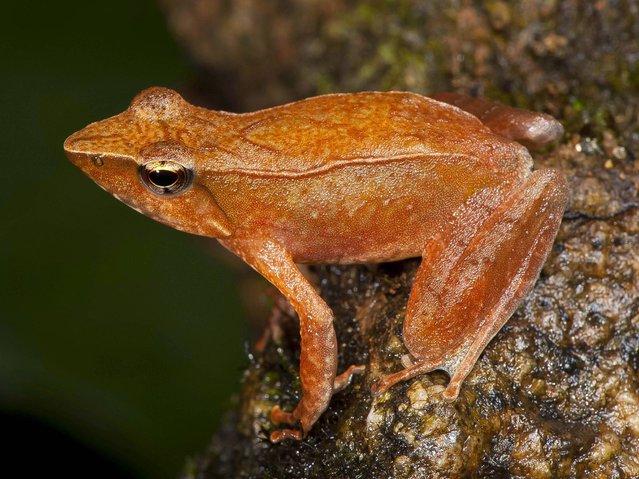
Orange dancing frog discovered by a team headed by University of Delhi professor Sathyabhama Das Biju in the jungle mountains of southern India. (Photo by Satyabhama Das Biju/AP Photo)

This undated photograph shows one of the 14 new species of so-called dancing frogs discovered by a team headed by University of Delhi professor Sathyabhama Das Biju in the jungle mountains of southern India. The study listing the new species brings the number of known Indian dancing frogs to 24 and attempts the first near-complete taxonomic sampling of the single-genus family found exclusively in southern India's lush mountain range called the Western Ghats, which stretches 1,600 kilometers (990 miles) from the west state of Maharashtra down to the country's southern tip. (Photo by Satyabhama Das Biju/AP Photo)
Details
09 May 2014 08:50:00