Loading...
Done
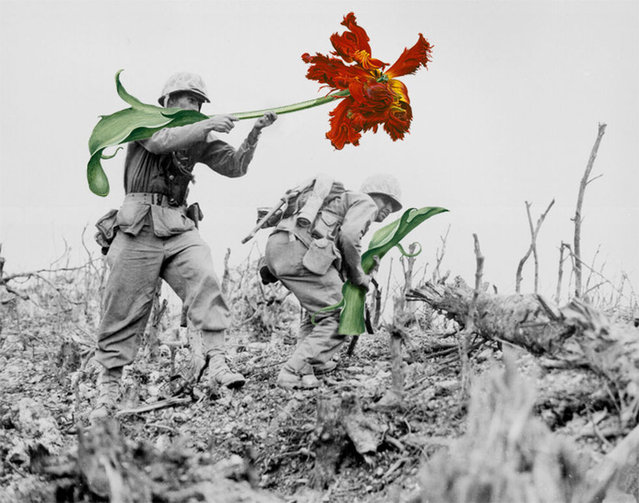
Flowers Of War By Mister Blick

It would have been so much better if the pictures created by Mister Blick were real. How wonderful it would be if these men were actually holding flowers, and none of these wars happened. Regretfully, all these wars have left their mark on the history of mankind. Wars are always bad. They bring nothing but destruction and terror to the regular people, while the big players make huge profits off of the suffering of the common folk. However, establishing dominance is an integral part of the human nature, and the desire to wage wars is simply an extension of this trait. Strong countries always suppress the weaker ones to gain even more power. Unfortunately, this is as inevitable as the sunrise or sunset. (Photo by Mister Blick)
Details
23 Nov 2014 11:58:00
Club-goers dance at “Morning Gloryville” at the Ministry of Sound in south London August 11, 2015. (Photo by Toby Melville/Reuters)

Club-goers dance at “Morning Gloryville” at the Ministry of Sound in south London August 11, 2015. Morning dance parties with names like “Morning Gloryville” and "Daybreaker" are gathering steam in cities across the world, giving rise to a movement known as “conscious clubbing”. Its founders aim to create the energy and community of electronic dance parties with fruit smoothies and coffee instead of the drugs and alcohol more common after nightfall. (Photo by Toby Melville/Reuters)
Details
18 Aug 2015 14:06:00
A sales assistant poses for photographs with a mealworm cookie in Seoul, South Korea, August 8, 2016. (Photo by Kim Hong-Ji/Reuters)

A sales assistant poses for photographs with a mealworm cookie in Seoul, South Korea, August 8, 2016. Insect-eating, or entomophagy, has long been common in much of the world, including South Korea, where boiled silky worm pupae, or beondegi, are a popular snack. Now, South Korea is looking to expand its insect industry as a source of agricultural income. (Photo by Kim Hong-Ji/Reuters)
Details
13 Aug 2016 11:06:00
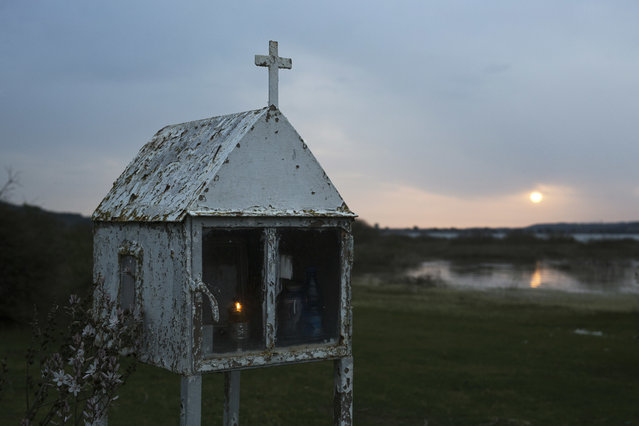
In this photo taken on Saturday, April 29, 2017, a candle is lit in a roadside shrine as the sun sets across a nearby lake of Pineia in the village of Souli, in the Peloponnese region of southern Greece. (Photo by Petros Giannakouris/AP Photo)

In this photo taken on Saturday, April 29, 2017, a candle is lit in a roadside shrine as the sun sets across a nearby lake of Pineia in the village of Souli, in the Peloponnese region of southern Greece. Made of iron sheeting, stone, wood, concrete or marble, tens of thousands of such shrines punctuate Greece’s roadside scenery, a common sight in a country that has one of the European Union’s worst road fatality rates. (Photo by Petros Giannakouris/AP Photo)
Details
13 May 2017 09:19:00
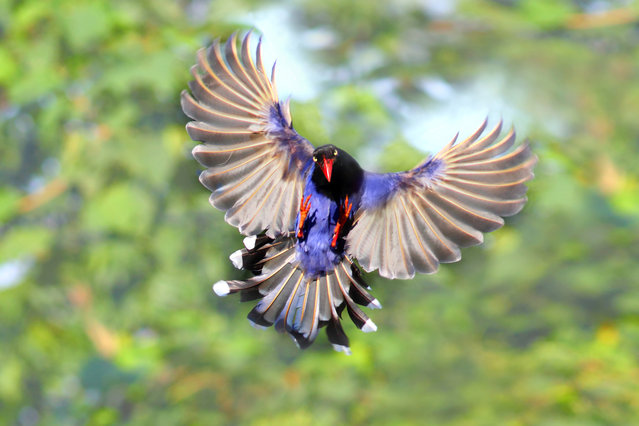
Taiwan Blue Magpie

The Taiwan Blue Magpie (Urocissa caerulea), also called the Taiwan Magpie or Formosan Blue Magpie, is a member of the Crow family. It is an endemic species living in the mountains of Taiwan at elevations of 300 to 1200m.
Details
19 Jun 2013 10:08:00
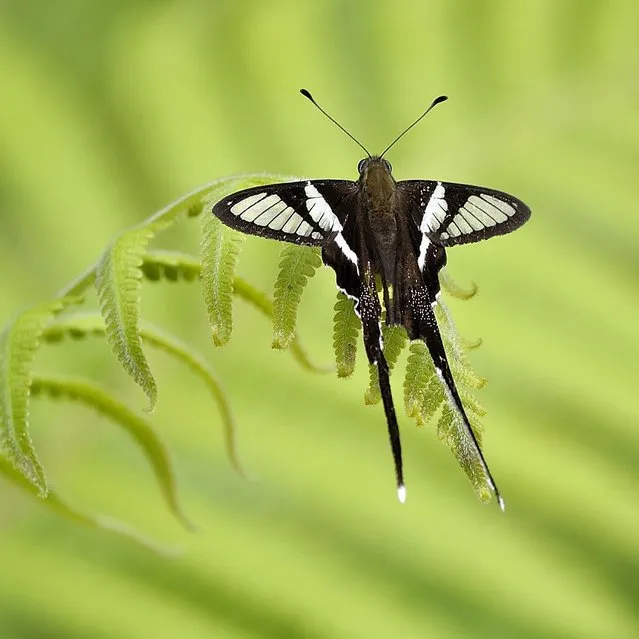
The White Dragontail (Lamproptera curius)

“The White Dragontail, Lamproptera curius, is a species of swallowtail native to parts of South Asia and Southeast Asia. It belongs to the Dragontails genus, Lamproptera, of the Swallowtail (Papilionidae) family”. – Wikipedia. (Photo by Boti)
Details
02 Jul 2012 08:39:00
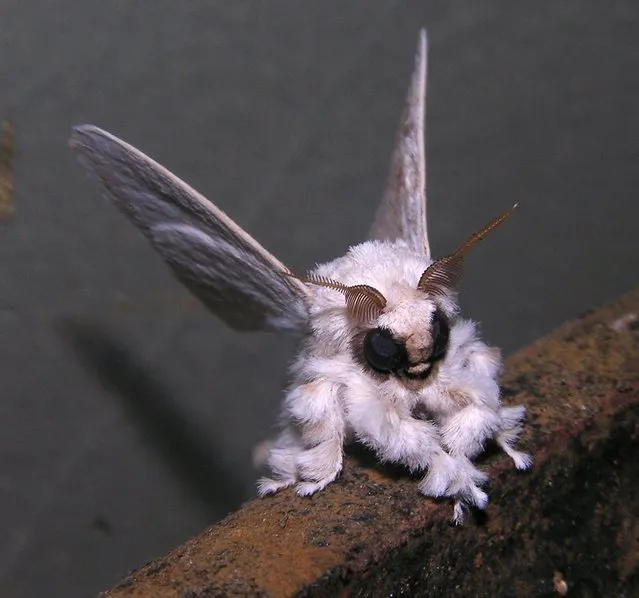
Venezuelan Poodle Moth

The Venezuelan Poodle Moth is a possible new species of moth discovered in 2009 by Dr. Arthur Anker of Bishkek, Kyrgyzstan, in the Gran Sabana region of Venezuela. It bears similarities to the Diaphora mendica, the Muslin Moth, but most likely belongs to the lepidopteran family Artace.
Details
13 Jan 2013 12:48:00


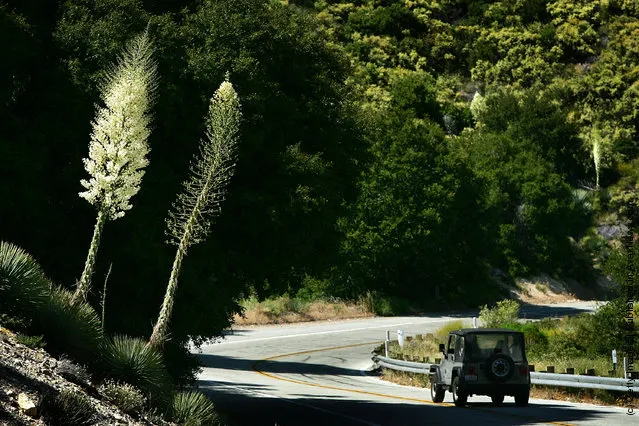
“Yucca is a genus of perennial shrubs and trees in the agave family, Agavaceae. Its 40-50 species are notable for their rosettes of evergreen, tough, sword-shaped leaves and large terminal panicles of white or whitish flowers. They are native to the hot and dry (arid) parts of North America, Central America, South America, and the Caribbean. Early reports of the species were confused with the cassava (Manihot esculenta). Consequently, Linnaeus mistakenly derived the generic name from the Carib word for the latter, yuca. It is also colloquially known in the midwest United States as “Ghosts in the graveyard”, as it is commonly found growing in rural graveyards and when in bloom the flowers appear as an apparition floating.” – Wikipedia

Photo: A yucca standing among flowers bursts forth a very large stalk of flowers as a heavy wildflower bloom on June 21, 2005 in the Angeles National Forest northwest of La Canada, California. (Photo by David McNew/Getty Images)
Details
29 Mar 2011 07:31:00