Loading...
Done
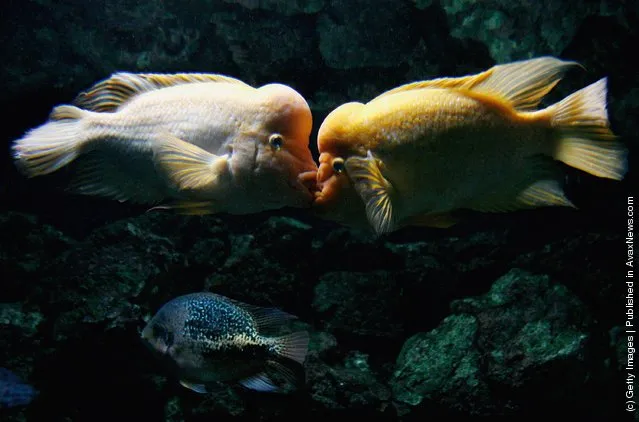
Midas Cichlid a.k.a. Amphilophus Citrinellus

“Amphilophus citrinellus is a large cichlid fish endemic to the San Juan River and adjacent watersheds in Costa Rica and Nicaragua. In the aquarium trade A. citrinellus is often sold under the trade name of Midas cichlid. A. citrinellus are omnivorous and their diet consists of plant material, molluscs and smaller fish”. – Wikipedia

Photo: Two Midas Cichlid (lat: amphilophus citrinellus) fish are seen in an aquarium at Hellabrunn zoo on December 23, 2009 in Munich, Germany. (Photo by Alexandra Beier/Getty Images)
Details
17 Aug 2011 11:29:00
An installation with a copy of a tank is seen at a villager's house in the village of Vits, Belarus November 8, 2016. (Photo by Vasily Fedosenko/Reuters)

An installation with a copy of a tank is seen at a villager's house in the village of Vits, Belarus November 8, 2016. (Photo by Vasily Fedosenko/Reuters)
Details
09 Nov 2016 06:32:00
Villagers take part in a ritual celebrating the pagan god Yurya and pray for plentiful future harvests in the village of Pogost, Belarus May 6, 2016. (Photo by Vasily Fedosenko/Reuters)

Villagers take part in a ritual celebrating the pagan god Yurya and pray for plentiful future harvests in the village of Pogost, Belarus May 6, 2016. (Photo by Vasily Fedosenko/Reuters)
Details
08 May 2016 10:41:00
A goose walks on the road as Belarusian villagers take part in the Yurya religious rite to bring a good harvest in the village of Lutki, some 270 km south of Minsk, on May 6, 2019. (Photo by Sergei Gapon/AFP Photo)

A goose walks on the road as Belarusian villagers take part in the Yurya religious rite to bring a good harvest in the village of Lutki, some 270 km south of Minsk, on May 6, 2019. (Photo by Sergei Gapon/AFP Photo)
Details
02 Jan 2020 00:01:00
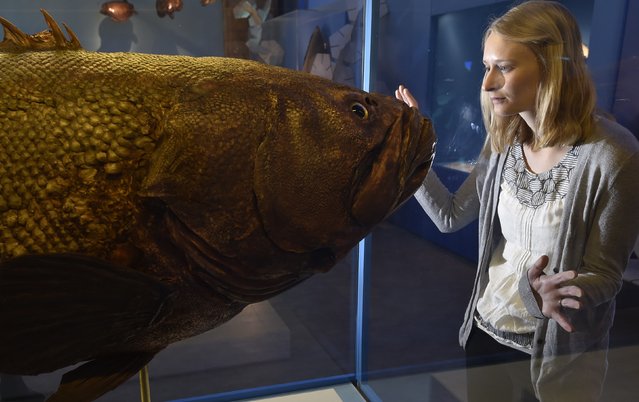
Museum employee Victoria views a giant grouper fish specimen at the Natural History Museum in west London March 25, 2015. (Photo by Toby Melville/Reuters)

Museum employee Victoria views a giant grouper fish specimen at the Natural History Museum in west London March 25, 2015. It forms part of a new exhibition, “Coral Reefs: Secret Cities of the Sea”, featuring a panoramic virtual dive and over 250 specimens from the Museum's coral, fish and marine invertebrate collection, which opens on March 27. (Photo by Toby Melville/Reuters)
Details
26 Mar 2015 11:38:00
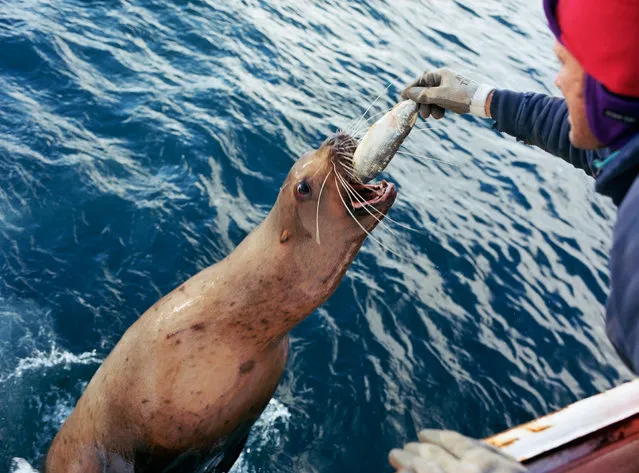
Before heading up to Alaska, the ship loads up with 3 months worth of food. Even so, it's hardly necessary. The ship's cook is constantly steaming fresh crab legs and seafood caught during the day. The hard labour of fishing requires a diet heavy in fat, protein, and omega-3s. Here, a sea lion gets a bite of the grub. (Photo by Corey Arnold)

In 2002 photographer Corey Arnold left behind a poor economy in San Francisco and headed up to Alaska to try his luck at his longtime passion of fishing. Arnold, who had worked summers during college on a salmon boat in Alaska, signed onto the f/v Rollo, a crabbing boat that fishes in the dangerous Bering Sea. While working long, strenuous hours on the Rollo, Arnold often stole away with the captain’s permission to grab his camera and photograph the crew and the ship. Arnold eventually put together “Fish Work: Bering Sea”, a documentation of his seven adventurous and dicey crab seasons aboard the Rollo. (Photo by Corey Arnold)
Details
20 Aug 2014 10:05:00
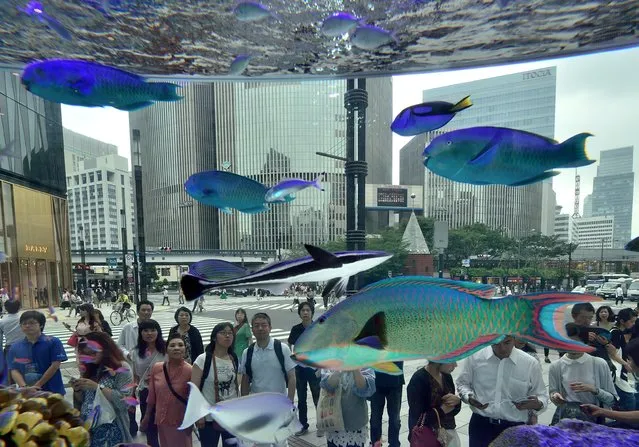
Visitors look at tropical fish transported from Japan's southern island of Okinawa displayed in a giant 14-ton fish tank at the Sony Square event space in Tokyo on July 17, 2016. The 45-day-long summer exhibition will be held through August 28 to display sea creatures common to the waters around Okinawa. (Photo by Kazuhiro Nogi/AFP Photo)

Visitors look at tropical fish transported from Japan's southern island of Okinawa displayed in a giant 14-ton fish tank at the Sony Square event space in Tokyo on July 17, 2016. The 45-day-long summer exhibition will be held through August 28 to display sea creatures common to the waters around Okinawa. (Photo by Kazuhiro Nogi/AFP Photo)
Details
18 Jul 2016 13:05:00
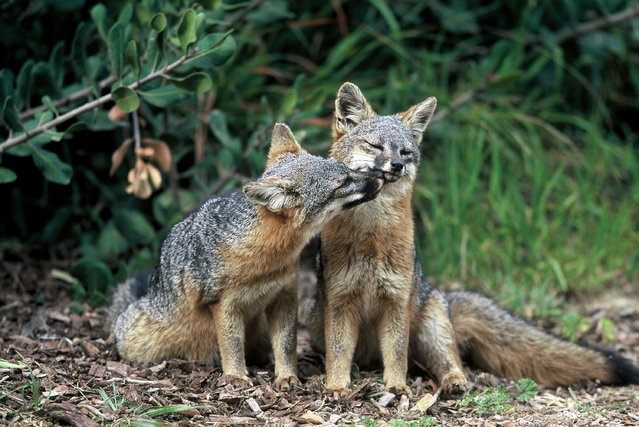
This undated photo provided by the U.S. Fish and Wildlife Service shows two island foxes in Channel Islands National Park, Calif. Three fox subspecies native to California's Channel Islands were removed from the list of endangered species Thursday, August 11, 2016, in what federal officials have called the fastest recovery of any mammal listed under the Endangered Species Act. (Photo by Chuck Graham/U.S. Fish and Wildlife Service via AP Photo)

This undated photo provided by the U.S. Fish and Wildlife Service shows two island foxes in Channel Islands National Park, Calif. Three fox subspecies native to California's Channel Islands were removed from the list of endangered species Thursday, August 11, 2016, in what federal officials have called the fastest recovery of any mammal listed under the Endangered Species Act. (Photo by Chuck Graham/U.S. Fish and Wildlife Service via AP Photo)
Details
12 Aug 2016 12:04:00