Loading...
Done
A Model styled by a participant waits to be judged by the jury during the contest “Day style” of the OMC Hairworld World Cup on May 4, 2014 in Frankfurt am Main, Germany. (Photo by Thomas Lohnes/Getty Images)

A Model styled by a participant waits to be judged by the jury during the contest “Day style” of the OMC Hairworld World Cup on May 4, 2014 in Frankfurt am Main, Germany. (Photo by Thomas Lohnes/Getty Images)
Details
06 May 2014 09:19:00
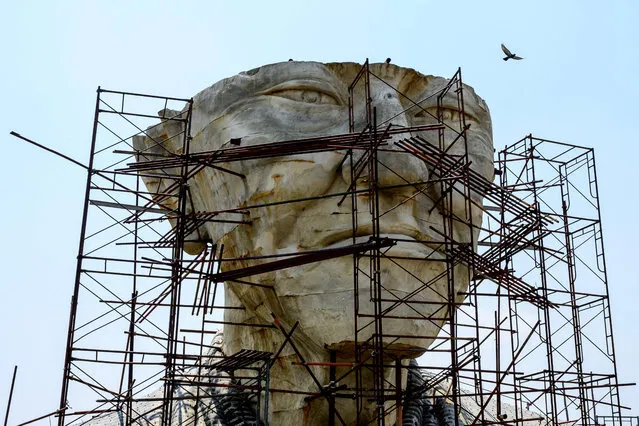
A bird flies over the abandoned giant sculpture of a Buddhist monk in Cha-am outside Hua Hin, 145km south of Bangkok, on February 25, 2021. (Photo by Mladen Antonov/AFP Photo)

A bird flies over the abandoned giant sculpture of a Buddhist monk in Cha-am outside Hua Hin, 145km south of Bangkok, on February 25, 2021. (Photo by Mladen Antonov/AFP Photo)
Details
09 Mar 2021 11:51:00
Autumn colors border a road leading through a small valley near Blankenburg am Harz, Germany, Wednesday, November 1, 2023. (Photo by Matthias Schrader/AP Photo)

Autumn colors border a road leading through a small valley near Blankenburg am Harz, Germany, Wednesday, November 1, 2023. (Photo by Matthias Schrader/AP Photo)
Details
24 Nov 2023 02:39:00
Two models sit in an acrylic “ZF-Car” from the German manufacturer of the same name at the Automechanika automotive service industry trade fair in Frankfurt am Main, Germany, 12 September 2016. The Automechanika Fair runs from 13 to 17 September 2016. (Photo by Boris Rössler/EPA)

Two models sit in an acrylic “ZF-Car” from the German manufacturer of the same name at the Automechanika automotive service industry trade fair in Frankfurt am Main, Germany, 12 September 2016. The Automechanika Fair runs from 13 to 17 September 2016. (Photo by Boris Rössler/EPA)
Details
13 Sep 2016 10:17:00
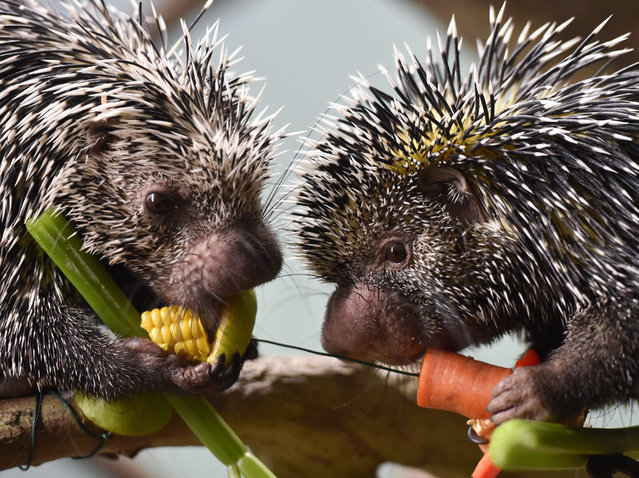
The coendou porcupine couple 'Joppi' (L) and 'Fletcher' nibble at a vegetables in their enclosure at the zoo in Frankfurt am Main, Germany, 03 December 2015. Coendou porcupines are nocturnal rodents related to porcupines and guinea pigs and native to the rain forests of Central and South America as well as Trinidad. (Photo by Arne Dedert/EPA)

The coendou porcupine couple 'Joppi' (L) and 'Fletcher' nibble at a vegetables in their enclosure at the zoo in Frankfurt am Main, Germany, 03 December 2015. Coendou porcupines are nocturnal rodents related to porcupines and guinea pigs and native to the rain forests of Central and South America as well as Trinidad. (Photo by Arne Dedert/EPA)
Details
05 Dec 2015 08:03:00
World Bodypainting Festival 2014. Photographed July 4th in Poertschach am Woerthersee, Austria July 4, 2014. (Photo by Jan Hetfleisch/Getty Images)

The World Bodypainting Festival held from July 4 to 6 at Lake Worthersee in Austria's southern Carinthia province included artists from around the world, drawing visitors to the “Mecca of Bodypainting”, according to the World Bodypainting Association. Photo: World Bodypainting Festival 2014. Photographed July 4th in Poertschach am Woerthersee, Austria July 4, 2014. (Photo by Jan Hetfleisch/Getty Images)
Details
08 Jul 2014 14:18:00
Elena from Dresden has her hair ruffled by the wind as she stands on a visitors' platform on the Maintower in Frankfurt am Main, western Germany, during stormy weather on February 22, 2017. (Photo by Arne Dedert/AFP Photo/DPA)

Elena from Dresden has her hair ruffled by the wind as she stands on a visitors' platform on the Maintower in Frankfurt am Main, western Germany, during stormy weather on February 22, 2017. (Photo by Arne Dedert/AFP Photo/DPA)
Details
24 Feb 2017 00:01:00
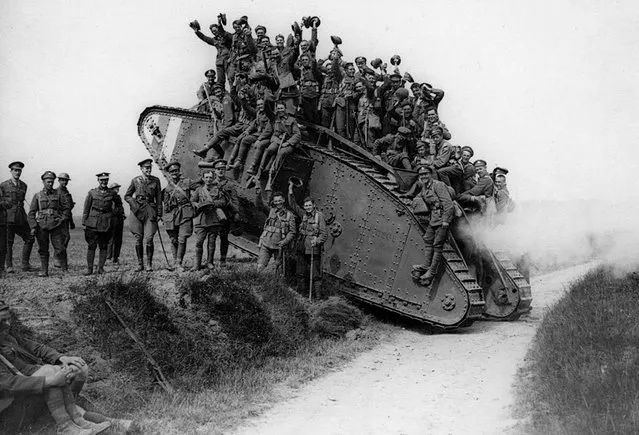
These black-and-white photos are taken from the new book “Armoured Warfare in the First World War 1916 – 1918” by Anthony Tucker-Jones and published by Pen & Sword Military. “Interestingly the British, French and Germans took completely different approaches with varying results”. The British military produced “Little Willie” in Autumn 1915 weighing 18 tonnes, which had a crew of two plus four gunners. “Inspired by a tracked artillery tractor “Little Willie” was referred to as a water tank – hence the name tank – to ensure secrecy”, said Anthony. “This led to the strange looking Mark I with its peculiar rhomboid shape, designed to cross trenches with guns in sponsons on either side. The Germans saw the tank as unchivalrous and were slow to grasp its utility. They favoured the Stormtrooper (specialist soldiers used to infiltrate enemy trenches) and artillery, not the tank”, said Anthony. “However, they didn’t hesitate to make use of captured British tanks. Although the tank helped secure victory and German soldiers dubbed it “Germany’s Downfall” the country was ultimately brought to its knees by the Allies blockade”. Here: British troops hitch a ride on a Mark IV after the massed tank fleet spearheading attack at Cambrai on November 20, 1917. (Photo by Anthony Tucker-Jones/Mediadrumworld.com)

These black-and-white photos are taken from the new book “Armoured Warfare in the First World War 1916 – 1918” by Anthony Tucker-Jones and published by Pen & Sword Military. Here: British troops hitch a ride on a Mark IV after the massed tank fleet spearheading attack at Cambrai on November 20, 1917. (Photo by Anthony Tucker-Jones/Mediadrumworld.com)
Details
23 Feb 2017 00:02:00