Loading...
Done
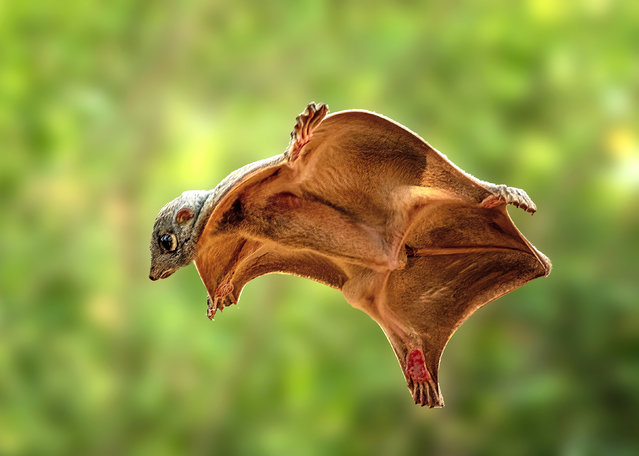
The Sunda lemur uses a special membrane to “fly” between trees while on the lookout for food in Java, Indonesia in the last decade of June 2024. (Photo by Dzulfikri/Solent News)

The Sunda lemur uses a special membrane to “fly” between trees while on the lookout for food in Java, Indonesia in the last decade of June 2024. (Photo by Dzulfikri/Solent News)
Details
14 Jul 2024 03:56:00
A policewoman uses a tissue during a protest to mark the International Day for the Elimination of Violence Against Women, in Mexico City, Mexico on November 25, 2021. (Photo by Raquel Cunha/Reuters)

A policewoman uses a tissue during a protest to mark the International Day for the Elimination of Violence Against Women, in Mexico City, Mexico on November 25, 2021. (Photo by Raquel Cunha/Reuters)
Details
26 Nov 2021 09:28:00
Only 156 people remained in the tribe when Jan visited in Accham District, Nepal, January 2016. (Photo by Jan Moller Hansen/Barcroft Images)

Only 156 people remained in the tribe when Jan visited in Accham District, Nepal, January 2016. Hidden deep in the Himalayan forest is one of the world’s last enduring nomadic tribes who are resisting attempts to move them into permanent settlements. (Photo by Jan Moller Hansen/Barcroft Images)
Details
14 Jan 2017 12:35:00
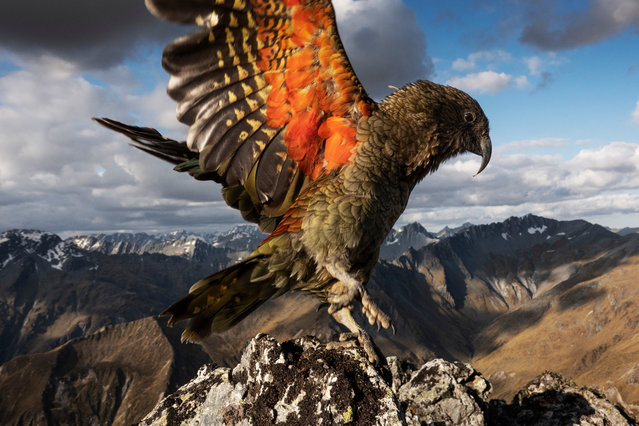
The endangered kea is the world’s only alpine parrot, and one of the most intelligent birds. They show no fear of humans and are thieves and pranksters. The parrot is seen in the Whakaari conservation area, near Glen Orchy in the Otago region of New Zealand, a place where historic huts and mining relics are surrounded by stunning mountains covered in tussock. (Photo by Murdo MacLeod/The Guardian)

The endangered kea is the world’s only alpine parrot, and one of the most intelligent birds. They show no fear of humans and are thieves and pranksters. The parrot is seen in the Whakaari conservation area, near Glen Orchy in the Otago region of New Zealand, a place where historic huts and mining relics are surrounded by stunning mountains covered in tussock. (Photo by Murdo MacLeod/The Guardian)
Details
15 Jun 2020 00:05:00
Zeebra  Lisa Thrower, New Zealand is modelled in the Bizarre Bra Section during the 2023 World of WearableArt Awards Night at TSB Bank Arena on September 22, 2023 in Wellington, New Zealand. (Photo by Hagen Hopkins/Getty Images for World of WearableArt)

Zeebra Lisa Thrower, New Zealand is modelled in the Bizarre Bra Section during the 2023 World of WearableArt Awards Night at TSB Bank Arena on September 22, 2023 in Wellington, New Zealand. (Photo by Hagen Hopkins/Getty Images for World of WearableArt)
Details
11 Dec 2024 04:09:00
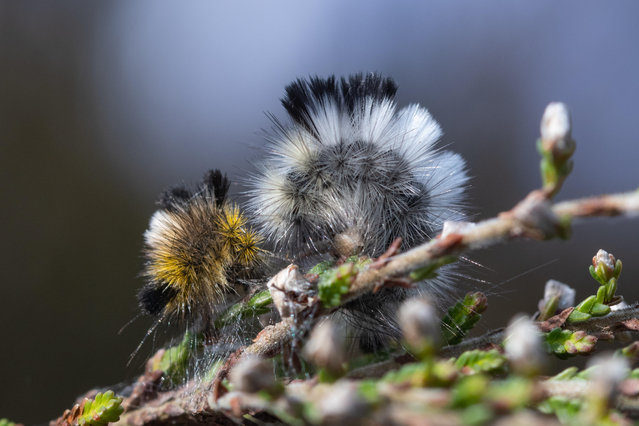
A pale tussock moth (Calliteara pudibunda) larva or caterpillar just after moulting on heather on Hankley Common, Surrey, England on April 30, 2019. (Photo by Gillian Pullinger/Alamy Stock Photo)

A pale tussock moth (Calliteara pudibunda) larva or caterpillar just after moulting on heather on Hankley Common, Surrey, England on April 30, 2019. (Photo by Gillian Pullinger/Alamy Stock Photo)
Details
08 Dec 2019 00:03:00
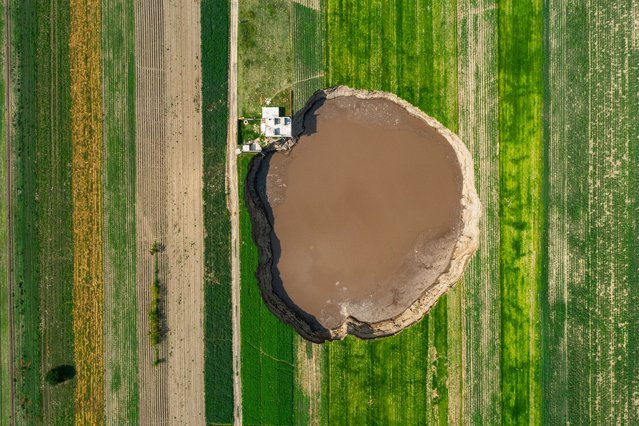
Aerial view of a giant sinkhole on June 09, 2021 in Santa María Zacatepec, Mexico. The giant sinkhole is located 20 kilometers northwest from the capital city Puebla, the hole now measures 110 meters across its widest point, covering around 11,000 square meters and damaging a house built near the place where it appeared. Farmers of the surroundings have been affected since they are not allowed to enter their fields due to the warning perimeter set up by the authorities. (Photo by Hector Vivas/Getty Images)

Aerial view of a giant sinkhole on June 09, 2021 in Santa María Zacatepec, Mexico. The giant sinkhole is located 20 kilometers northwest from the capital city Puebla, the hole now measures 110 meters across its widest point, covering around 11,000 square meters and damaging a house built near the place where it appeared. Farmers of the surroundings have been affected since they are not allowed to enter their fields due to the warning perimeter set up by the authorities. (Photo by Hector Vivas/Getty Images)
Details
10 Aug 2021 09:48:00
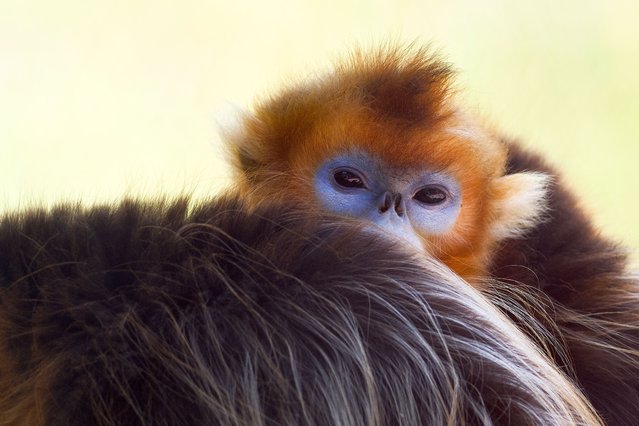
A golden snub-nosed monkeys (Rhinopitheque de Roxelane) looks through its enclosure after quarantine during its presentation at the Beauval Zoopark in Saint-Aignan Central France, on May 7, 2025. ZooParc de Beauval (Loir-et-Cher) welcomed three golden snub-nosed monkeys on April 3, 2025, an endangered species from China, as part of a conservation program, becoming the first zoo outside Asia to house these long-haired, red-furred primates with bluish faces. (Photo by Guillaume Souvant/AFP Photo)

A golden snub-nosed monkeys (Rhinopitheque de Roxelane) looks through its enclosure after quarantine during its presentation at the Beauval Zoopark in Saint-Aignan Central France, on May 7, 2025. ZooParc de Beauval (Loir-et-Cher) welcomed three golden snub-nosed monkeys on April 3, 2025, an endangered species from China, as part of a conservation program, becoming the first zoo outside Asia to house these long-haired, red-furred primates with bluish faces. (Photo by Guillaume Souvant/AFP Photo)

Details
18 May 2025 02:44:00