Loading...
Done
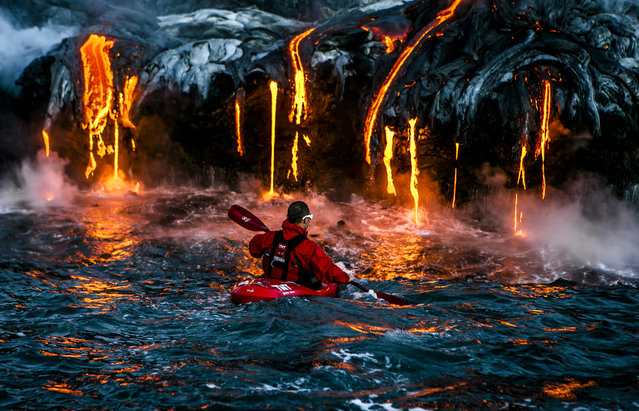
“Kilauea Rules”. The most extreme place we put ours kayakers to paddle till now. Photo location: Big Island, Hawaii. (Photo and caption by Alexandre Socci/National Geographic Photo Contest)

“Kilauea Rules”. The most extreme place we put ours kayakers to paddle till now. Photo location: Big Island, Hawaii. (Photo and caption by Alexandre Socci/National Geographic Photo Contest)
Details
20 Jun 2014 10:47:00
A Buddhist monk salvages a statue of a Buddhist deity from a monastery around the famous Swayambhunath stupa after it was damaged by Saturday's earthquake in  Kathmandu, Nepal, Thursday, April 30, 2015. In mere seconds, Saturday's earthquake devastated a swathe of Nepal. Three of the seven World Heritage sites in the Kathmandu Valley have been severely damaged, including Durbar Square with pagodas and temples dating from the 15th to 18th centuries, according to UNESCO, the United Nations cultural agency. (Photo by Niranjan Shrestha/AP Photo)

A Buddhist monk salvages a statue of a Buddhist deity from a monastery around the famous Swayambhunath stupa after it was damaged by Saturday's earthquake in Kathmandu, Nepal, Thursday, April 30, 2015. In mere seconds, Saturday's earthquake devastated a swathe of Nepal. Three of the seven World Heritage sites in the Kathmandu Valley have been severely damaged, including Durbar Square with pagodas and temples dating from the 15th to 18th centuries, according to UNESCO, the United Nations cultural agency. (Photo by Niranjan Shrestha/AP Photo)
Details
02 May 2015 14:35:00
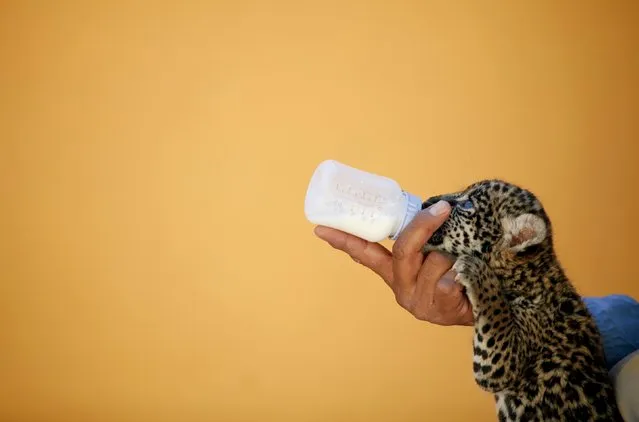
A keeper feeds a four-week-old jaguar while presenting it to the media, at a zoo in Ciudad Juarez, Mexico, October 14, 2015. (Photo by Jose Luis Gonzalez/Reuters)

A keeper feeds a four-week-old jaguar while presenting it to the media, at a zoo in Ciudad Juarez, Mexico, October 14, 2015. (Photo by Jose Luis Gonzalez/Reuters)
Details
19 Oct 2015 08:03:00
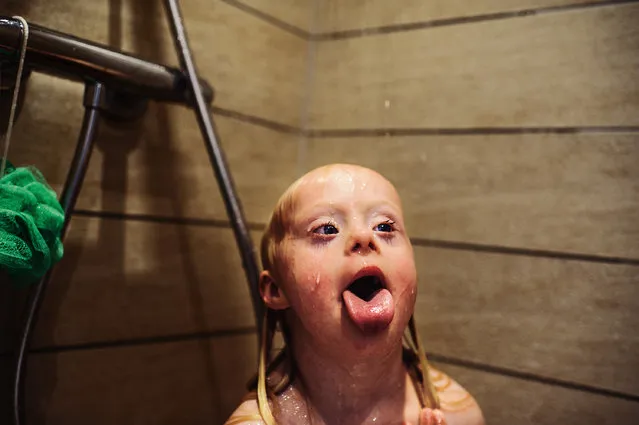
“One in Eight Hundred” by Mario Wezel, from Germany, is the winner of the “People” category. The title refers to the odds given to Martin and Karina at their prenatal screening before their daughter, Emmy, was born. The five-year-old from Denmark has Down's Syndrome. (Photo by Mario Wezel/Sony World Photography Awards)

“One in Eight Hundred” by Mario Wezel, from Germany, is the winner of the “People” category. The title refers to the odds given to Martin and Karina at their prenatal screening before their daughter, Emmy, was born. The five-year-old from Denmark has Down's Syndrome. (Photo by Mario Wezel/Sony World Photography Awards)
Details
02 May 2014 10:53:00
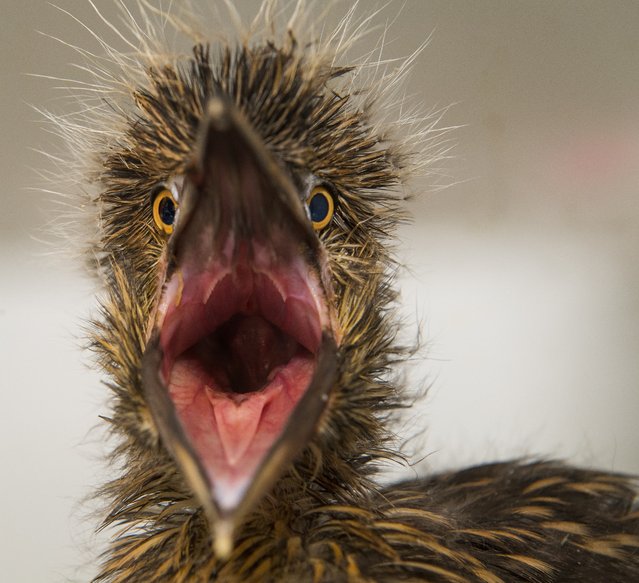
A baby Black-crowned Night Heron squawks in its incubator while being cared for at City Wildlife rescue and rehabilitation center in Washington, DC on May 31, 2017. The heron is one of several that have been brought to CW by the staff at The National Zoo over the past few years. The heron is a native bird and has made an established rookery inside the zoo grounds over a hundred years ago.  Every year at this time, some of the chicks get pushed or fall out of the nest and require human care.  Because the birds are native and not part of the Smithsonian collection, they partnered with CW to rehabilitate the herons for re-release back to the flock inside Zoo. They're reintroduced back to their flock so that they can migrate together in the Fall. The Black-crowned heron usually migrates from the DC area down to southeast North Carolina, some going as far as Jacksonville, FL in winter. The Black-crowned heron is the species of greatest conservation need in the District of Columbia because their numbers are in such rapid decline due to habitat loss. (Photo Linda Davidson/The Washington Post)

A baby Black-crowned Night Heron squawks in its incubator while being cared for at City Wildlife rescue and rehabilitation center in Washington, DC on May 31, 2017. The heron is one of several that have been brought to CW by the staff at The National Zoo over the past few years. (Photo Linda Davidson/The Washington Post)
Details
04 Jun 2017 08:04:00
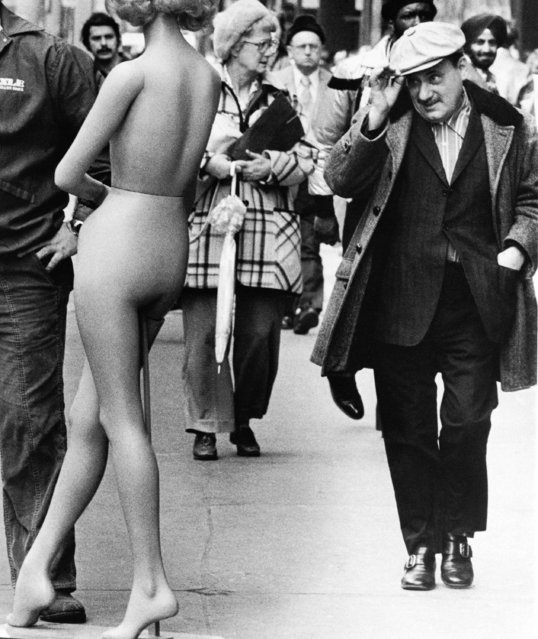
A hint of Spring Fever is evidenced by this passerby tipping his hat to a store fixture mannequin on a State St. sidewalk in downtown Chicago on March 23, 1978. The mannequin was awaiting pickup to be transported. (Photo by AP Photo)

A hint of Spring Fever is evidenced by this passerby tipping his hat to a store fixture mannequin on a State St. sidewalk in downtown Chicago on March 23, 1978. The mannequin was awaiting pickup to be transported. (Photo by AP Photo)
Details
04 Apr 2018 00:03:00
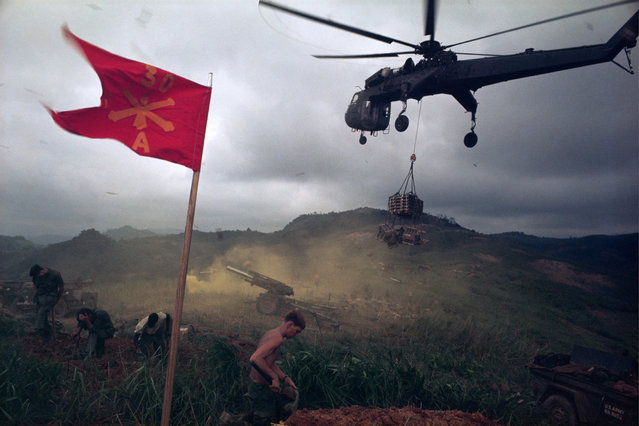
Ammunition airlift into besieged Khe Sanh, Operation Pegasus, April 1968. (Photo by Larry Burrows/AP Photo)

Ammunition airlift into besieged Khe Sanh, Operation Pegasus, April 1968. (Photo by Larry Burrows/AP Photo)
Details
22 May 2018 00:01:00
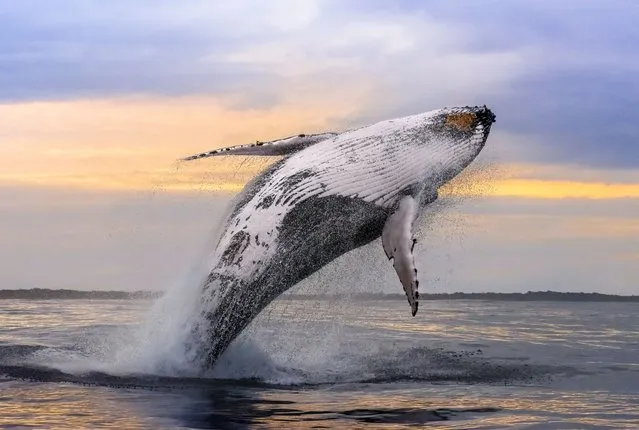
A 40-tonne humpback launching out of the water in an incredible breach in New South Wales, Australia on October 2022 in front of a sunset. The humpback whale can grow up to 56 feet long and typically covers 9,900 miles a year as it travels through the oceans of the world. Humpback whales are a species of Baleen whale, meaning they don't have teeth. Instead, they have baleen which helps them to filter feed. Their main source of food is krill or tiny bait fish. (Photo by Jodie Lowe/Media Drum Images)

A 40-tonne humpback launching out of the water in an incredible breach in New South Wales, Australia on October 2022 in front of a sunset. The humpback whale can grow up to 56 feet long and typically covers 9,900 miles a year as it travels through the oceans of the world. Humpback whales are a species of Baleen whale, meaning they don't have teeth. Instead, they have baleen which helps them to filter feed. Their main source of food is krill or tiny bait fish. (Photo by Jodie Lowe/Media Drum Images)
Details
30 Oct 2022 04:28:00