Revellers take part in the 21st Rio LGBT pride parade at Copacabana beach in Rio de Janeiro, Brazil, on December 11, 2016. (Photo by Yasuyoshi Chiba/AFP Photo)
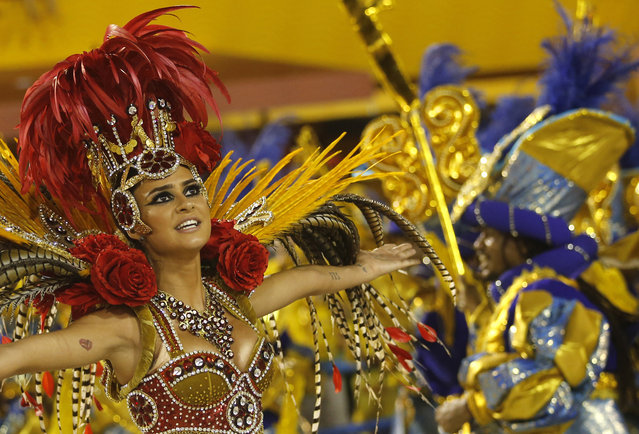
A performer from the Academicos do Grande Rio samba school dances during carnival celebrations at the Sambadrome in Rio de Janeiro, Brazil, early Monday, February 16, 2015. (Photo by Silvia Izquierdo/AP Photo)
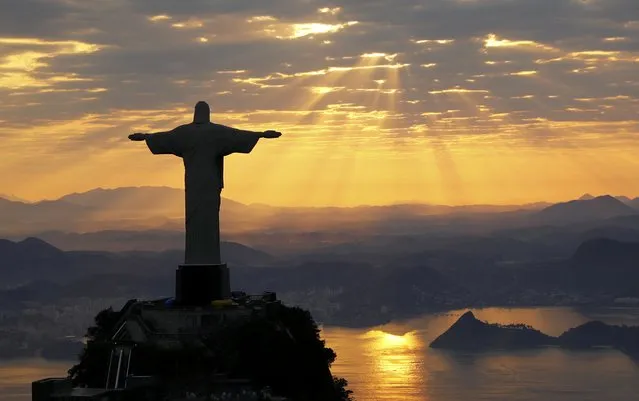
Jesus Christ The Redeemer is seen during sunrise in Rio de Janeiro, Brazil August 2, 2016. Christ the Redeemer is an Art Deco statue of Jesus Christ in Rio de Janeiro, Brazil, created by Polish-French sculptor Paul Landowski and built by the Brazilian engineer Heitor da Silva Costa, in collaboration with the French engineer Albert Caquot. The face was created by the Romanian artist Gheorghe Leonida1. (Photo by Kai Pfaffenbach/Reuters)
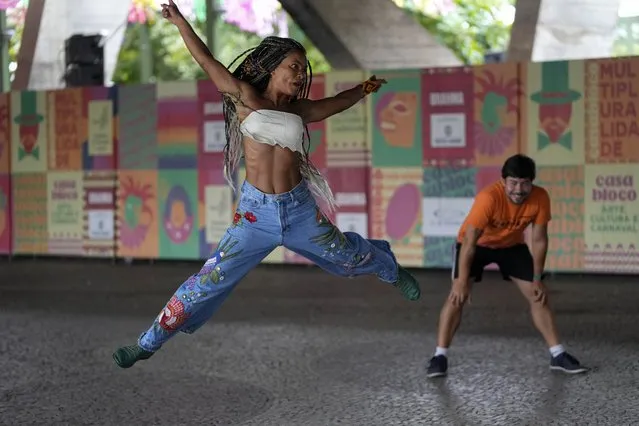
A reveller takes part in an annual block party known as “Cordao de Prata Preta”, one of the many carnival parties to take place in the neighbourhoods of Rio de Janeiro, February 6, 2016. (Photo by Pilar Olivares/Reuters)
A member of the Unidos do Viradouro samba school performs during the last night of the Carnival parade at the Marques de Sapucai Sambadrome in Rio de Janeiro, Brazil, on February 13, 2024. (Photo by Pablo Porciuncula/AFP Photo)
Instructor Raquel Potí leads a stilt walking workshop at the Museum of Modern Art in Rio de Janeiro, Brazil, Saturday, January 27, 2024. Potí is chiefly responsible for the explosion of stilt walking in Rio, having trained more than 1,000 kids and adults over the past decade. (Photo by Silvia Izquierdo/AP Photo)