Loading...
Done
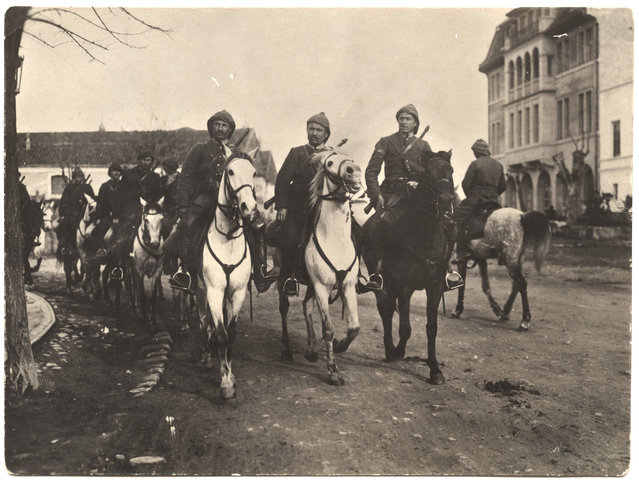
Turkish army, including cavalry, infantry and artillery. (Photo by Dr. P.A. Smithe/National World War I Museum, Kansas City, Mo.)

Dr. P.A. Smithe was sent by the American Red Cross as a doctor and surgeon to work at a hospital in Vienna. He sailed to Europe in December 1915 and returned home in August 1916, according to his daughter, who donated his images to the National World War I Museum. Photo: Turkish army, including cavalry, infantry and artillery. (Photo by Dr. P.A. Smithe/National World War I Museum, Kansas City, Mo.)
Details
29 Jul 2014 11:53:00
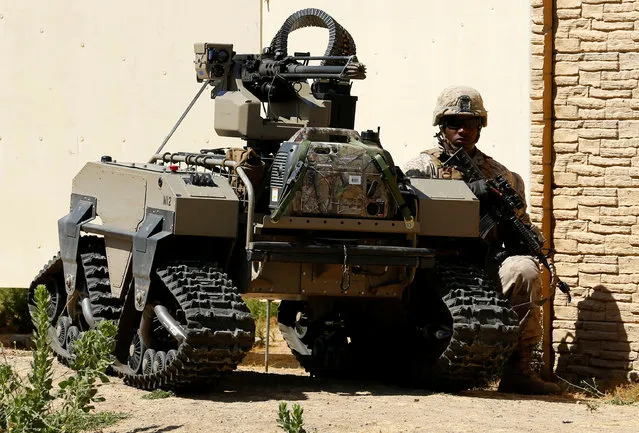
A U.S. Marine kneels beside a Multi-Utility Tactical Transport ( MUTT) during a patrol as part of Rim of the Pacific (RIMPAC) 2016 an exercise held at Camp Pendleton, California United States, July 13, 2016. (Photo by Mike Blake/Reuters)

A U.S. Marine kneels beside a Multi-Utility Tactical Transport ( MUTT) during a patrol as part of Rim of the Pacific (RIMPAC) 2016 an exercise held at Camp Pendleton, California United States, July 13, 2016. (Photo by Mike Blake/Reuters)
Details
15 Jul 2016 12:25:00
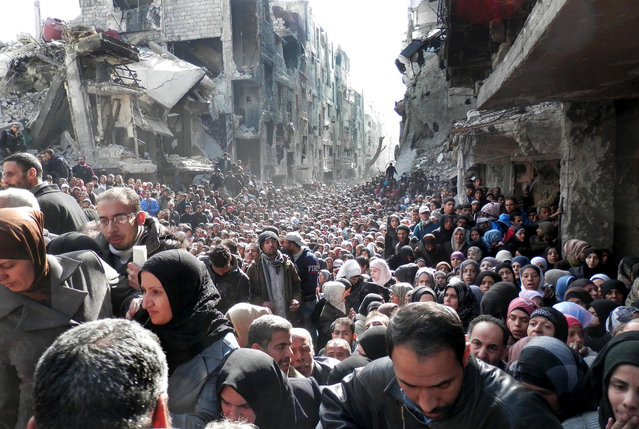
In this January 31, 2014 file photo released by the United Nations Relief and Works Agency for Palestine Refugees in the Near East (UNRWA), shows residents of the besieged Palestinian camp of Yarmouk, queuing to receive food supplies, in Damascus, Syria. That year, the U.N. was able to deliver food to about five percent of people in besieged areas including Yarmouk, while today estimates show the organization is reaching less than one percent. (Photo by UNRWA via AP Photo)

In this January 31, 2014 file photo released by the United Nations Relief and Works Agency for Palestine Refugees in the Near East (UNRWA), shows residents of the besieged Palestinian camp of Yarmouk, queuing to receive food supplies, in Damascus, Syria. That year, the U.N. was able to deliver food to about five percent of people in besieged areas including Yarmouk, while today estimates show the organization is reaching less than one percent. (Photo by UNRWA via AP Photo)
Details
07 Feb 2016 06:36:00
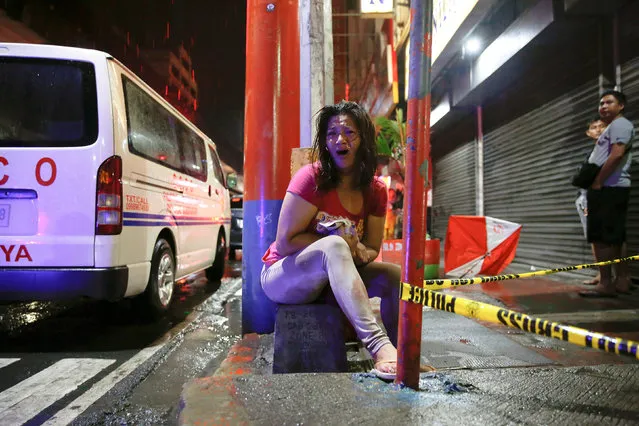
A woman cries after her husband was shot dead by unidentified gunmen riding motorcycles in Manila, Philippines late October 10, 2016. (Photo by Damir Sagolj/Reuters)

A woman cries after her husband was shot dead by unidentified gunmen riding motorcycles in Manila, Philippines late October 10, 2016. According to police reports, around 2,300 people have been killed in Philippine President Rodrigo Duterte's war against illegal drugs. The figure was revised by the police from an original tally of around 3,600 deaths. (Photo by Damir Sagolj/Reuters)
Details
26 Oct 2016 10:53:00
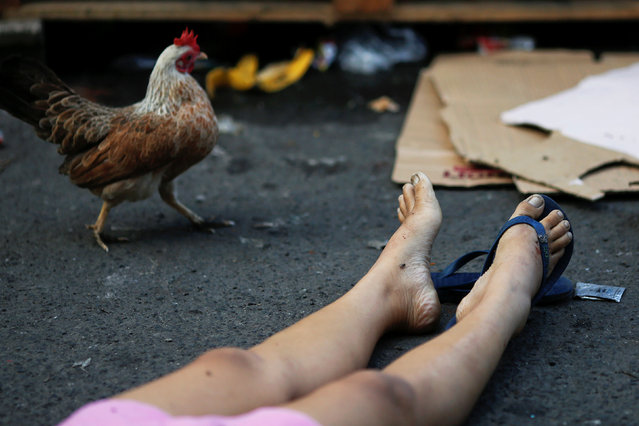
A chicken is seen next to the body of a woman killed by unknown gunmen at the market in a port area of Manila, Philippines October 28, 2016. (Photo by Damir Sagolj/Reuters)

A chicken is seen next to the body of a woman killed by unknown gunmen at the market in a port area of Manila, Philippines October 28, 2016. Philippine President Rodrigo Duterte's war on drugs and other crimes took he office on June 30 has claimed 4,447 lives, according to official figures made available by police on November 10. (Photo by Damir Sagolj/Reuters)
Details
11 Nov 2016 08:07:00


In modern Russia there are no free elections, therefore the political elite is almost constant.

Photo: Valentina Matvienko, Mayor of St. Petersburg, attends the St. Petersburg International Economic Forum (SPIEF) on June 17, 2011 in St. Petersburg, Russia. Global business leaders have gathered in Russia for the three-day conference. (Photo by Alexander Aleshkin/Epsilon/Getty Images)
Details
18 Jun 2011 10:17:00
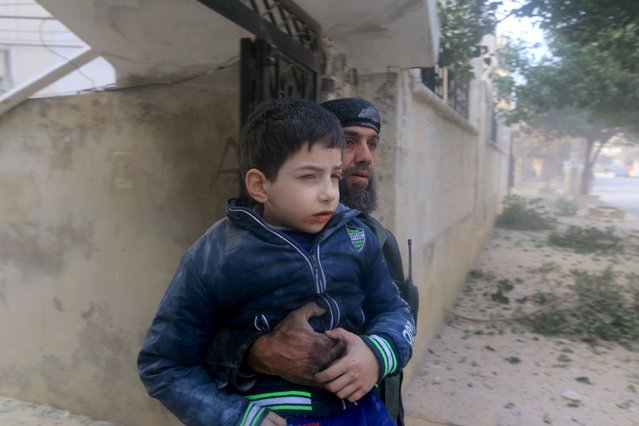
A rescue worker holds an injured boy after what activists said were airstrikes carried out by the Russian air force in Idlib city, Syria December 20, 2015. (Photo by Ammar Abdullah/Reuters)

A rescue worker holds an injured boy after what activists said were airstrikes carried out by the Russian air force in Idlib city, Syria December 20, 2015. (Photo by Ammar Abdullah/Reuters)
Details
22 Dec 2015 08:00:00
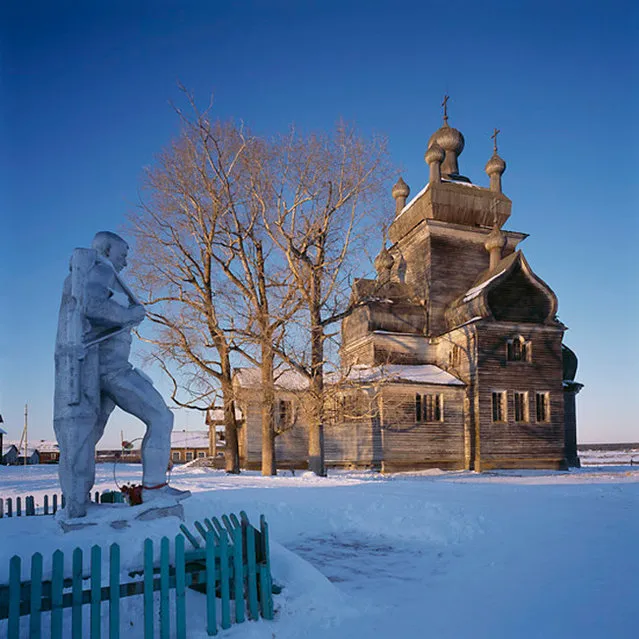
Wooden Churches - Travelling In The Russian North By Richard Davies Part 2

While communism, collectivism, worms, dry rot and casual looting failed to destroy the majestic wooden churches of Russia, it may be ordinary neglect that finally does them in. Dwindled now to several hundred remaining examples, these glories of vernacular architecture lie scattered amid the vastness of the world’s largest country. Just over a decade ago, Richard Davies, a British architectural photographer, struck out on a mission to record the fragile and poetic structures. Austerely beautiful and haunting, “Wooden Churches: Traveling in the Russian North” (White Sea Publishing; $132) is the result. Covering thousands of miles, Mr. Davies described how he and the writer Matilda Moreton tracked down the survivors from among the thousands of onion-domed structures built after Prince Vladimir converted to Christianity in 988.

See also: Wooden Churches Part1
Details
28 Nov 2013 12:13:00