Loading...
Done
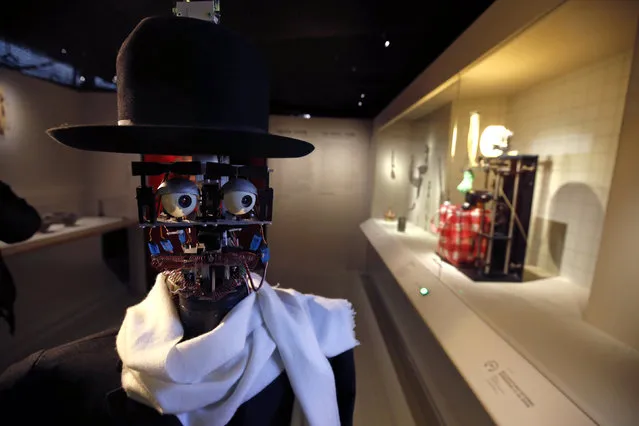
The Berenson robot strolls among visitors during the exhibition “Persona : Oddly Human” at the Quai Branly museum in Paris, France, February 23, 2016. The Berenson robot, developed in France in 2011, is the brainchild of anthropologist Denis Vidal and robotics engineer Philippe Gaussier. Its programming allows it to record reactions of museum visitors to certain pieces of art and then use the data to develop its own unique taste, which allows “Berenson” to judge whether or not it likes a certain work of art within an exhibition. (Photo by Philippe Wojazer/Reuters)

The Berenson robot strolls among visitors during the exhibition “Persona : Oddly Human” at the Quai Branly museum in Paris, France, February 23, 2016. The Berenson robot, developed in France in 2011, is the brainchild of anthropologist Denis Vidal and robotics engineer Philippe Gaussier. Its programming allows it to record reactions of museum visitors to certain pieces of art and then use the data to develop its own unique taste, which allows “Berenson” to judge whether or not it likes a certain work of art within an exhibition. (Photo by Philippe Wojazer/Reuters)
Details
25 Feb 2016 12:26:00
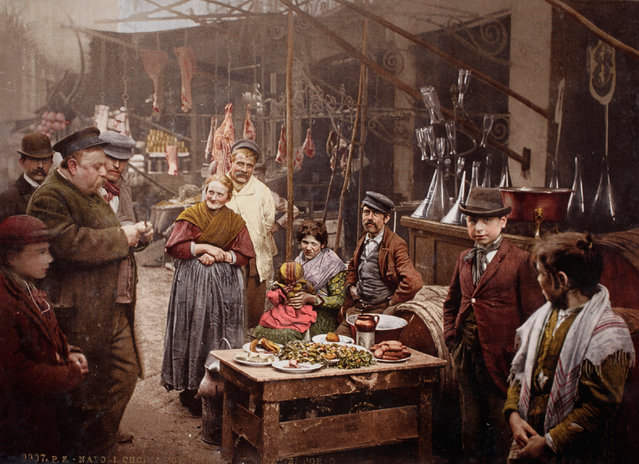
The finished photochromes were produced using at least six different tint stones, although many more were often used. Here: Street food in the Strada del Porto in Naples, Italy, 1899. (Photo by Swiss Camera Museum/The Guardian)

Photochromes are vibrant and nuanced prints hand-coloured from black-and-white negatives. Created using a process pioneered in the 1880s, these images offer a fascinating insight into the world when colour photography was still in its infancy. A Tour of the World in Photochromes is at the Swiss Camera Museum, Vevey, until 21 August. Here: Street food in the Strada del Porto in Naples, Italy, 1899. (Photo by Swiss Camera Museum/The Guardian)
Details
07 Jul 2016 10:56:00
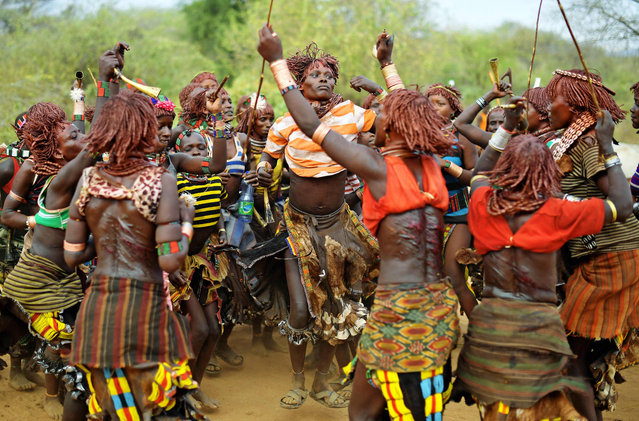
Hamar women dance before a bull jumping ceremony in Ethiopia's southern Omo Valley region near Turmi on September 19, 2016. The Hamar are a Nilotic ethnic group in Ethiopia. The construction of the Gibe III dam, the third largest hydroelectric plant in Africa, and large areas of very “thirsty” cotton and sugar plantations and factories along the Omo river are impacting heavily on the lives of tribes living in the Omo Valley who depend on the river for their survival and way of life. Human rights groups fear for the future of the tribes if they are forced to scatter, give up traditional ways through loss of land or ability to keep cattle as globalisation and development increases. (Photo by Carl De Souza/AFP Photo)

Hamar women dance before a bull jumping ceremony in Ethiopia's southern Omo Valley region near Turmi on September 19, 2016. The Hamar are a Nilotic ethnic group in Ethiopia. The construction of the Gibe III dam, the third largest hydroelectric plant in Africa, and large areas of very “thirsty” cotton and sugar plantations and factories along the Omo river are impacting heavily on the lives of tribes living in the Omo Valley who depend on the river for their survival and way of life. (Photo by Carl De Souza/AFP Photo)
Details
02 Oct 2016 08:45:00
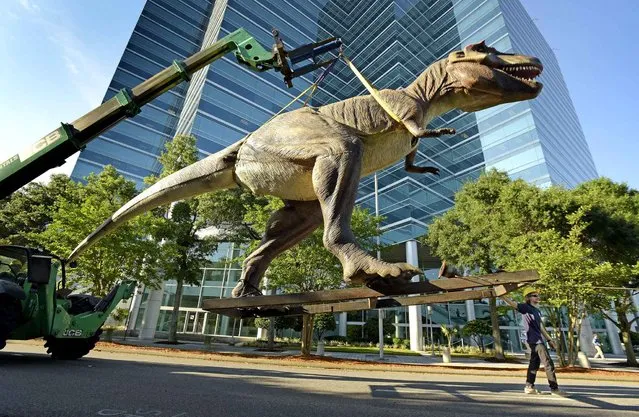
Crews move a 39 foot long, 16 foot tall, 2400 lbs. replica of a Tyrannosaurus Rex from behind the Museum Of Science And History in Jacksonville, Fla., to its new location in front of the entrance of the museum Wednesday morning, May 20, 2015, to kickoff the upcoming Dinosaurs Unearthed exhibit. (Photo by Bob Self/The Florida Times-Union via AP Photo)

Crews move a 39 foot long, 16 foot tall, 2400 lbs. replica of a Tyrannosaurus Rex from behind the Museum Of Science And History in Jacksonville, Fla., to its new location in front of the entrance of the museum Wednesday morning, May 20, 2015, to kickoff the upcoming Dinosaurs Unearthed exhibit. The exhibiti, which opens this week, includes animatronic dinosaurs as well as prehistoric fossils and runs through September 7. (Photo by Bob Self/The Florida Times-Union via AP Photo)
Details
23 May 2015 11:22:00
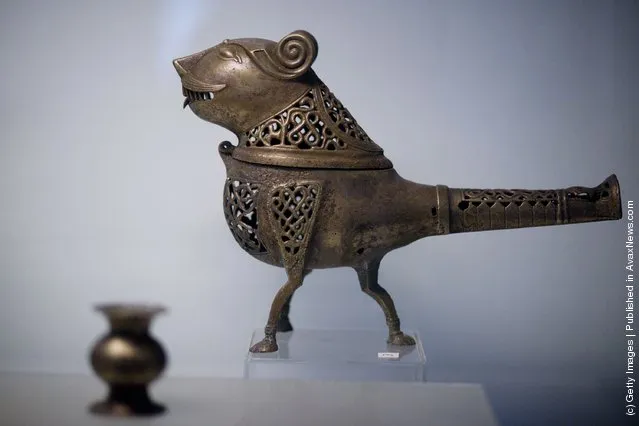
An ancient sculptures, pottery and bowls is displayed in the Kabul Museum August 4, 2011 in Kabul, Afghanistan

An ancient sculpture is displayed in the Kabul Museum August 4, 2011 in Kabul, Afghanistan. The sculptures, which had been destroyed by Islamists during the Taliban regime, were repaired after the collapse of the hardliners in 2001. Portions of the collection have been exhibited in seven countries. (Photo by Majid Saeedi/Getty Images)
Details
05 Aug 2011 09:27:00
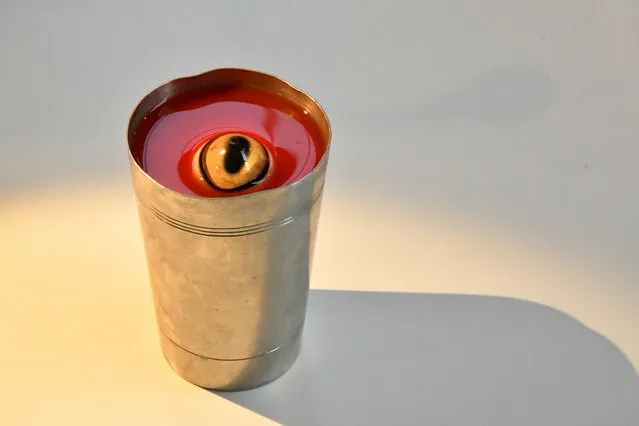
A Mongolian Bloody Mary, made with pickled sheep eyeballs and tomato juice, is displayed at the Disgusting Food Museum in Malmo, Sweden November 1, 2018. (Photo by Mikael Nilsson/Reuters)

A Mongolian Bloody Mary, made with pickled sheep eyeballs and tomato juice, is displayed at the Disgusting Food Museum in Malmo, Sweden November 1, 2018. (Photo by Mikael Nilsson/Reuters)
Details
27 Dec 2018 00:03:00
Gigi Hadid attends “Rei Kawakubo/Comme des Garcons: Art Of The In-Between” Costume Institute Gala – Arrivals at Metropolitan Museum of Art on May 1, 2017 in New York City. (Photo by Carlo Allegri/Reuters)

Gigi Hadid attends “Rei Kawakubo/Comme des Garcons: Art Of The In-Between” Costume Institute Gala – Arrivals at Metropolitan Museum of Art on May 1, 2017 in New York City. (Photo by Carlo Allegri/Reuters)
Details
02 May 2017 09:46:00
Members of the LGBT community kiss during a Kissathon to celebrate International Day Against Homophobia, outside Bellas Artes museum in Mexico City, Mexico, May 17, 2016. (Photo by Edgard Garrido/Reuters)

Members of the LGBT community kiss during a Kissathon to celebrate International Day Against Homophobia, outside Bellas Artes museum in Mexico City, Mexico, May 17, 2016. (Photo by Edgard Garrido/Reuters)
Details
19 May 2016 11:36:00