A woman dressed in traditional costume smiles at the Royal Plaza, as interest for historical clothing rises within the country, in Bangkok, Thailand April 6, 2018. (Photo by Soe Zeya Tun/Reuters)
Protesters a demonstration of the LGTBI collective in Madrid on November 20, 2021 against the rise of the fascism in the society and in support of the new transgender law in Spain. (Photo by Celestino Arce Lavin/ZUMA Press Wire/Rex Features/Shutterstock)
A plane leaves Qatar Airport as the sun rises behind the Mosque at Souq Waqif in Doha, Qatar on Friday, December 9, 2022. (Photo by Peter Byrne/PA Images via Getty Images)
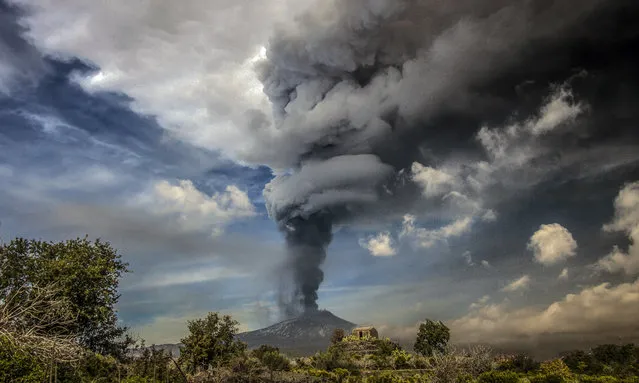
A person looks on as lava and plumes of smoke rise from a crater of Mount Etna, Europe's most active volcano, Italy on July 15, 2024. (Photo by Giuseppe Di Stefano/Etna Walk via Reuters)
A trader sells mealies to commuter in Durban, South Africa, April19, 2016, as food prices continue to rise due to drought conditions. (Photo by Rogan Ward/Reuters)
This NASA photo shows a United Launch Alliance Atlas V rocket with NASA’s Mars 2020 Perseverance rover onboard as it launches from Space Launch Complex 41 at Cape Canaveral Air Force Station, on July 30, 2020, from NASA’s Kennedy Space Center in Florida. The Perseverance rover is part of NASA’s Mars Exploration Program, a long-term effort of robotic exploration of the Red Planet. (Photo by Joel Kowsky/NASA)
A British photographer has captured life at the “edge of the world”. Timothy Allen, best known for his work on BBC's Human Planet, trekked through the freezing Siberian wilderness for 16 days as he joined part of an 800km migration of reindeer in the Yamal-Nenets region – a name that roughly translates to “edge of the world”. The stunning pictures feature the nomadic Nenets tribe, who drink blood to survive in -45°C temperatures. Timothy's epic journey, which will be revealed in an eight-minute documentary on Animal Planet USA, saw him travel across the bleak terrain of the frozen Ob River with the Nenets people in December last year. Here: An empty camp is shown beneath a colourful sky in Siberia, December 2016. (Photo by Timothy Allen/Barcroft Productions)
Scientists trekking for days to the undisputed furthest north land point on the planet, in October 2024 were greeted by an unexpected welcoming party: a stoat, whom they named Randall. The team were heading to Kaffeklubben Island, also known as Inuit Qeqertaat, off the northern tip of Greenland, about 440 miles from the North Pole, when Randall emerged from a cairn of rocks, showing no fear as he went to investigate them. (Photo by Jeff Kerby/Magnus News)