Loading...
Done
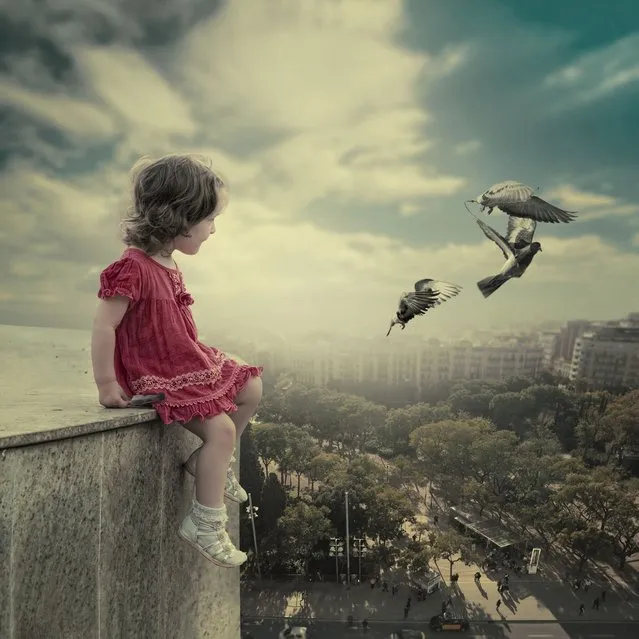
“The observer”. (Photo by Ionut Caras)

“Photo mechanic” and photographer Ionut Caras creates surreal concepts by combining the everyday with the unthinkable. His use of light and tone takes the viewer into a bizarre and beautiful world only seen in storybooks and our dreams. Photo: “The observer”. (Photo by Ionut Caras)
Details
03 Jun 2015 08:49:00
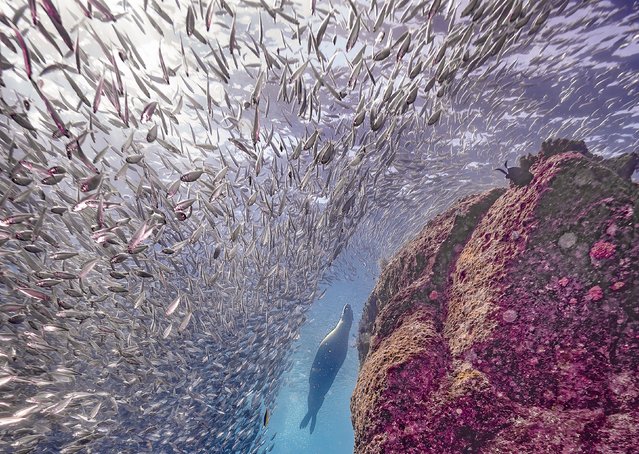
Sea lions make dinner plans in the Gulf of California early July 2024. The gulf is a primary source of sardines and anchovies, two of Mexico’s top marine resources. (Photo by Glenn Ostle/Solent News)

Sea lions make dinner plans in the Gulf of California early July 2024. The gulf is a primary source of sardines and anchovies, two of Mexico’s top marine resources. (Photo by Glenn Ostle/Solent News)
Details
04 Oct 2024 04:04:00
The Rio Tinto river in Spain crosses an ancient mining site which makes the water turn a variety of bright colours. Copper, silver and gold are mined here, as well as iron, which turns the water red. An ochre mix is responsible for the yellow tint of the rest of the river. (Photo by Olivier Jarry-Lancombe/Solent News)

The Rio Tinto river in Spain crosses an ancient mining site which makes the water turn a variety of bright colours. Copper, silver and gold are mined here, as well as iron, which turns the water red. An ochre mix is responsible for the yellow tint of the rest of the river. (Photo by Olivier Jarry-Lancombe/Solent News)
Details
20 Feb 2025 04:18:00
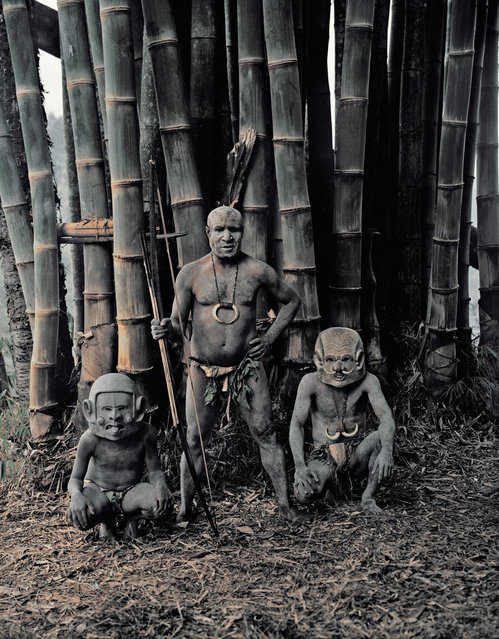
“Asaro from the Eastern Highlands”. The mudmen could not cover their faces with mud because the people of Papua New Guinea thought that the mud from the Asaro river was poisonous. So instead of covering their faces with this alleged poison, they made masks from pebbles that they heated and water from the waterfall, with unusual designs such as long or very short ears either going down to the chin or sticking up at the top, long joined eyebrows attached to the top of the ears, horns and sideways mouths. (Jimmy Nelson)

“Asaro from the Eastern Highlands”. The mudmen could not cover their faces with mud because the people of Papua New Guinea thought that the mud from the Asaro river was poisonous. So instead of covering their faces with this alleged poison, they made masks from pebbles that they heated and water from the waterfall, with unusual designs such as long or very short ears either going down to the chin or sticking up at the top, long joined eyebrows attached to the top of the ears, horns and sideways mouths. (Photo and caption by Jimmy Nelson)
Details
20 Oct 2013 08:54:00
Children run past used caskets at a crematorium facility in Manila on April 29, 2020. Most of the Philippines is under quarantine to contain the spread of the coronavirus that has infected over 7,000 people and killed at least 500 in the country. (Photo by Maria Tan/AFP Photo)

Children run past used caskets at a crematorium facility in Manila on April 29, 2020. Most of the Philippines is under quarantine to contain the spread of the coronavirus that has infected over 7,000 people and killed at least 500 in the country. (Photo by Maria Tan/AFP Photo)
Details
04 May 2020 00:05:00
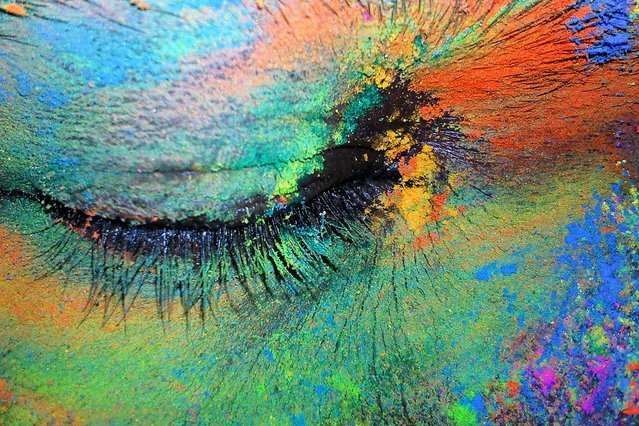
This close-up image – of a Holi Festival celebrant in Vrindivan, India, coated in neon-colored powder – was submitted to National Geographic’s Your Shot in the last week of March. On April 1 we published it on our Daily News site, along with seven other bright scenes captured during the Hindu spring Festival of Colors. (Photo by Tinto Alencherry/National Geographic)

This close-up image – of a Holi Festival celebrant in Vrindivan, India, coated in neon-colored powder – was submitted to National Geographic’s Your Shot in the last week of March. On April 1 we published it on our Daily News site, along with seven other bright scenes captured during the Hindu spring Festival of Colors. (Photo by Tinto Alencherry/National Geographic)
Details
06 Jan 2014 12:30:00
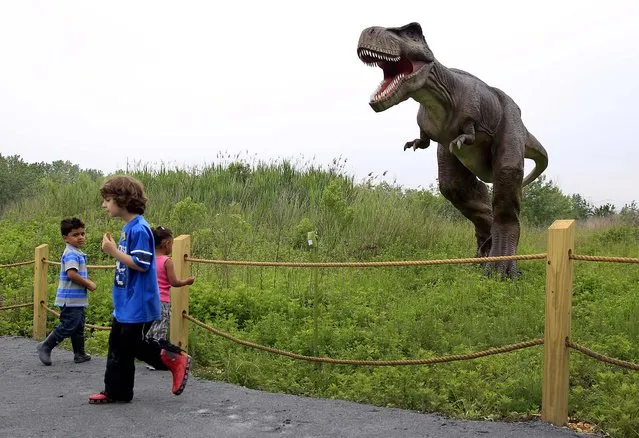
Children watch and react as a T-Rex moves and growls in an inter-active display at Field Station Dinosaurs in Secaucus, N.J on May 25, 2012

Children watch and react as a T-Rex moves and growls in an inter-active display at Field Station Dinosaurs in Secaucus, N.J on May 25, 2012. There will be 31 types of life-sized dinosaurs displayed at the Jurassic expedition that opens Saturday, May 26. (Photo by Mel Evans/Associated Press)
Details
27 May 2012 10:58:00


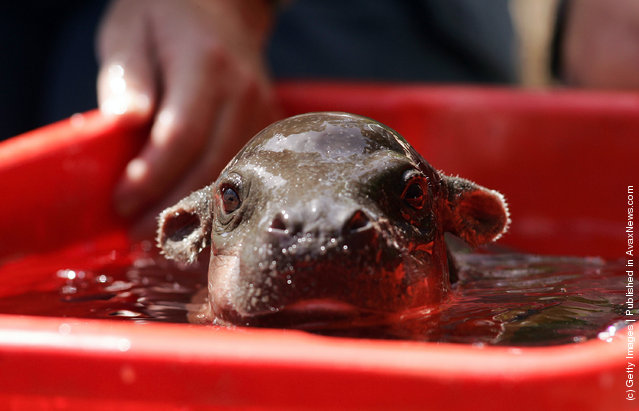
“The pygmy hippopotamus (Choeropsis liberiensis or Hexaprotodon liberiensis) is a large mammal native to the forests and swamps of western Africa (the specific name liberiensis means “of Liberia”, as this is where the vast majority live). The pygmy hippo is reclusive and nocturnal. It is one of only two extant species in the Hippopotamidae family, the other being its much larger cousin the common hippopotamus”. – Wikipedia

Photo: Monifa, a one month old baby Pygmy Hippopotamus takes a morning bath at Taronga Zoo on November 7, 2008 in Sydney, Australia. Monifa is the first Pygmy Hippopotamus to be born at Taronga Zoo in the past twenty three years. (Photo by Sergio Dionisio/Getty Images)

Details
11 Apr 2011 08:11:00