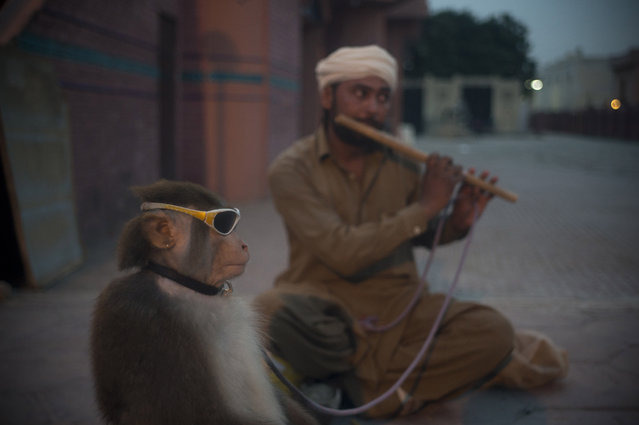
A Pakistani monkey handler Naseer Khan plays flute to attract passers by for a monkey show to earn his living in Islamabad, Pakistan, Monday, September 7, 2015. (Photo by B. K. Bangash/AP Photo)
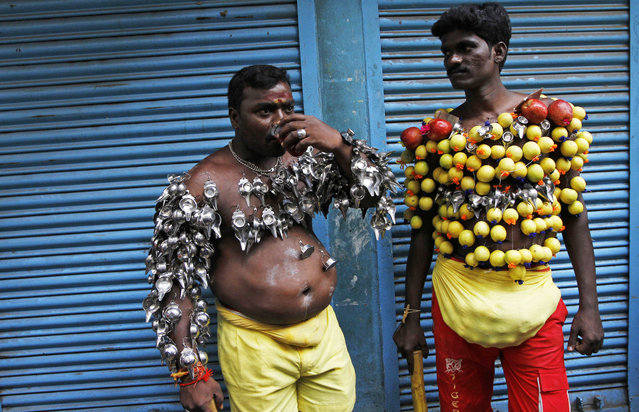
Hindu devotees, their bodies pierced with lemon and paladai, or bowl with a spout mainly used to feed milk to infants, wait to participate in a procession to mark Shivratri, or the night of Shiva, in Chennai, India, Wednesday, February 18, 2015. Such processions are held as an offering and show of devotion by devotees on the day dedicated to the worship of Lord Shiva, the Hindu god of destruction. (Photo by Arun Sankar K./AP Photo)
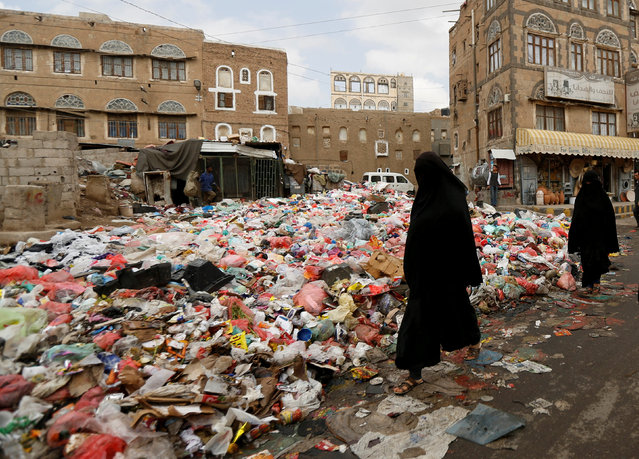
Women walk past a pile of rubbish bags on a street during a strike by garbage collectors demanding delayed salaries in Sanaa, Yemen May 8, 2017. (Photo by Khaled Abdullah/Reuters)
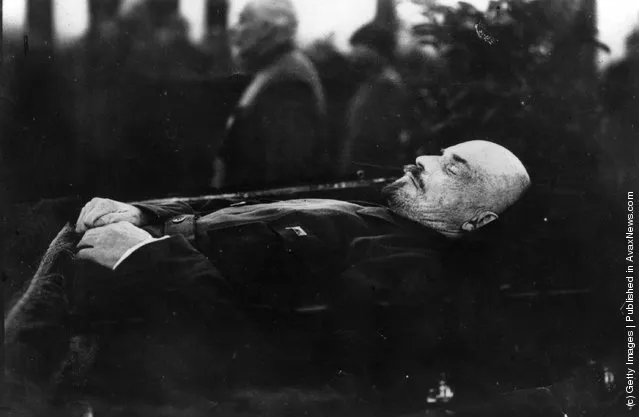
Photo: Vladimir Ilyich Lenin (1870 – 1924) lying in state in the Kremlin. (Photo by Hulton Archive/Getty Images). 1924
Important! For the same article in Russian language click here.
Something quite intriguing is happening within Russian-speaking internet during the last few – should you type a fully academic inquiry (at least, according to Russian academic requirements) in national search engines for "Lenin's mausoleum" – the first thing you get (even in top 10 searches) is website pages talking about black magic and occult. Website authors view this construction differently, but unconditionally agree on one thing: the mausoleum of the "leader of the world proletariat” – the essence of a magical artifact, a sort of “energy vampire”. It was built with a certain purpose: to drain the energy out of miserable Soviet citizens on one hand; and to poison the anthroposphere of one-sixth part of the earth with its vibes (the exact territory that was occupied by the former Soviet Union), depriving the Russian people of will to resist on the other hand. Complete nonsense? No doubt. Nevertheless, an intriguing one. Well, probably because some oddities do exist in mausoleum's history. These oddities are the thing we are going to discuss this time. First, let me refresh you memory on the subject.
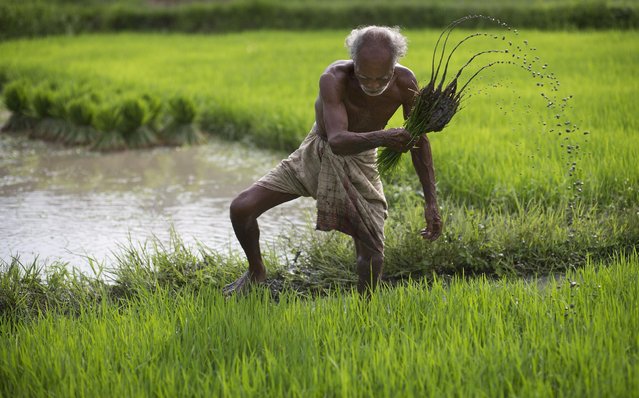
A farmer works in a paddy field at Reba Maheswar village, 56 kilometers (35 miles) east of Gauhati, India, Friday, July 3, 2015. Rice is one of the most important food crops of India and about 4,000 different varieties are grown in different parts of the country. (Photo by Anupam Nath/AP Photo)