Loading...
Done


“The Trabant is a car that was produced by former East German auto maker VEB Sachsenring Automobilwerke Zwickau in Zwickau, Sachsen. It was the most common vehicle in East Germany, and was also exported to countries both inside and outside the communist bloc. The main selling points was that it had room for four adults and luggage in a compact, light and durable shell and that it was fast (when introduced) and durable. With its mediocre performance, smoky two-stroke engine, and production shortages, the Trabant is often cited as an example of the disadvantages of centralized planning; on the other hand, it is regarded with derisive affection as a symbol of the failed former East Germany and of the fall of communism (in former West Germany, as many East Germans streamed into West Berlin and West Germany in their Trabants after the opening of the Berlin Wall in 1989). It was in production without any significant changes for nearly 30 years with 3,096,099 Trabants produced in total”. – Wikipedia

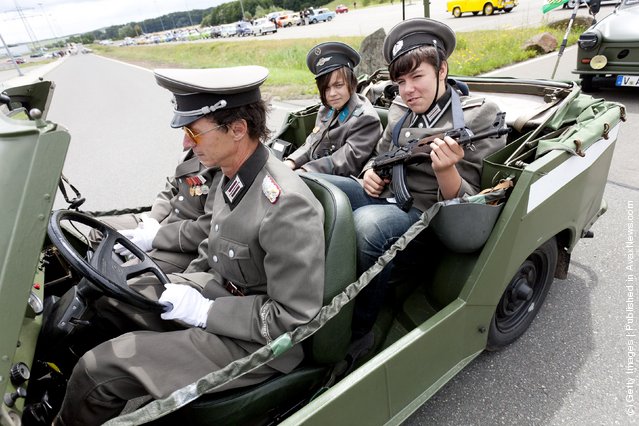
Photo: Enthusiasts weared in uniforms of the former eastern german army trive in a military Trabant car as fans and owners of East German-era Trabant cars gather at the 2011 International Trabantfahrer Treffen (International Trabant Drivers Meeting) on June 26, 2011 in Zwickau, Germany. The Trabant, also known as the Trabi, was among the main cars produced in communist East Germany and built by VEB Sachsenring Automobilwerke in Zwickau for 30 years until 1989. Today the car has cult status for many followers and one company, IndiKar, is even seeking to revive the brand in a modern, electric version. (Photo by Carsten Koall/Getty Images)
Details
27 Jun 2011 12:21:00
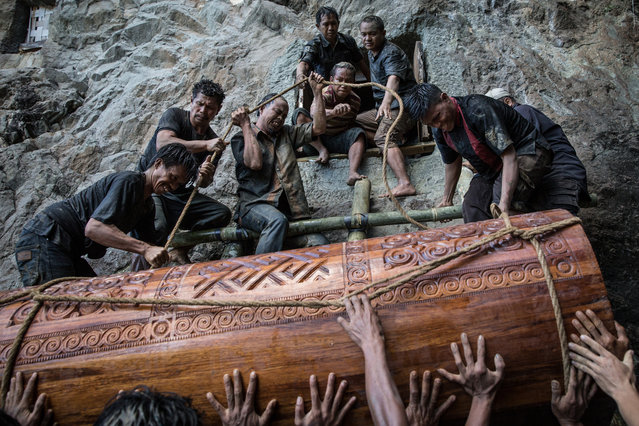
It is said that Torajans are people who “live to die”. For this Indonesian ethnic group, funerals are such extravagant events that they sometimes attract tourists. Families can postpone burials years (and the deceased are considered sick and hosted at home until the funeral) until the family can raise enough money and gather as many relatives as possible. And then it’s a jubilant multiday social event with a parade, dances and animal sacrifices. Agung Parameswara photographed these funerary practices when he traveled to South Sulawesi province, where the Torajans live. But often, their funeral isn’t the last time the dead are seen. In August, crypts are opened, coffins are slid back out and bodies delicately unsheathed. This tender ritual is known as Ma’Nene, which is customarily performed every few years. (Photo by Agung Parameswara/The Washington Post)

It is said that Torajans are people who “live to die”. For this Indonesian ethnic group, funerals are such extravagant events that they sometimes attract tourists. Families can postpone burials years (and the deceased are considered sick and hosted at home until the funeral) until the family can raise enough money and gather as many relatives as possible. And then it’s a jubilant multiday social event with a parade, dances and animal sacrifices. Agung Parameswara photographed these funerary practices when he traveled to South Sulawesi province, where the Torajans live. (Photo by Agung Parameswara/The Washington Post)
Details
06 Oct 2016 09:15:00
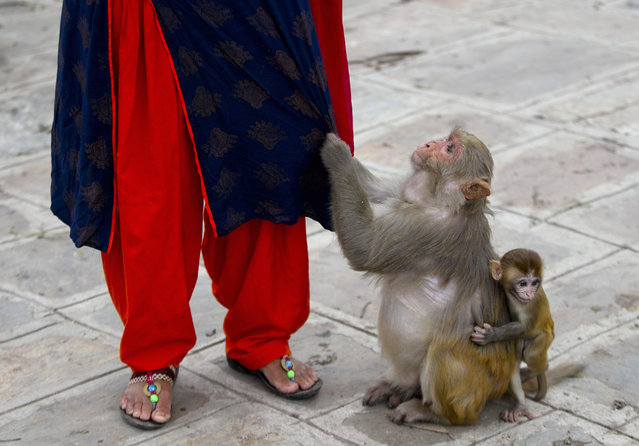
In this July 8, 2019, photo, a monkey pulls on the clothes of Saraswati Dangol as she arrives to feed monkeys in the forest near Pashupatinath temple in Kathmandu, Nepal. For the past four years, Dangol has been bringing the bread every day to feed the monkeys. As soon as they see her with her white sack, they gather around her, some patiently waiting for their turn while others less patiently snatching the bread from her hands. Many of Dangol's regulars are elderly, or are mother or baby monkeys who are unable to fight for their share of food in the wild. (Photo by Niranjan Shrestha/AP Photo)

In this July 8, 2019, photo, a monkey pulls on the clothes of Saraswati Dangol as she arrives to feed monkeys in the forest near Pashupatinath temple in Kathmandu, Nepal. For the past four years, Dangol has been bringing the bread every day to feed the monkeys. As soon as they see her with her white sack, they gather around her, some patiently waiting for their turn while others less patiently snatching the bread from her hands. Many of Dangol's regulars are elderly, or are mother or baby monkeys who are unable to fight for their share of food in the wild. (Photo by Niranjan Shrestha/AP Photo)
Details
26 Jul 2019 00:03:00
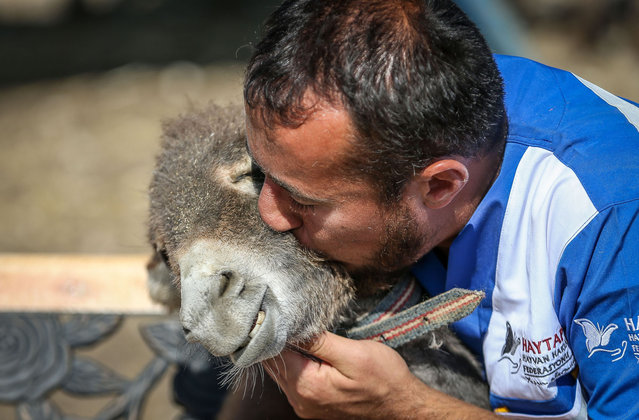
A worker caresses a donkey at the Retired Animals Farm in Turkey's Bursa on October 01, 2020. Animal Rights Federation in Turkey (HAYTAP) established a “Retired Animals Farm” in Bursa for animals that were tortured, thrown out by their owners, injured and in need of assistance for similar reasons. Built in the neighborhood of Baskoy in Nilufer district after long term efforts, the farm provides a home to animals of many species, such as horse, donkey, cow, sheep, chicken from all around Turkey. The farm project receives support from various institutions and organizations. (Photo by Sergen Sezgin/Anadolu Agency via Getty Images)

A worker caresses a donkey at the Retired Animals Farm in Turkey's Bursa on October 01, 2020. Animal Rights Federation in Turkey (HAYTAP) established a “Retired Animals Farm” in Bursa for animals that were tortured, thrown out by their owners, injured and in need of assistance for similar reasons. Built in the neighborhood of Baskoy in Nilufer district after long term efforts, the farm provides a home to animals of many species, such as horse, donkey, cow, sheep, chicken from all around Turkey. The farm project receives support from various institutions and organizations. (Photo by Sergen Sezgin/Anadolu Agency via Getty Images)
Details
22 Oct 2020 00:01:00
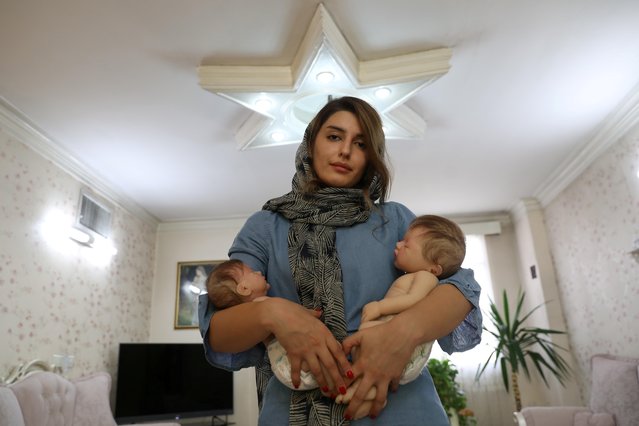
Twenty-four-year-old Maryam Aghayee makes hyper-realistic baby dolls acting as surrogates for some Iranian families who are apprehensive of having more children. “It has been about three or four months since I started this work”, says Maryam in Tehran, Iran on October 7, 2020. “After making my second doll, many orders have been coming in. The second doll was much more realistic than the previous one. After making my second doll, I said that from now on I can take customer orders. I did not intend to start a business from the beginning because it was a hobby, but after the second doll, the demand for these kinds of dolls increased, customers want to have such dolls”. (Photo by Majid Asgaripour/WANA (West Asia News Agency) via Reuters)

Twenty-four-year-old Maryam Aghayee makes hyper-realistic baby dolls acting as surrogates for some Iranian families who are apprehensive of having more children. “It has been about three or four months since I started this work”, says Maryam in Tehran, Iran on October 7, 2020. “After making my second doll, many orders have been coming in. The second doll was much more realistic than the previous one. After making my second doll, I said that from now on I can take customer orders. I did not intend to start a business from the beginning because it was a hobby, but after the second doll, the demand for these kinds of dolls increased, customers want to have such dolls”. (Photo by Majid Asgaripour/WANA (West Asia News Agency) via Reuters)
Details
25 Oct 2020 00:01:00
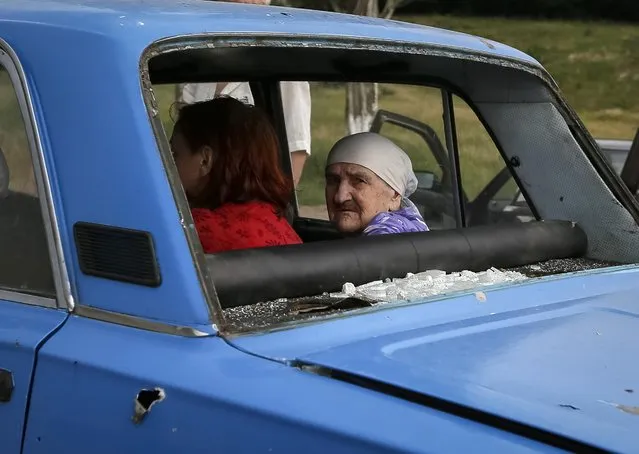
Caught In East Ukraine Crossfire

An old woman looks from inside a car with bullet holes and shattered windows as she flees fighting in the eastern Ukrainian town of Slaviansk June 9, 2014. REUTERS/Gleb Garanich.
Details
10 Jun 2014 11:15:00
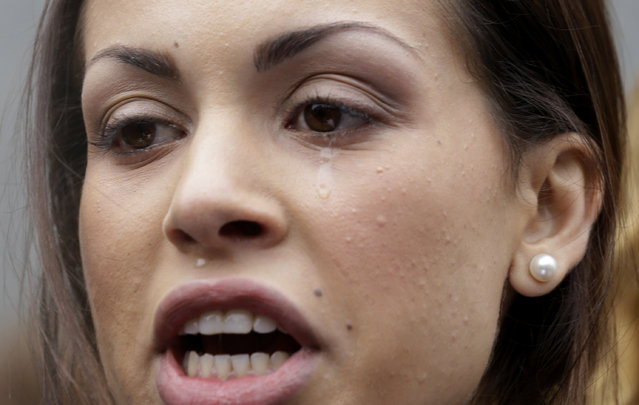
A tear rolls down the cheek of Karima el-Mahroug, also known as Ruby, a Moroccan woman at the center of ex-Premier Silvio Berlusconi's s*x-for-hire trial, as she reads a statement to reporters during a protest outside the court house, in Milan, Italy, Thursday, April 4, 2013. The Moroccan woman at the center of ex-Premier Silvio Berlusconi's s*x-for-hire trial has denounced what she says is psychological warfare being waged against her by Italian prosecutors. Ruby, read out a lengthy statement Thursday to a gaggle of reporters in front of Milan's courthouse denying she was a prostitute and insisting that prosecutors hear her side of the story. (Photo by Luca Bruno/AP Photo)

A tear rolls down the cheek of Karima el-Mahroug, also known as Ruby, a Moroccan woman at the center of ex-Premier Silvio Berlusconi's s*x-for-hire trial, as she reads a statement to reporters during a protest outside the court house, in Milan, Italy, Thursday, April 4, 2013. The Moroccan woman at the center of ex-Premier Silvio Berlusconi's s*x-for-hire trial has denounced what she says is psychological warfare being waged against her by Italian prosecutors. Ruby, read out a lengthy statement Thursday to a gaggle of reporters in front of Milan's courthouse denying she was a prostitute and insisting that prosecutors hear her side of the story. (Photo by Luca Bruno/AP Photo)
Details
14 May 2013 10:44:00
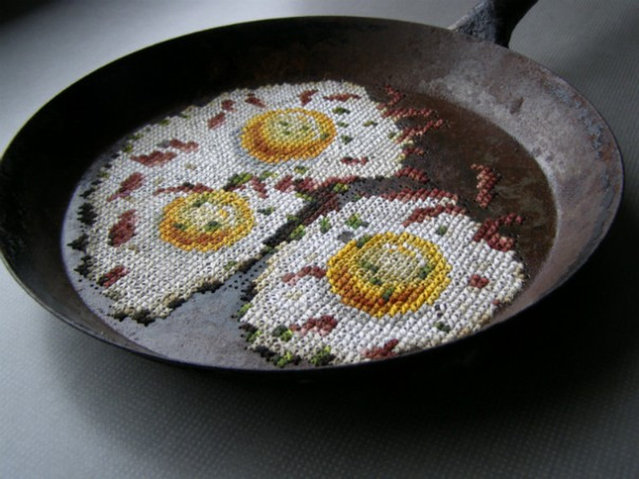
Embroidery On Metal By Severija Incirauskaite-Kriauneviciene

Just when you thought you had seen it all…Lithuanian artist, Severija Incirauskaite-Kriauneviciene drives up in this. This woman is comfortable around a drill bit and a sewing kit. Back it up and park it.
Details
08 Dec 2012 15:10:00