Loading...
Done
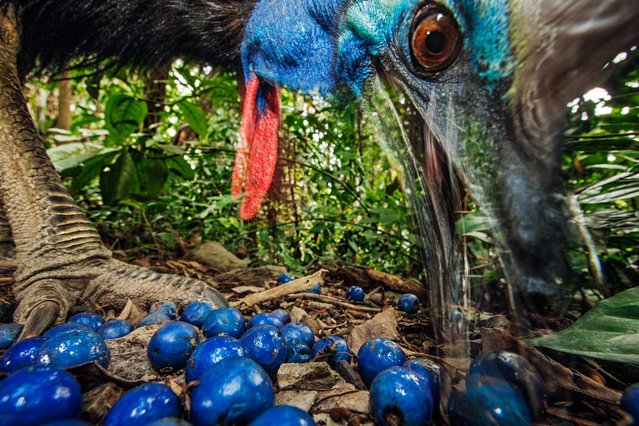
“Cassowaries are large, flightless birds related to emus and (more distantly) to ostriches, rheas, and kiwis”, writes Olivia Judson in the September issue of National Geographic magazine. (Photo by Christian Ziegler/National Geographic)

“Cassowaries are large, flightless birds related to emus and (more distantly) to ostriches, rheas, and kiwis”, writes Olivia Judson in the September issue of National Geographic magazine. How large? People-size: Adult males stand well over five foot five and top 110 pounds. Females are even taller, and can weigh more than 160 pounds. Dangerous when roused, they’re shy and peaceable when left alone. But even birds this big and tough are prey to habitat loss. The dense New Guinea and Australia rain forests where they live have dwindled. Today cassowaries might number 1,500 to 2,000. And because they help shape those same forests – by moving seeds from one place to another – “if they vanish”, Judson writes, “the structure of the forest would gradually change” too. (Photo by Christian Ziegler/National Geographic)
Details
06 Jan 2014 12:21:00
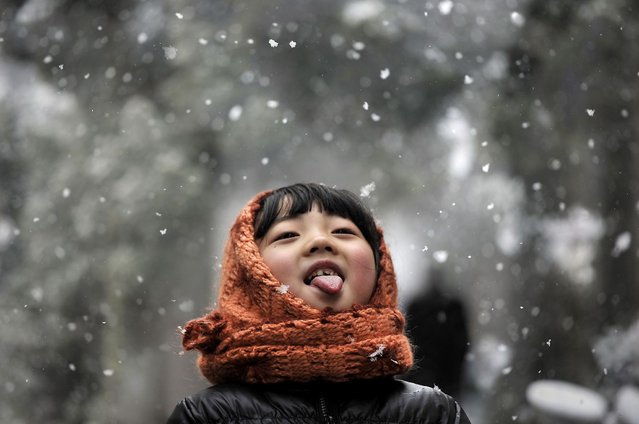
A girl sticks out her tongue during snowfalls on a street in Hefei, Anhui province February 13, 2014. (Photo by Reuters/Stringer)

A girl sticks out her tongue during snowfalls on a street in Hefei, Anhui province February 13, 2014. (Photo by Reuters/Stringer)
Details
15 Feb 2014 12:09:00
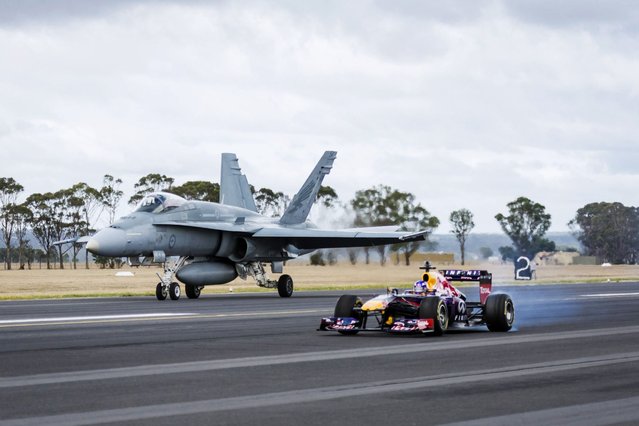
Daniel Ricciardo performs alongside Michael Kneightley in an RAAF F/A-18 Hornet at RAAF Base in East Sale, Victoria, Australia on March 12th, 2014. (Photo by Andy Green/Red Bull Content Pool)

Daniel Ricciardo performs alongside Michael Kneightley in an RAAF F/A-18 Hornet at RAAF Base in East Sale, Victoria, Australia on March 12th, 2014. (Photo by Andy Green/Red Bull Content Pool)
Details
15 Mar 2014 10:21:00
Animal rights activists covered with fake blood sit on the floor during a protest against the use of animals in research to mark World Day for Animals in Laboratories in central Madrid April 24, 2014. The sign reads, “How many rabbits do your shampoo kill?”. (Photo by Andrea Comas/Reuters)

Animal rights activists covered with fake blood sit on the floor during a protest against the use of animals in research to mark World Day for Animals in Laboratories in central Madrid April 24, 2014. The sign reads, “How many rabbits do your shampoo kill?”. (Photo by Andrea Comas/Reuters)
Details
26 Apr 2014 11:44:00
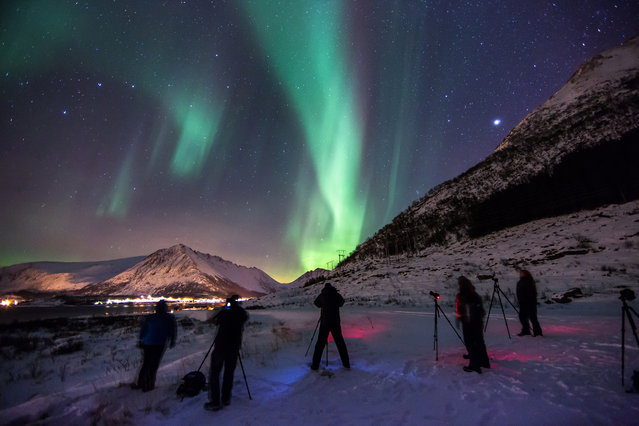
“Aurora Hunters”. Photographers taking part in a photography tour on the Lofoten Islands in Norway, pull over on the side of the road to take a photo of their first ever Aurora Borealis after spotting it from their tour bus. Photo location: Rystad, Lofoten Islands, Norway. (Photo and caption by Mark Gee/National Geographic Photo Contest)

“Aurora Hunters”. Photographers taking part in a photography tour on the Lofoten Islands in Norway, pull over on the side of the road to take a photo of their first ever Aurora Borealis after spotting it from their tour bus. Photo location: Rystad, Lofoten Islands, Norway. (Photo and caption by Mark Gee/National Geographic Photo Contest)
Details
17 Jun 2014 10:08:00
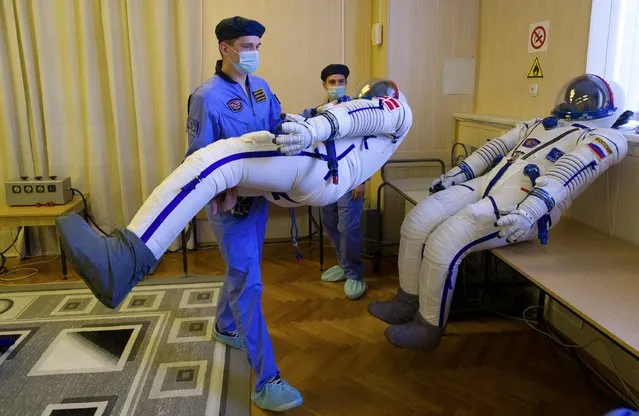
Employees prepare spacesuits at the Russian-leased Baikonur cosmodrome in Kazakhstan on August 19, 2015. Members of the main crew of the 45/46 expedition to the International Space Station ISS, Kazakhstan's cosmonaut Aydyn Aimbetov, Russian cosmonaut Sergei Volkov and Denmark's astronaut Andreas Mogensen from the European Space Agency, are scheduled to blast off to the International Space Station (ISS) on September 2, 2015. (Photo by AFP Photo)

Employees prepare spacesuits at the Russian-leased Baikonur cosmodrome in Kazakhstan on August 19, 2015. Members of the main crew of the 45/46 expedition to the International Space Station ISS, Kazakhstan's cosmonaut Aydyn Aimbetov, Russian cosmonaut Sergei Volkov and Denmark's astronaut Andreas Mogensen from the European Space Agency, are scheduled to blast off to the International Space Station (ISS) on September 2, 2015. (Photo by AFP Photo)
Details
20 Aug 2015 13:45:00
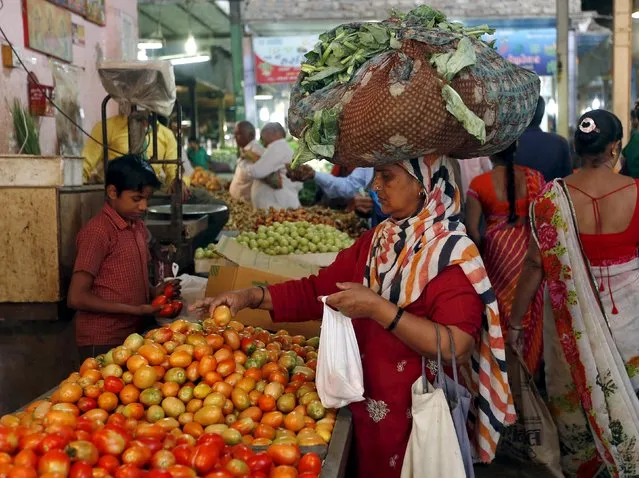
A woman carrying cabbage leaves on her head buys tomato at a market in Ahmedabad, India, November 9, 2015. (Photo by Amit Dave/Reuters)

A woman carrying cabbage leaves on her head buys tomato at a market in Ahmedabad, India, November 9, 2015. India's villages face a sharp spike in food prices in 2016, as a second year of drought drives up the cost of ingredients such as sugar and milk, and poor transport infrastructure stops falling global prices from reaching rural areas. (Photo by Amit Dave/Reuters)
Details
19 Nov 2015 08:02:00
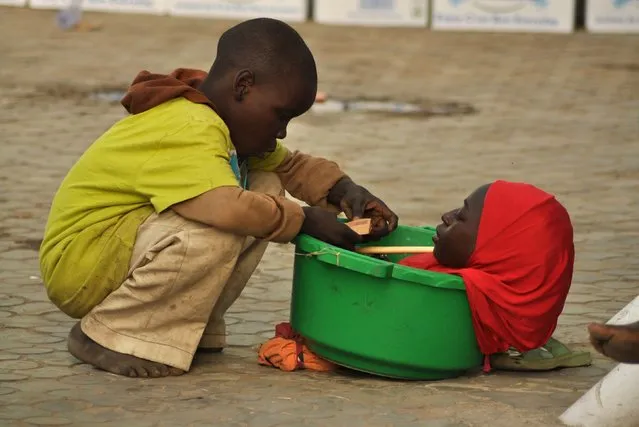
A physically challenged girl looks at her brother as she is kept in a basin to seek alms from people on the street in Kano, Nigeria December 30, 2015. (Photo by Reuters/Stringer)

A physically challenged girl looks at her brother as she is kept in a basin to seek alms from people on the street in Kano, Nigeria December 30, 2015. The girl has suffered from her condition since birth. (Photo by Reuters/Stringer)
Details
02 Jan 2016 11:18:00