Loading...
Done
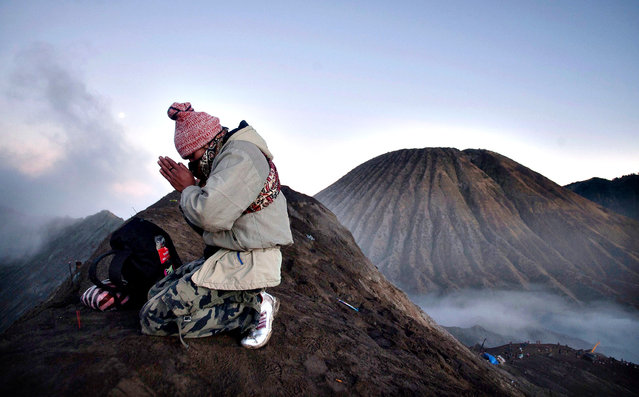
A Tengger tribesman prays at Mount Bromo during the annual Kasada ceremony in East Java on August 12, 2014. The Kasada ceremony is a festival held every 14th day of the Kasada month in the traditional Hindu lunar calender to honour Sang Hyang Widhi (God Almighty) and is based on the legend of Roro Anteng and Joko Seger from the Majapahit Kingdom, from which their Tengger tribe name originates. (Photo by Juni Kriswanto/AFP Photo)

A Tengger tribesman prays at Mount Bromo during the annual Kasada ceremony in East Java on August 12, 2014. The Kasada ceremony is a festival held every 14th day of the Kasada month in the traditional Hindu lunar calender to honour Sang Hyang Widhi (God Almighty) and is based on the legend of Roro Anteng and Joko Seger from the Majapahit Kingdom, from which their Tengger tribe name originates. Hundreds of worshippers from the Tengger tribe offer food and livestock as a symbolic sacrifice which they throw into the crater for the blessings of safety and prosperity to their familyies and community. (Photo by Juni Kriswanto/AFP Photo)
Details
16 Aug 2014 11:19:00
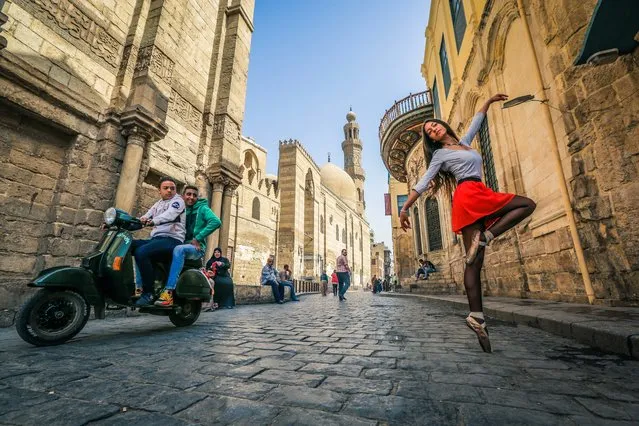
In his series “Ballerinas of Cairo”, photographer Mohamed Taher documents Egyptian dancers making the city streets their stage – pirouetting, leaping and posing their way through their country’s sprawling capital. The photos are, at first glance, stunning snapshots of a city’s vibrant culture in motion. But considering the dangers Egyptian women face for roaming these same streets on a daily basis, their impact is far deeper. Sexual harassment continues to present not just a possibility but a terrifying reality in present-day Egypt. A 2013 United Nations report calculated that 99.3 percent of women in the country have experienced sexual harassment on the streets, a problem that’s sparked initiatives giving women a way to fight back. The violence is rooted in an extreme conservative perspective encouraging women to stay in the home. (Photo by Mohamed Taher/Ballerinas of Cairo)

In his series “Ballerinas of Cairo”, photographer Mohamed Taher documents Egyptian dancers making the city streets their stage – pirouetting, leaping and posing their way through their country’s sprawling capital. The photos are, at first glance, stunning snapshots of a city’s vibrant culture in motion. (Photo by Mohamed Taher/Ballerinas of Cairo)
Details
17 Jan 2017 12:30:00
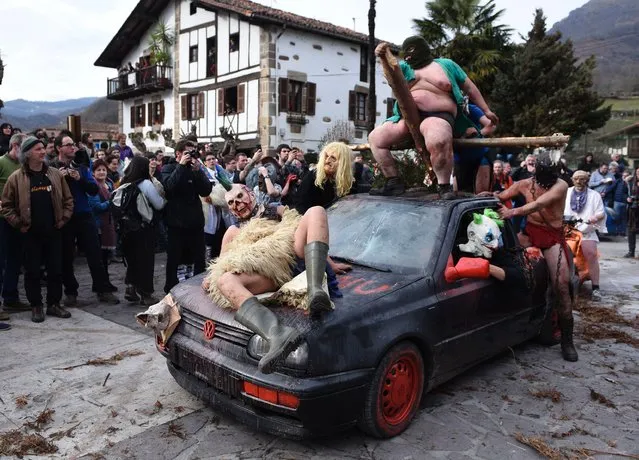
Disguised participants strike poses on a car during the ancient carnival of Ituren, in the northern Spanish Navarra province on January 30, 2017. The yearly three day festivities, revolving mainly around agriculture and principally sheep hearding, run on the last Sunday, Monday and Tuesday of January where Navarra Valley locals from two villages dress up and participate in a variety of activites as they perform a pilgrimage through each village. (Photo by Ander Gillenea/AFP Photo)

Disguised participants strike poses on a car during the ancient carnival of Ituren, in the northern Spanish Navarra province on January 30, 2017. The yearly three day festivities, revolving mainly around agriculture and principally sheep hearding, run on the last Sunday, Monday and Tuesday of January where Navarra Valley locals from two villages dress up and participate in a variety of activites as they perform a pilgrimage through each village. (Photo by Ander Gillenea/AFP Photo)
Details
31 Jan 2017 10:00:00
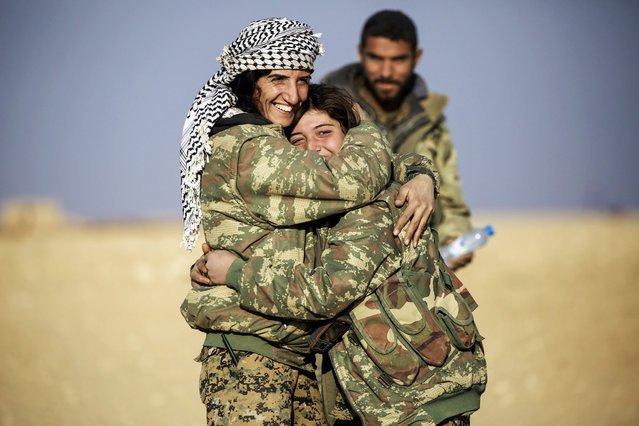
Rougine, a 19-year-old female Arab fighter among the Syrian Democratic Forces, made up of US-backed Kurdish and Arab fighters, stands in fatigues embracing another colleague near the village of al-Torshan, 20 km on the outskirts of Raqa on February 6, 2017. Unlike Syria's Kurds, who have emphasised gender equality in both their militias and nascent autonomous governing institutions in north and northeast Syria, the Arab tribes in the same region are among the more conservative segments of the country's population, and most Arab families find the concept of female fighters “hard to accept”. (Photo by Delil Souleiman/AFP Photo)

Rougine, a 19-year-old female Arab fighter among the Syrian Democratic Forces, made up of US-backed Kurdish and Arab fighters, stands in fatigues embracing another colleague near the village of al-Torshan, 20 km on the outskirts of Raqa on February 6, 2017. (Photo by Delil Souleiman/AFP Photo)
Details
13 Feb 2017 00:05:00
Iraqis run for cover as they flee Mosul's Al-Tayaran neighbourhood on February 28, 2017, during an offensive by Iraqi forces to retake the area from Islamic State (IS) group fighters. Hundreds of civilians fled through the desert to escape fighting and privation in Mosul, joining thousands of others who left their homes as conditions worsen in the city's west. (Photo by Ahmad Al-Rubaye/AFP Photo)

Iraqis run for cover as they flee Mosul's Al-Tayaran neighbourhood on February 28, 2017, during an offensive by Iraqi forces to retake the area from Islamic State (IS) group fighters. Hundreds of civilians fled through the desert to escape fighting and privation in Mosul, joining thousands of others who left their homes as conditions worsen in the city's west. (Photo by Ahmad Al-Rubaye/AFP Photo)
Details
02 Mar 2017 00:01:00
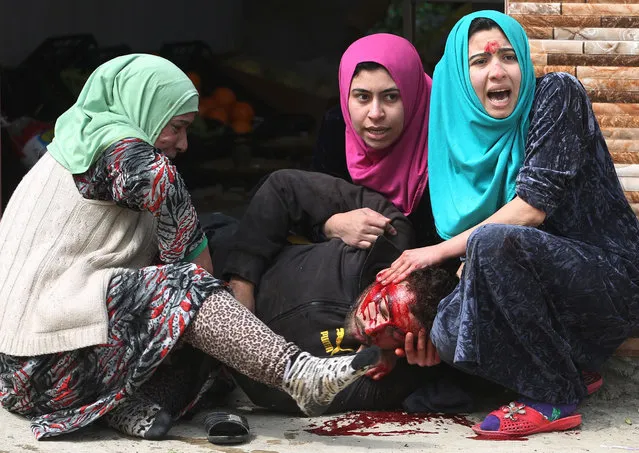
Iraqi women cry over their brother's body, who was killed by a mortar shell fired by Islamic State (IS) group jihadists on civilians who were gathered to receive aid, in Al-Risala neighbourhood on March 22, 2017, as an ongoing offensive by Iraqi forces to retake the city from the group continues. Iraqi forces launched a major operation to recapture west Mosul – the most-populated urban area still held by IS – on February 19, and have retaken a series of neighbourhoods from the jihadists. (Photo by Ahmad Al-Rubaye/AFP Photo)

Iraqi women cry over their brother's body, who was killed by a mortar shell fired by Islamic State (IS) group jihadists on civilians who were gathered to receive aid, in Al-Risala neighbourhood on March 22, 2017, as an ongoing offensive by Iraqi forces to retake the city from the group continues. Iraqi forces launched a major operation to recapture west Mosul – the most-populated urban area still held by IS – on February 19, and have retaken a series of neighbourhoods from the jihadists. (Photo by Ahmad Al-Rubaye/AFP Photo)
Details
27 Mar 2017 08:30:00
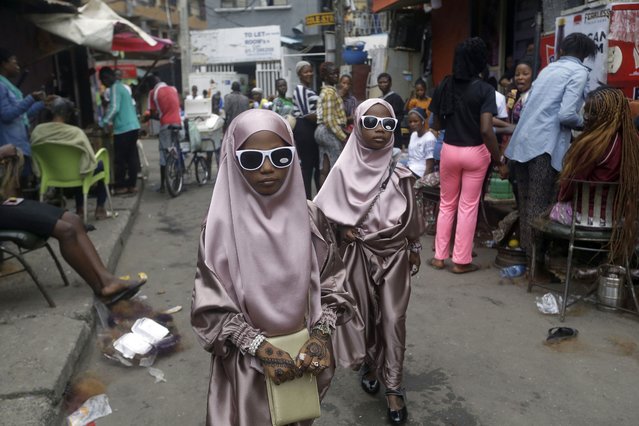
Muslim girls are seen after prayers, in Lagos, Nigeria, Friday, July 31, 2020. Small groups of pilgrims performed one of the final rites of the Islamic hajj on Friday as Muslims worldwide marked the start of the Eid al-Adha holiday amid a global pandemic that has impacted nearly every aspect of this year's pilgrimage and celebrations. The last days of hajj coincide with the four-day Eid al-Adha, or “Feast of Sacrifice”, in which Muslims slaughter livestock and distribute the meat to the poor. (Photo by Sunday Alamba/AP Photo)

Muslim girls are seen after prayers, in Lagos, Nigeria, Friday, July 31, 2020. Small groups of pilgrims performed one of the final rites of the Islamic hajj on Friday as Muslims worldwide marked the start of the Eid al-Adha holiday amid a global pandemic that has impacted nearly every aspect of this year's pilgrimage and celebrations. The last days of hajj coincide with the four-day Eid al-Adha, or “Feast of Sacrifice”, in which Muslims slaughter livestock and distribute the meat to the poor. (Photo by Sunday Alamba/AP Photo)
Details
14 Aug 2020 00:01:00
This aerial picture taken on August 16, 2020, shows the MV Wakashio bulk carrier that had run aground and broke into two parts near Blue Bay Marine Park, Mauritius. A ship that has leaked more than 1,000 tonnes of oil in pristine waters off the Mauritius coast has split into two, its Japanese operator said August 16, 2020. (Photo by AFP Photo/Stringer)

This aerial picture taken on August 16, 2020, shows the MV Wakashio bulk carrier that had run aground and broke into two parts near Blue Bay Marine Park, Mauritius. A ship that has leaked more than 1,000 tonnes of oil in pristine waters off the Mauritius coast has split into two, its Japanese operator said August 16, 2020. (Photo by AFP Photo/Stringer)
Details
08 Sep 2020 00:03:00