Loading...
Done
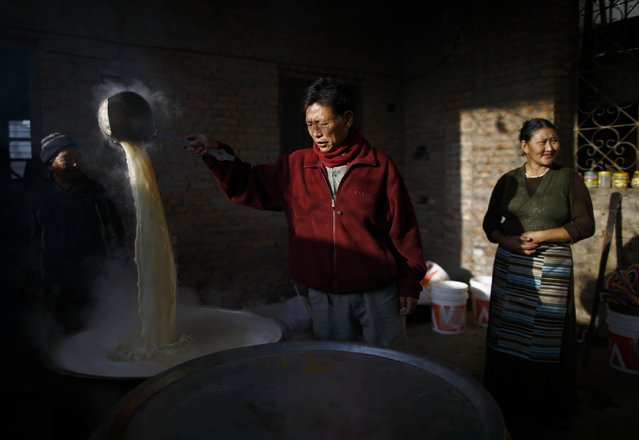
A Tibetan man stirs butter tea made for the arriving guest during the function organised to mark Losar or the Tibetan New Year at a Tibetan Refugee Camp in Lalitpur February 19, 2015. (Photo by Navesh Chitrakar/Reuters)

A Tibetan man stirs butter tea made for the arriving guest during the function organised to mark Losar or the Tibetan New Year at a Tibetan Refugee Camp in Lalitpur February 19, 2015. Tibetans across the world marked the arrival of the New Year with prayers and festivities. (Photo by Niranjan Shrestha/AP Photo)
Details
20 Feb 2015 13:06:00
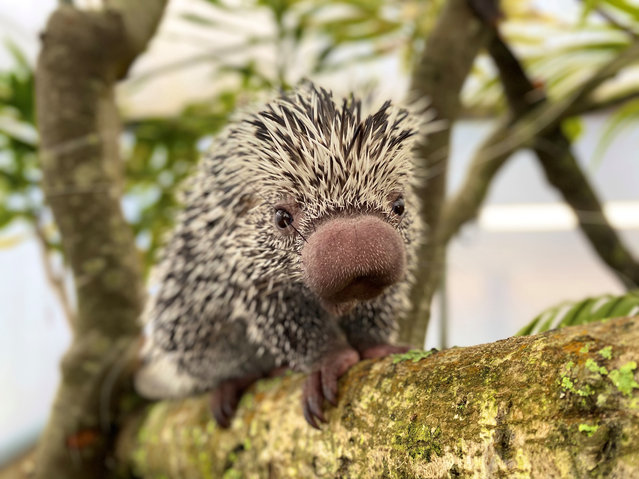
Runner-up, Heart and Minds: Nifty nose, by Samantha Allworthy at Longleat. Species: prehensile tailed porcupines. (Photo by Samantha Allworthy/BIAZA 2020 Photography Competition)

The British and Irish Association of Zoos and Aquariums (BIAZA) has announced the winning images in its annual photography competition. The 2020 winners show the important work of zoos and aquariums at an immensely challenging time. After months of closures, these conservation organisations are reeling from the financial impacts of the coronavirus pandemic. Here: Runner-up, Heart and Minds: Nifty nose, by Samantha Allworthy at Longleat. Species: prehensile tailed porcupines. (Photo by Samantha Allworthy/BIAZA 2020 Photography Competition)
Details
24 Jul 2020 00:03:00
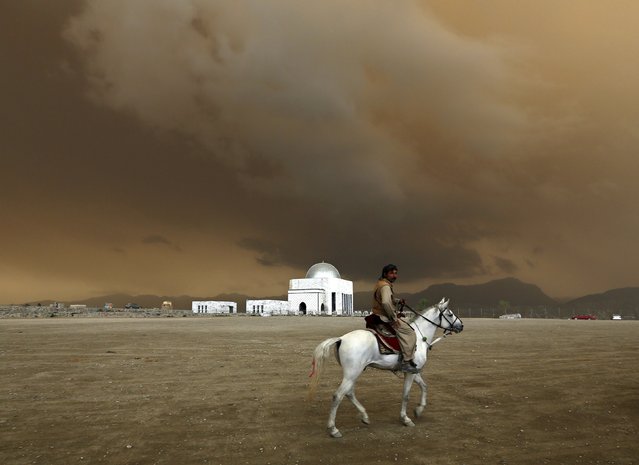
A man rides a horse at a playground on a hill in Kabul April 19, 2015. (Photo by Mohammad Ismail/Reuters)

A man rides a horse at a playground on a hill in Kabul April 19, 2015. (Photo by Mohammad Ismail/Reuters)
Details
21 Apr 2015 10:46:00
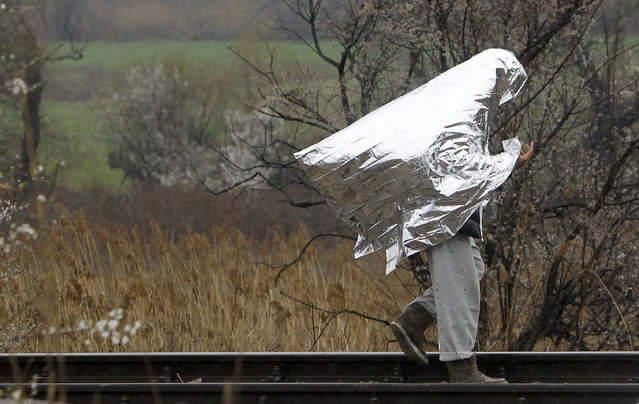
A man covered with thermal blanket walks along railway tracks beside an improvised refugee camp on the border line between Macedonia and Serbia near the northern Macedonian village of Tabanovce, Thursday, March 10, 2016. Around 1.500 migrants and refugees are stranded at Tabanovce transit center for refugees in northern Macedonia. (Photo by Boris Grdanoski/AP Photo)

A man covered with thermal blanket walks along railway tracks beside an improvised refugee camp on the border line between Macedonia and Serbia near the northern Macedonian village of Tabanovce, Thursday, March 10, 2016. Around 1.500 migrants and refugees are stranded at Tabanovce transit center for refugees in northern Macedonia. (Photo by Boris Grdanoski/AP Photo)
Details
11 Mar 2016 14:35:00
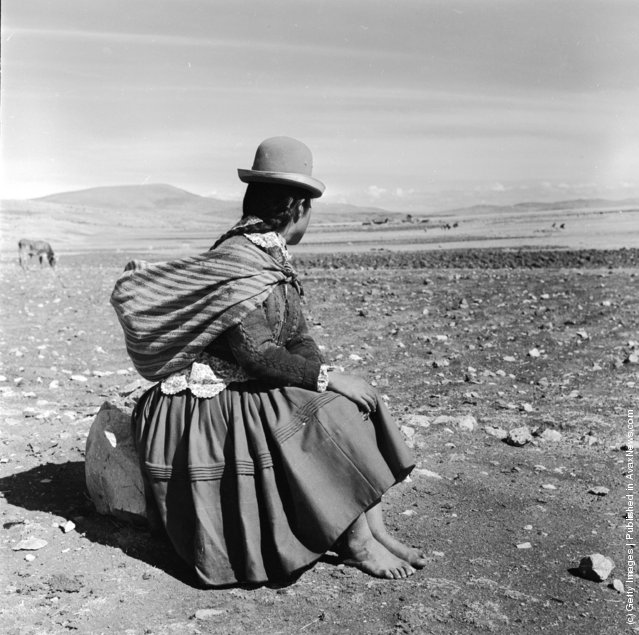
Burdened with a shawl full of her belongings, a woman stops for a rest on the road between Julaca and Puno in Peru, 1955

Burdened with a shawl full of her belongings, a woman stops for a rest on the road between Julaca and Puno in Peru. (Photo by Three Lions/Getty Images). Circa 1955
Details
09 Aug 2011 11:48:00
1936:  Lucie Clayton instructs pupils in the art of correct posture by balancing a glass and book on their heads at her finishing school

Lucie Clayton instructs pupils in the art of correct posture by balancing a glass and book on their heads at her finishing school in Old Cavendish Street, London. (Photo by William Vanderson/Fox Photos/Getty Images). 25th November 1936
Details
06 Sep 2011 12:06:00
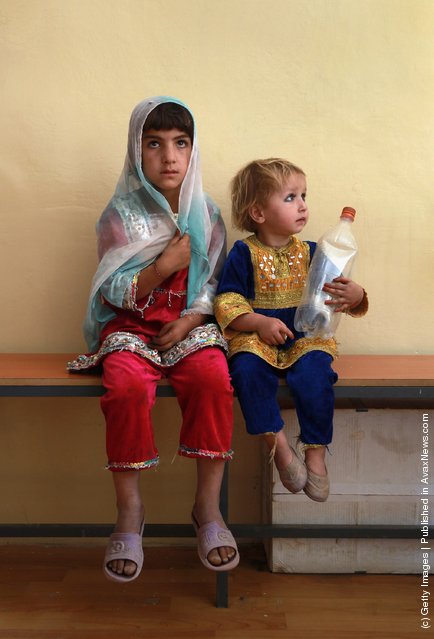
Afghan children wait as their mothers receive treatment at a USAID-funded health center

Afghan children wait as their mothers receive treatment at a USAID-funded health center on September 7, 2011 in Farza, Afghanistan. Almost 10 years after the 9/11 attacks and the U.S. invasion of Afghanistan, the U.S. government funds some of 500 Afghan health facilities nationwide, most run by non-governmental organizations contracted by the Afghan Ministry of Public Health. (Photo by John Moore/Getty Images)
Details
09 Sep 2011 09:54:00
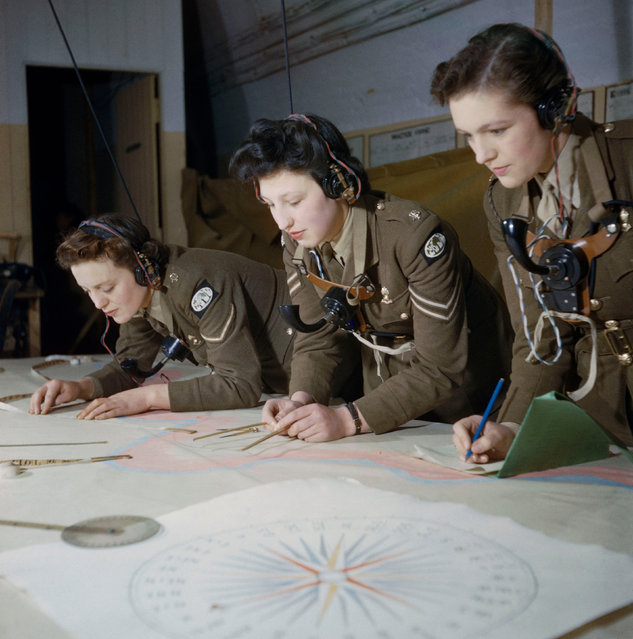
Auxiliary Territorial Service (ATS) plotters at work at Coastal Artillery Headquarters in Dover, December 1942. (Photo by Ted Dearberg/IWM/PA Wire)

Auxiliary Territorial Service (ATS) plotters at work at Coastal Artillery Headquarters in Dover, December 1942. The Auxiliary Territorial Service was the women's branch of the British Army during the Second World War. It was formed on 9 September 1938, initially as a women's voluntary service, and existed until 1 February 1949, when it was merged into the Women's Royal Army Corps. The ATS had its roots in the Women's Auxiliary Army Corps (WAAC), which was formed in 1917 as a voluntary service. During the First World War its members served in a number of jobs including clerks, cooks, telephonists and waitresses. The WAAC was disbanded after four years in 1921. (Photo by Ted Dearberg/IWM/PA Wire)
Details
13 Jul 2017 07:52:00