Loading...
Done
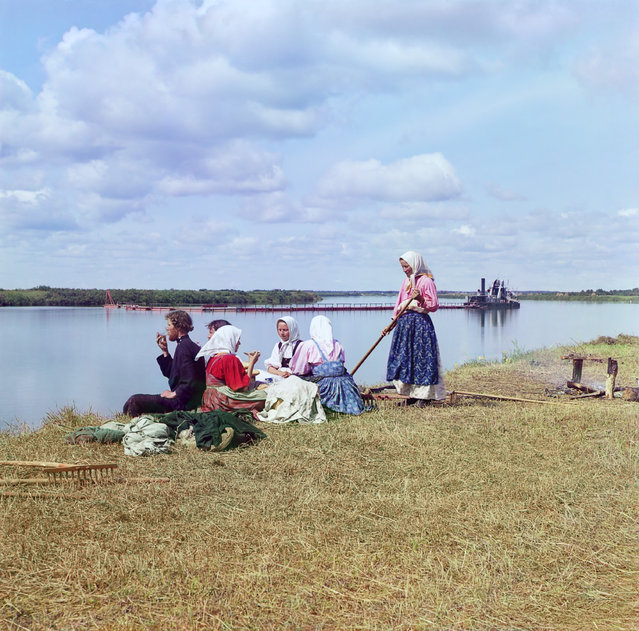
Photos by Sergey Prokudin-Gorsky. Dinner during haying. Russian Empire, Novgorod province, county Cherepovets, 1909

“Sergey Mikhaylovich Prokudin-Gorsky (August 30 1863 Russian Empire – September 27, 1944 Paris, France) was a Russian chemist and photographer. He is best known for his pioneering work in color photography of early 20th-century Russia”. – Wikipedia

Photo: Dinner during haying. Russian Empire, Novgorod province, county Cherepovets, 1909. (Photos by Sergey Prokudin-Gorsky via US Library of Congress and Prokudin-Gorsky.org)

P.S. All pictures are presented in high resolution. To see Hi-Res images – just TWICE click on any picture. In other words, click small picture – opens the BIG picture. Click BIG picture – opens VERY BIG picture (if available; this principle works anywhere on the site AvaxNews). Enjoy.
Details
24 Jul 2012 12:03:00


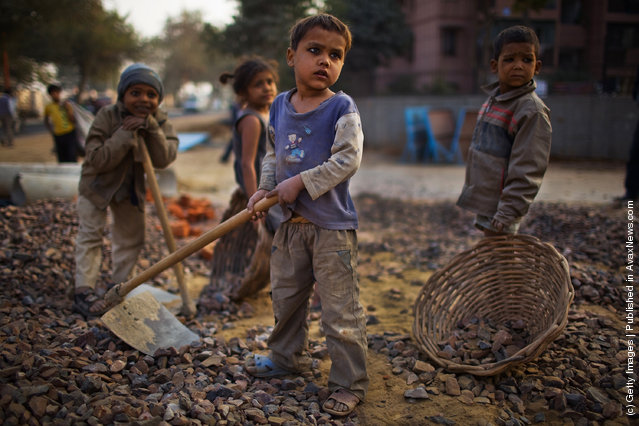
Indian children work nearby to their parents at a construction project in front of the Jawaharlal Nehru Stadium on January 30, 2010 in New Delhi, India. The children accompany their parents to the work site, where if they are prepared to work, they will receive money for bread an milk and be provided with dinner by the contractor. The sheer scale of the project has drawn an enormous population of migrant workers from all over India.
Details
20 May 2011 07:00:00
DJ Evans Mireku Kissi (R) and fashion stylist Daniel Quist ride a motorcycle in front of a street side bar in Accra, Ghana. June 10, 2015. (Photo by Francis Kokoroko/Reuters)

DJ Evans Mireku Kissi (R) and fashion stylist Daniel Quist ride a motorcycle in front of a street side bar in Accra, Ghana. June 10, 2015. Young artists in Ghana's capital have evolved a new style that is turning heads and challenging accepted notions of African fashion. (Photo by Francis Kokoroko/Reuters)
Details
23 Oct 2015 08:02:00
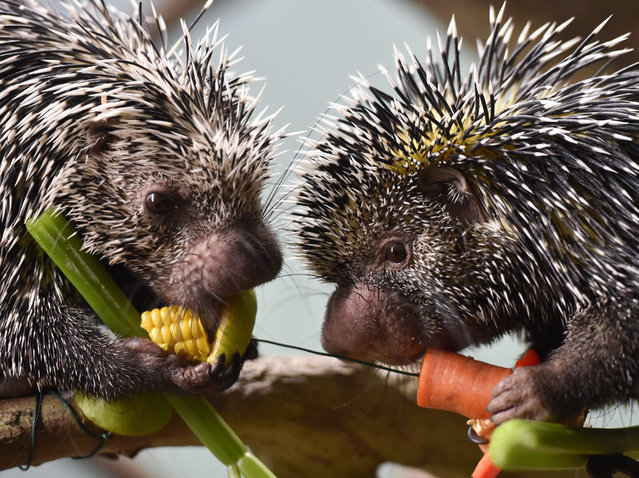
The coendou porcupine couple 'Joppi' (L) and 'Fletcher' nibble at a vegetables in their enclosure at the zoo in Frankfurt am Main, Germany, 03 December 2015. Coendou porcupines are nocturnal rodents related to porcupines and guinea pigs and native to the rain forests of Central and South America as well as Trinidad. (Photo by Arne Dedert/EPA)

The coendou porcupine couple 'Joppi' (L) and 'Fletcher' nibble at a vegetables in their enclosure at the zoo in Frankfurt am Main, Germany, 03 December 2015. Coendou porcupines are nocturnal rodents related to porcupines and guinea pigs and native to the rain forests of Central and South America as well as Trinidad. (Photo by Arne Dedert/EPA)
Details
05 Dec 2015 08:03:00
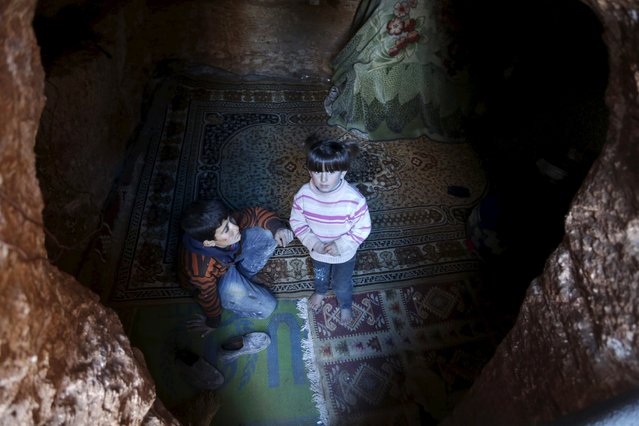
Internally displaced Syrian children stand at the entrance of their makeshift shelter that is an underground cave in Om al-Seer, southern Idlib countryside, Syria December 26, 2015. (Photo by Khalil Ashawi/Reuters)

Internally displaced Syrian children stand at the entrance of their makeshift shelter that is an underground cave in Om al-Seer, southern Idlib countryside, Syria December 26, 2015. (Photo by Khalil Ashawi/Reuters)
Details
28 Dec 2015 08:01:00
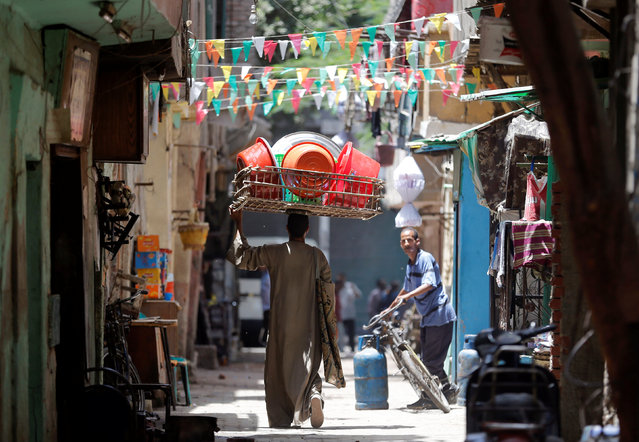
An Egyptian street vendor carries plastic dishes on a street decorated for the holy month of Ramadan in old Cairo, Egypt June 1, 2016. (Photo by Amr Abdallah Dalsh/Reuters)

An Egyptian street vendor carries plastic dishes on a street decorated for the holy month of Ramadan in old Cairo, Egypt June 1, 2016. (Photo by Amr Abdallah Dalsh/Reuters)
Details
15 Jul 2016 12:20:00
A biker rides in a “Ride for Pride” event to show support for the Confederate flag in Brandon, Hillsborough County, June 26, 2015. (Photo by Carlo Allegri/Reuters)

A biker rides in a “Ride for Pride” event to show support for the Confederate flag in Brandon, Hillsborough County, June 26, 2015. Several hundred people took part in the event. (Photo by Carlo Allegri/Reuters)
Details
28 Jun 2015 13:01:00
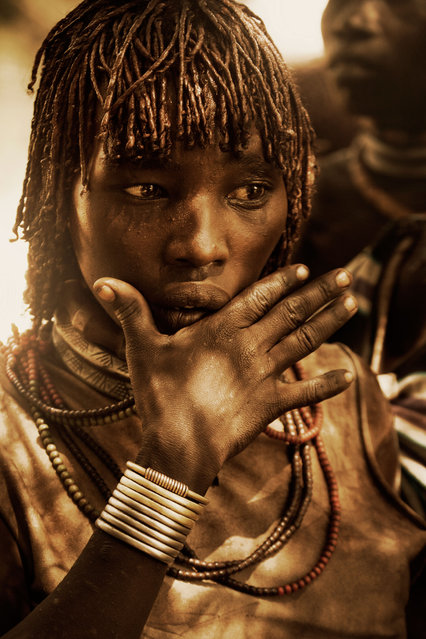
The Hamar people traditionally use red ocher clay to braid the hair of their women. (Photo by Diego Arroyo)

During his time in Ethiopia, New York-based art director and photographer Diego Arroyo spent time with the Hamar, Mursi, Dassanech, and Arbore Tribes. They, along with several others tribes, make up the 200,000 people situated in Africa’s Great Rift Valley. The people of the Omo Valley are still primarily herders and farmers, living an isolated and simple life. While they have yet to be truly touched by globalization, they could soon disappear. Their way of life is being threatened by a massive hydroelectric dam. (Photo by Diego Arroyo)
Details
13 Aug 2014 10:00:00