Singer Rihanna in the audience at the 54th Annual GRAMMY Awards held at Staples Center on February 12, 2012 in Los Angeles, California. (Photo by Larry Busacca/Getty Images For The Recording Academy)
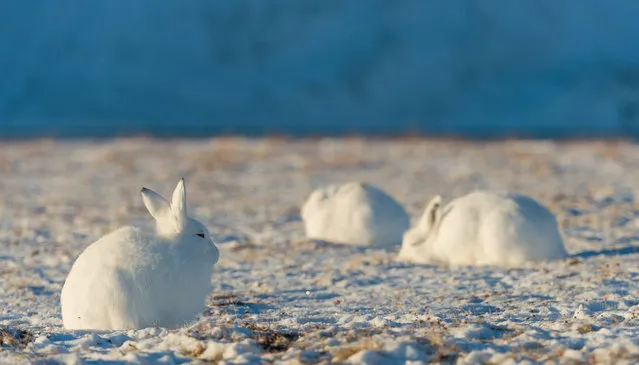
The arctic hare, or polar rabbit, is a species of hare which is adapted largely to polar and mountainous habitats. The arctic hare survives with a thick coat of fur and usually digs holes in the ground or under snow to keep warm and sleep. Arctic hares look like rabbits but have shorter ears, are taller when standing, and, unlike rabbits, can thrive in cold climates. They can travel together with many other hares, sometimes huddling with dozens or more, but are usually found alone, taking, in some cases, more than one partner. The arctic hare can run up to 60 kilometres per hour (40 mph). Its predators include the arctic wolf, arctic fox, and ermine.
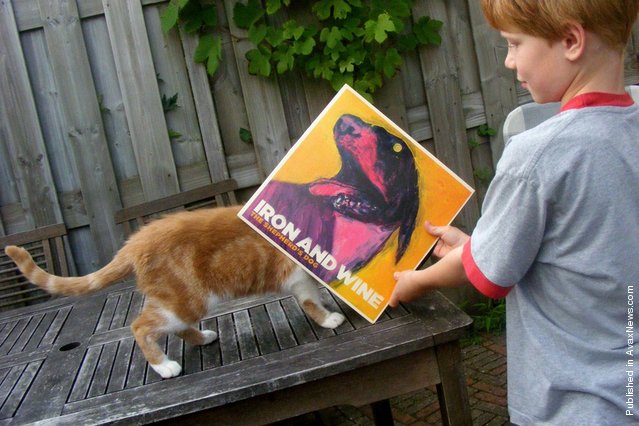
“Sleeveface is an internet phenomenon wherein one or more persons obscure or augment body parts with record sleeve(s), causing an illusion. Sleeveface has become popular on social networking sites”. – Wikipedia
Photo: “Doggy Style” (Photo by Samuel and Marco van Bergen via SleeveFace.com)
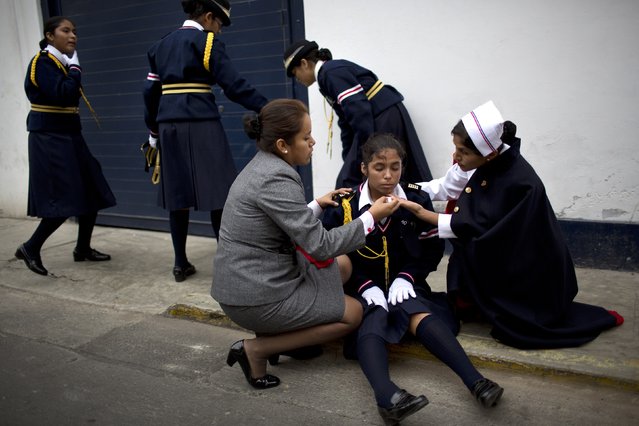
A student is assisted by teachers after she fell ill while marching in a parade celebrating Saint Peter's day in Lima, Peru, Monday, June 29, 2015. During the feast day of the Catholic saint, who is the patron saint of fishermen, coastal communities pay homage to St. Peter, whose statue is paraded to the sea and petitions are made to keep their vessels and all who work on them safe. (Photo by Rodrigo Abd/AP Photo)
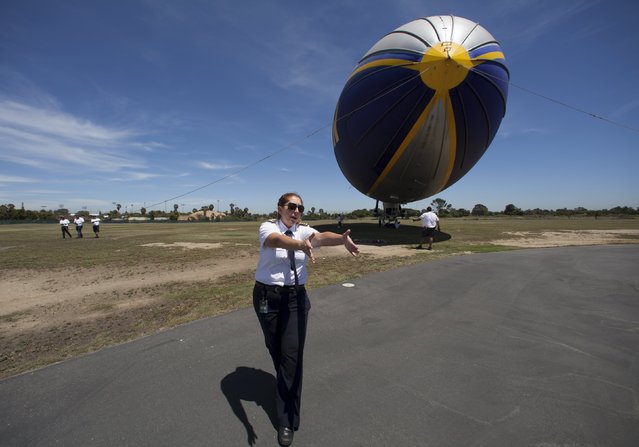
One of only three active female blimp pilots in the world, Kristen Arambula guides her passengers towards the Goodyear blimp “Spirit of America” in Carson, California August 5, 2015. Christened in 2002, the air ship is being retired after 8,000 flights and replaced with a newer more modern version named the “Spirit of Innovation” in September. (Photo by Mike Blake/Reuters)
Participants celebrate during the “Chupinazo” (start rocket) to mark the kickoff at noon sharp of the San Fermin Festival, in front of the Town Hall of Pamplona, northern Spain, on July 6, 2018. (Photo by Jaime Reina/AFP Photo)
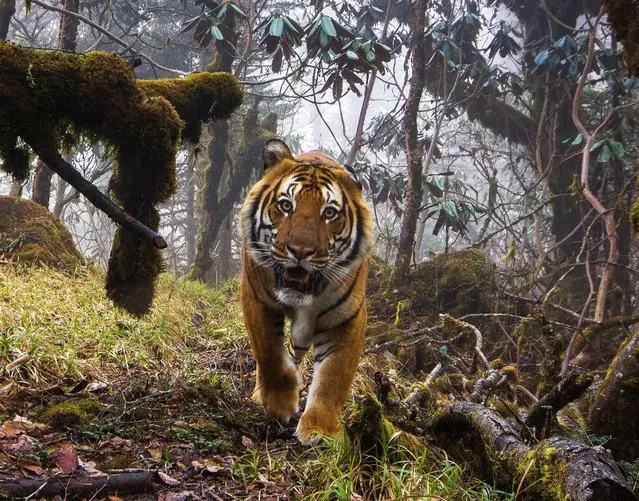
Rare images of wild tigers in Bhutan, captured by camera traps, show tigers and other animals using high-altitude wildlife corridors which are lifelines to isolated tiger populations and critical to genetic diversity, conservation and growth. Here: A wild Bengal tiger (Panthera tigris tigris) captured on a camera trap in corridor eight at an altitude of 3,540 metres in Trongsa, Bhutan. (Photo by Emmanuel Rondeau/WWF UK/The Guardian)
Underwater photographer of the year – winner. Dancing Octopus by Gabriel Barathieu (France). Location: Island of Mayotte, off the coast of south-east Africa. “Balletic and malevolent”, one judge said of this octopus, hunting in a lagoon. Barathieu waited until spring tides when there was just 30cm of water on the flats and plenty of light in the shallows. (Photo by Gabriel Barathieu/UPY2017)