Loading...
Done
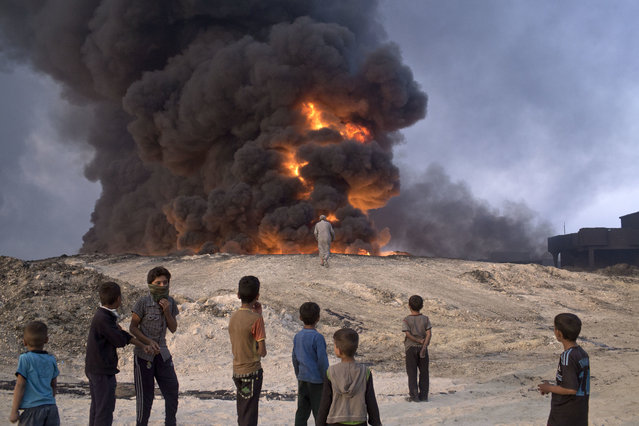
in Qayyarah, about 31 miles (50 km) south of Mosul, Iraq, Sunday, October 23, 2016.in Qayyarah, some 50 kilometers south of Mosul, Iraq, Sunday, Oct. 23, 2016. Islamic State fighters torched a sulfur plant south of Mosul, sending a cloud of toxic fumes into the air that mingled with oil wells the militants had lit on fire to create a smoke screen. (Photo by Marko Drobnjakovic/AP Photo)

in Qayyarah, about 31 miles (50 km) south of Mosul, Iraq, Sunday, October 23, 2016.in Qayyarah, some 50 kilometers south of Mosul, Iraq, Sunday, Oct. 23, 2016. Islamic State fighters torched a sulfur plant south of Mosul, sending a cloud of toxic fumes into the air that mingled with oil wells the militants had lit on fire to create a smoke screen. (Photo by Marko Drobnjakovic/AP Photo)
Details
24 Oct 2016 12:56:00
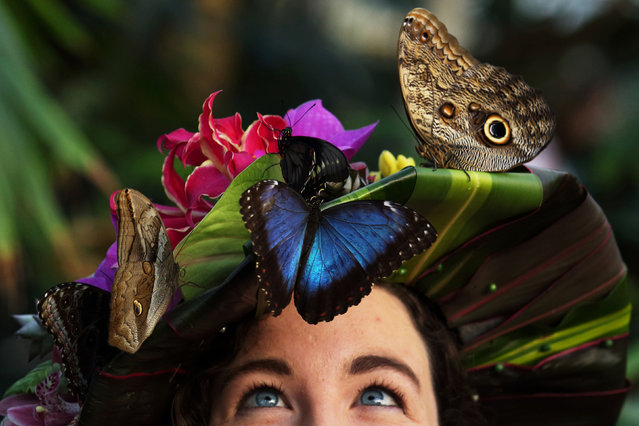
Entomologist Anna Platoni wears a hat made of tropical flowers made by florist Emma Reynolds with a Blue Morpho butterfly on her cheek to mark the opening of Butterflies in the Glasshouse at RHS Garden Wisley, south of London, on Janurary 15, 2016. (Photo by Luke MacGregor/PA Wire/RHS)

Entomologist Anna Platoni wears a hat made of tropical flowers made by florist Emma Reynolds with a Blue Morpho butterfly on her cheek to mark the opening of Butterflies in the Glasshouse at RHS Garden Wisley, south of London, on Janurary 15, 2016. (Photo by Luke MacGregor/PA Wire/RHS)
Details
16 Jan 2016 10:22:00
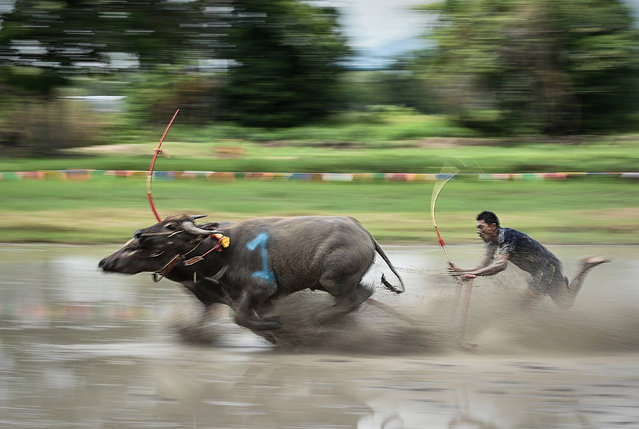
A jockey drives a buffalo in the annual water buffalo race, part of a week-long festival in homage to the animals and in celebration of the rice harvest in Chonburi, Thailand on April 1, 2016. (Photo by Vichaya Pop/Barcroft Media)

A jockey drives a buffalo in the annual water buffalo race, part of a week-long festival in homage to the animals and in celebration of the rice harvest in Chonburi, Thailand on April 1, 2016. (Photo by Vichaya Pop/Barcroft Media)
Details
02 Apr 2016 09:56:00
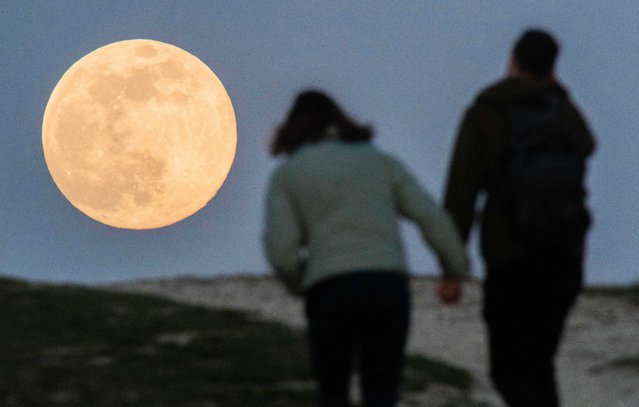
A couple is walking hand-held up Kronsberg, just outside Hanover, Germany on April 7, 2020, when the moon rises on the horizon as the so-called supermoon. The moon reaches its perigee, i.e. the point closest to the Earth's orbit, on the night of 7-8 April as a full moon and therefore appears particularly large to the human observer. (Photo by Julian Stratenschulte/dpa via ZUMA Press)

A couple is walking hand-held up Kronsberg, just outside Hanover, Germany on April 7, 2020, when the moon rises on the horizon as the so-called supermoon. The moon reaches its perigee, i.e. the point closest to the Earth's orbit, on the night of 7-8 April as a full moon and therefore appears particularly large to the human observer. (Photo by Julian Stratenschulte/dpa via ZUMA Press)
Details
09 Apr 2020 00:07:00
Models present creations “2033 (teens)” by Belarusian designer Anastasiya Kutepova during a show at the festival and contest Fashion Mill, amid the coronavirus disease (COVID-19) outbreak, in Minsk, Belarus on June 30, 2020. (Photo by Vasily Fedosenko/Reuters)

Models present creations “2033 (teens)” by Belarusian designer Anastasiya Kutepova during a show at the festival and contest Fashion Mill, amid the coronavirus disease (COVID-19) outbreak, in Minsk, Belarus on June 30, 2020. (Photo by Vasily Fedosenko/Reuters)
Details
02 Jul 2020 00:07:00
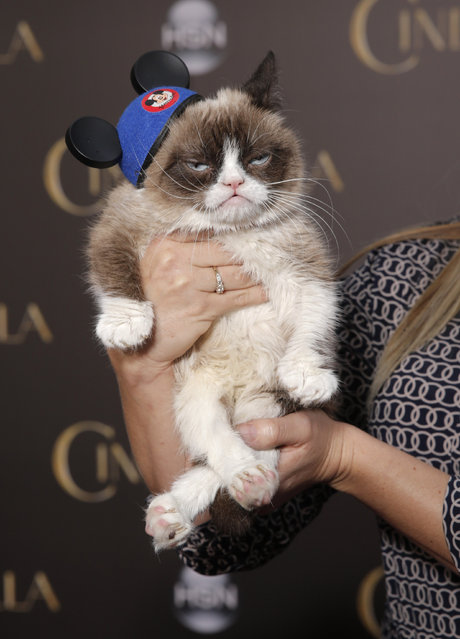
Grumpy Cat attends the World Premiere Of "Cinderella" on Sunday, March 1, 2015, in Los Angeles. (Photo by Todd Williamson/Invision/AP)

Grumpy Cat attends the World Premiere Of "Cinderella" on Sunday, March 1, 2015, in Los Angeles. (Photo by Todd Williamson/Invision/AP)
Details
07 Mar 2015 11:02:00
Meghan Puhr participates in a virtual realty presentation during an Intel news conference before CES International, Wednesday, January 4, 2017, in Las Vegas. (Photo by John Locher/AP Photo)

Meghan Puhr participates in a virtual realty presentation during an Intel news conference before CES International, Wednesday, January 4, 2017, in Las Vegas. (Photo by John Locher/AP Photo)
Details
07 Jan 2017 13:59:00
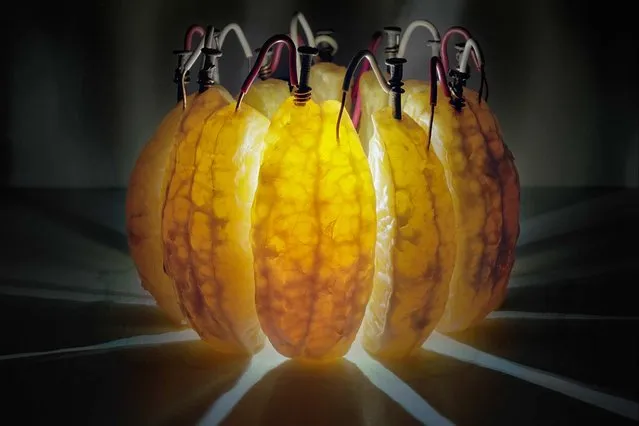
Wedges of an orange generate enough current and electrical juice – 3.5 volts – to power an LED. The fruit’s citric acid helps electrons flow from galvanized nails to copper wire in this 14-hour exposure. This image was published in September’s Visions of Earth, a trio of photos that appear in each issue of National Geographic. (Photo by Caleb Charland/National Geographic)

Wedges of an orange generate enough current and electrical juice – 3.5 volts – to power an LED. The fruit’s citric acid helps electrons flow from galvanized nails to copper wire in this 14-hour exposure. This image was published in September’s Visions of Earth, a trio of photos that appear in each issue of National Geographic. (Photo by Caleb Charland/National Geographic)
Details
06 Jan 2014 12:09:00