Loading...
Done
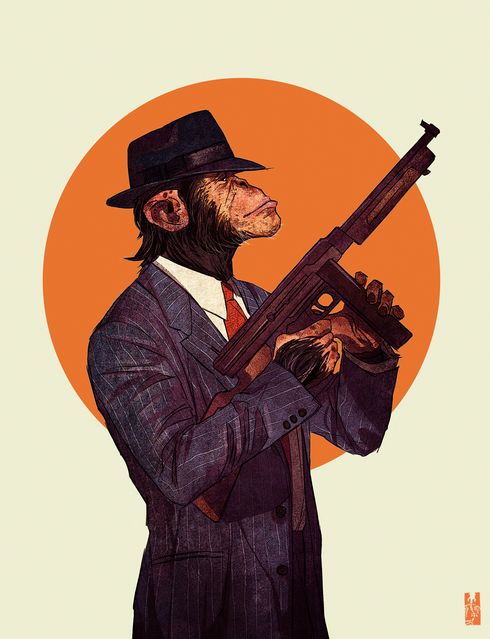
Animalistic Tendencies By Zarnala

Zarnala is a female illustrator with a knack for anthropomorphic illustration, combining human and animal elements to create something altogether new. Unlike other forms of anthropomorphic art one can find out there though, her work always retains a tasteful, professional edge similar to the feel I get from comics like Juanjo Garnido's take on Blacksad. With an awesome watercolor themed approach to all her illustration work and her use of graphic shapes to frame her characters, at times it gives her art a strangely retro look that reminds one of the works of Norman Rockwell and JC Leyendecker. Check out more of her work after the break!
Details
11 Dec 2013 11:08:00
Verena Popp-Hackner And Georg Popp Professional Landscape Photographers

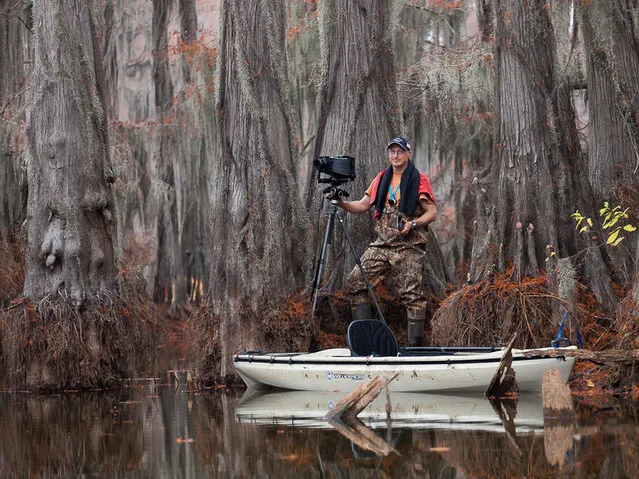
We – Verena Popp-Hackner and Georg Popp - are professional landscape photographers. While we are based in Vienna/Austria, running our own (rights managed) image library and a small but fine photo-gallery. Photographing our tiny country Austria, with all it's culture and nature, canoeing it's rivers or lakes and hiking the Alps is our profession but our photographic “backyard” includes the rest of the planet as well. We use analog large format cameras almost exclusively for our landscape work, shooting on 4x5” sheet film, to provide clients with the maximum of print-sharpness and details and unsurpassed clarity and depth of focus.
Details
15 Jan 2014 14:06:00
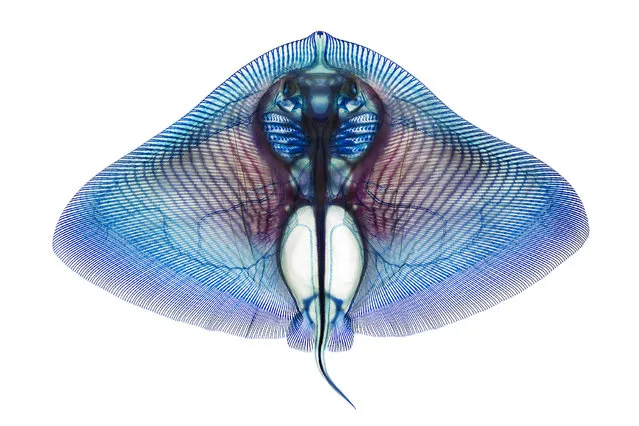
This image of the butterfly ray (Gymnura crebripunctata) helped scientists study the joints in its wings. (Photo by Adam Summers)

The photographs feature fish that have been specially treated to make the stained skeletal tissues visible through the skin and flesh. The technique, developed by Dr. Adam Summers, uses dyes, hydrogen peroxide, a digestive enzyme and glycerin to make the flesh seem to disappear. Photo: This image of the butterfly ray (Gymnura crebripunctata) helped scientists study the joints in its wings. (Photo by Adam Summers)
Details
23 Feb 2014 14:53:00
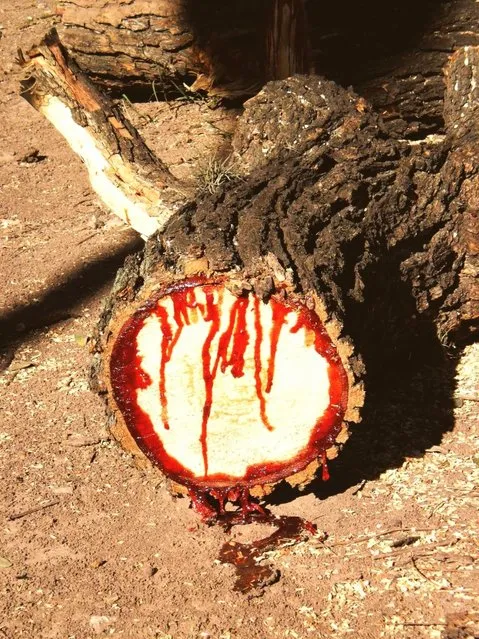
Bloodwood Tree

The bloodwood tree (Pterocarpus angolensis) is a deciduous tree with a high canopy, reaching about 15m in height and has dark bark. The red sap is used traditionally as a dye and in some areas mixed with animal fat to make a cosmetic for faces and bodies. It is also believed to have magical properties for the curing of problems concerning blood, apparently because of its close resemblance to blood. The name bloodwood for these trees stems from the dark red to brown sap that accumulates on wounds on the trunks.
Details
14 May 2014 12:44:00
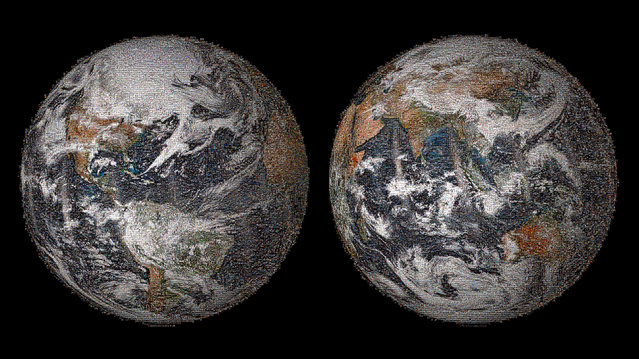
NASA’s “Global Selfie” Earth mosaic contains more than 36,000 individual photographs from the more than 50,000 images posted around the world. (Photo by NASA)

On Earth Day this year, NASA asked people all around the world a question: “Where are you on Earth Right Now?” To answer this question people were asked to post their selfie on social media. The goal was to use each picture as a pixel in the creation of a “Global Selfie” – a mosaic image that would look like Earth appeared from the space. The 3.2 gigapixel “Global Selfie”, was made the with 36,422 individual images.
Details
25 May 2014 08:37:00


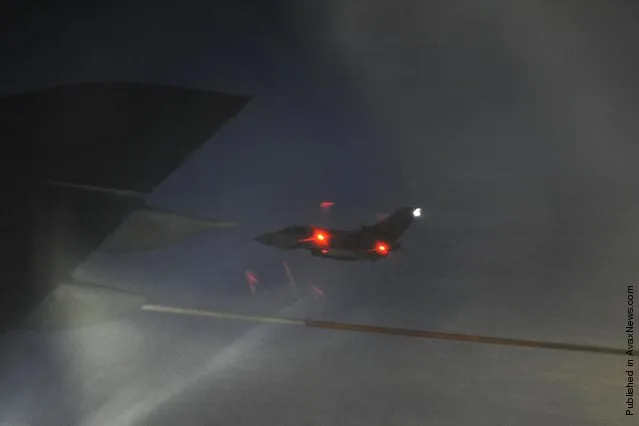
In this handout from the Ministry of Defence, Royal Air Force VC10 and Tristar air-to-air refuelling aircraft support the first UK air combat mission in support of UN Resolution 1973 in flight on March 19, 2011. Col Muammar Gaddafi has vowed a “long war” against the “crusader aggression” after over 100 missiles were fired by the US and UK, during multi-national action aimed at enforcing a UN-mandated no-fly zone. (Photo by SAC Neil Chapman/MoD via Getty Images)
Details
21 Mar 2011 08:39:00
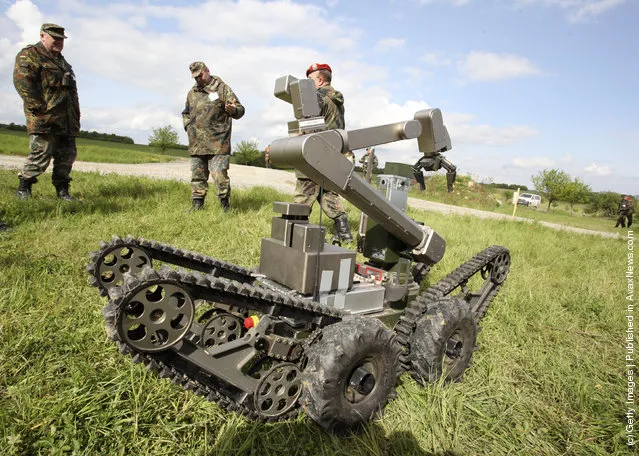
European Land-Robot Trial (ELROB), Military robot, teleMAX

The land-robot “teleMAX” of German company telerob stands next to soldiers during a trial at the German army base on May 18, 2010 in Hammelburg, Germany. ELROB provides an overview of the current state of affairs in European unmanned system technology and to evaluate commercial off-the-shelf products for military use. It is to show what is feasible in robotics, to support technological developments in Europe, and to find solutions for the current military challenges. (Photo by Ralph Orlowski/Getty Images)
Details
16 Aug 2011 11:47:00
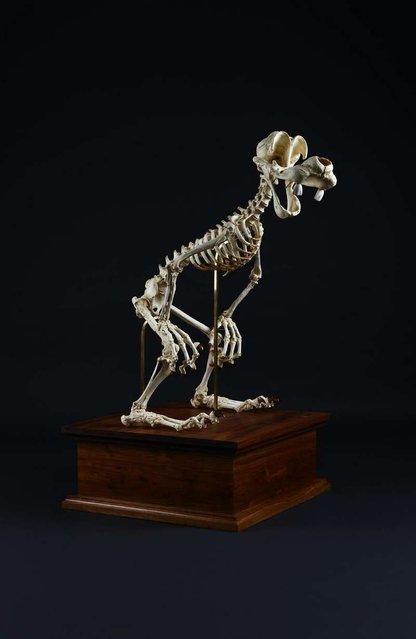
Cartoon Skeletons By Hyungkoo Lee

Korean artist Hyungkoo Lee has created a series (Homo Animatus) of works featuring skeletal representations of familiar cartoon characters. He uses resin, aluminum sticks, stainless steel wires, springs, and oil paint. If you look closely, you will see the bones of our favorite childhood friends like Canis Latrans Animatus (Wile E. Coyote), Geococcyx Animatus (Roadrunner), Lepus Animatus (Bugs Bunny), Felis Catus Animatus (Tom), Mus Animatus (Jerry), Anas Animatus (Donald Duck) and his three nephews, Animatus H, D and L ( Huey, Dewey and Louie)
Details
06 May 2013 12:42:00