Loading...
Done
A picture of Moon Ji-sung, a high school student who died in the Sewol ferry disaster, hangs in her room in Ansan April 7, 2015. Her dream was to be a flight attendant. (Photo by Kim Hong-Ji/Reuters)

A picture of Moon Ji-sung, a high school student who died in the Sewol ferry disaster, hangs in her room in Ansan April 7, 2015. Her dream was to be a flight attendant. Nearly a year after the Sewol ferry sank on April 16, 2014, with the death of 250 students, some families keep their children’s bedrooms intact to remember and honour their loved ones. More than 300 people, most of them students and teachers from Danwon High School, are dead, or missing and presumed dead, after the Sewol ferry sank on a routine trip from the port of Incheon, near Seoul, to the holiday island of Jeju. (Photo by Kim Hong-Ji/Reuters)
Details
14 Apr 2015 11:18:00
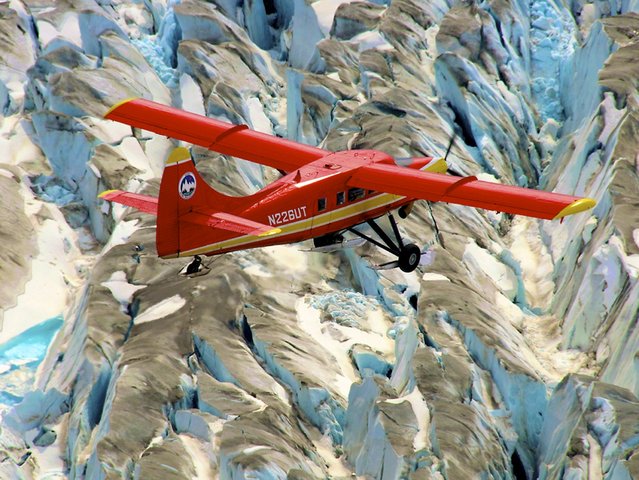
NASA's DHC-3 Otter plane flies in Operation IceBridge-Alaska surveys of mountain glaciers in Alaska in this image released on September 18, 2014. Over the past few decades, average global temperatures have been on the rise, and this warming is happening two to three times faster in the Arctic. (Photo by Chris Larsen/Reuters/NASA/University of Alaska-Fairbanks)

NASA's DHC-3 Otter plane flies in Operation IceBridge-Alaska surveys of mountain glaciers in Alaska in this image released on September 18, 2014. Over the past few decades, average global temperatures have been on the rise, and this warming is happening two to three times faster in the Arctic. (Photo by Chris Larsen/Reuters/NASA/University of Alaska-Fairbanks)
Details
20 Sep 2014 10:28:00
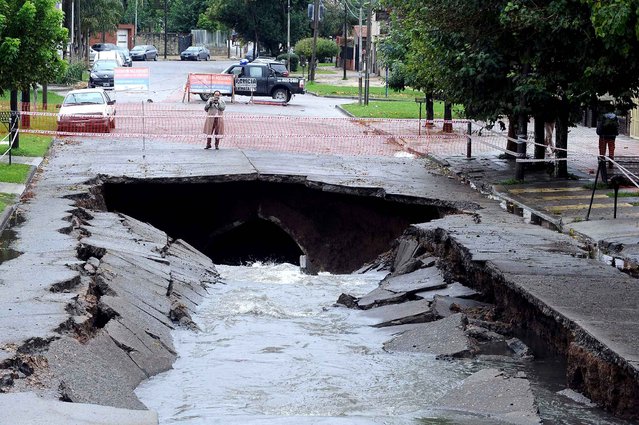
Handout picture released by Telam showing the tarmac of the Pedro Palacios Avenue in Ramos Mejia, province of Buenos Aires, Argentina, under which the channeled waters of the Maldonado stream flow, after it collapsed on April 8, 2014 leaving a 40-metre-long, 1.4-metre-deep hole. About 3000 people had to be evacuated in the Argentine provinces of Neuquen (soutwest), Catamarca (northwest), Santiago del estero (center) and Cordoba (center)due to the foods caused by heavy rain, official sources said. (Photo by Daniel Dabove/AFP Photo)

Handout picture released by Telam showing the tarmac of the Pedro Palacios Avenue in Ramos Mejia, province of Buenos Aires, Argentina, under which the channeled waters of the Maldonado stream flow, after it collapsed on April 8, 2014 leaving a 40-metre-long, 1.4-metre-deep hole. About 3000 people had to be evacuated in the Argentine provinces of Neuquen (soutwest), Catamarca (northwest), Santiago del estero (center) and Cordoba (center)due to the foods caused by heavy rain, official sources said. (Photo by Daniel Dabove/AFP Photo)
Details
12 Apr 2014 12:40:00
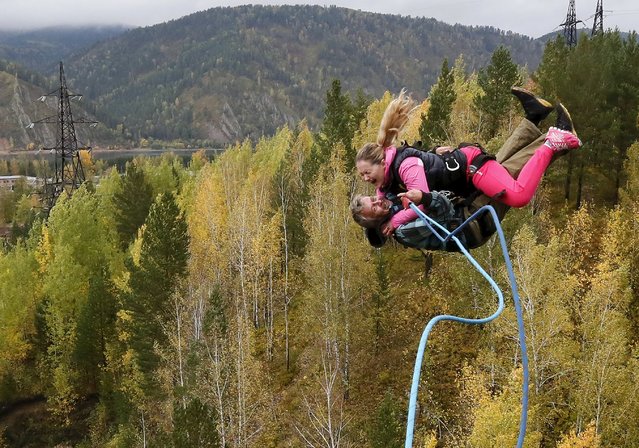
Members of the “Exit Point” amateur rope-jumping group jump from a 44-metre high (144-ft) waterpipe bridge in the Siberian Taiga area outside Krasnoyarsk, September 13, 2015. Rope-jumping, an extreme sport, involves jumping from a high point using an advanced leverage system combining mountaineering and rope safety equipment. (Photo by Ilya Naymushin/Reuters)

Members of the “Exit Point” amateur rope-jumping group jump from a 44-metre high (144-ft) waterpipe bridge in the Siberian Taiga area outside Krasnoyarsk, September 13, 2015. Rope-jumping, an extreme sport, involves jumping from a high point using an advanced leverage system combining mountaineering and rope safety equipment. (Photo by Ilya Naymushin/Reuters)
Details
14 Sep 2015 14:16:00
Aerobatic pilot Sean D. Tucker flies in the two-seat Oracle Extra airplane over downtown Chicago skyline, Wednesday, June 8, 2016. Tucker will perform before the start of of the America's Cup World Series racing on Saturday and Sunday. (Photo by Kiichiro Sato/AP Photo)

Aerobatic pilot Sean D. Tucker flies in the two-seat Oracle Extra airplane over downtown Chicago skyline, Wednesday, June 8, 2016. Tucker will perform before the start of of the America's Cup World Series racing on Saturday and Sunday. (Photo by Kiichiro Sato/AP Photo)
Details
09 Jun 2016 09:28:00
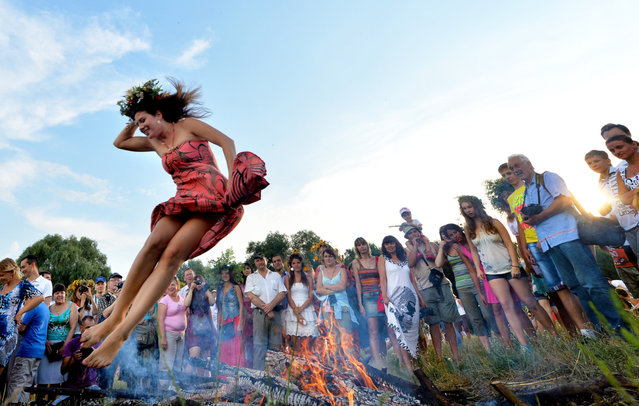
A girl jumps over a campfire while celebrating Ivan Kupala Night, a traditional Slavic holiday not far from Kiev on July 6, 2013. During the celebration, originating in pagan times, people plait wreaths, jump over fires, and swim naked. (Photo by Sergei Supinsky/AFP Photo)

A girl jumps over a campfire while celebrating Ivan Kupala Night, a traditional Slavic holiday not far from Kiev on July 6, 2013. During the celebration, originating in pagan times, people plait wreaths, jump over fires, and swim naked. (Photo by Sergei Supinsky/AFP Photo)
Details
13 Jul 2013 11:59:00
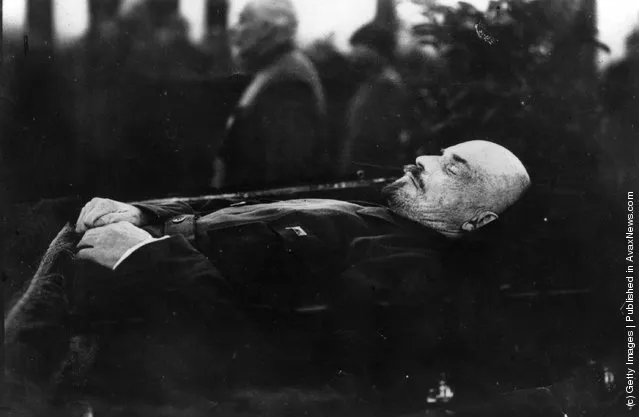
1924:  Vladimir Ilyich Lenin lying in state in the Kremlin

Photo: Vladimir Ilyich Lenin (1870 – 1924) lying in state in the Kremlin. (Photo by Hulton Archive/Getty Images). 1924

Important! For the same article in Russian language click here.

Something quite intriguing is happening within Russian-speaking internet during the last few – should you type a fully academic inquiry (at least, according to Russian academic requirements) in national search engines for "Lenin's mausoleum" – the first thing you get (even in top 10 searches) is website pages talking about black magic and occult. Website authors view this construction differently, but unconditionally agree on one thing: the mausoleum of the "leader of the world proletariat” – the essence of a magical artifact, a sort of “energy vampire”. It was built with a certain purpose: to drain the energy out of miserable Soviet citizens on one hand; and to poison the anthroposphere of one-sixth part of the earth with its vibes (the exact territory that was occupied by the former Soviet Union), depriving the Russian people of will to resist on the other hand. Complete nonsense? No doubt. Nevertheless, an intriguing one. Well, probably because some oddities do exist in mausoleum's history. These oddities are the thing we are going to discuss this time. First, let me refresh you memory on the subject.
Details
16 Oct 2011 11:27:00
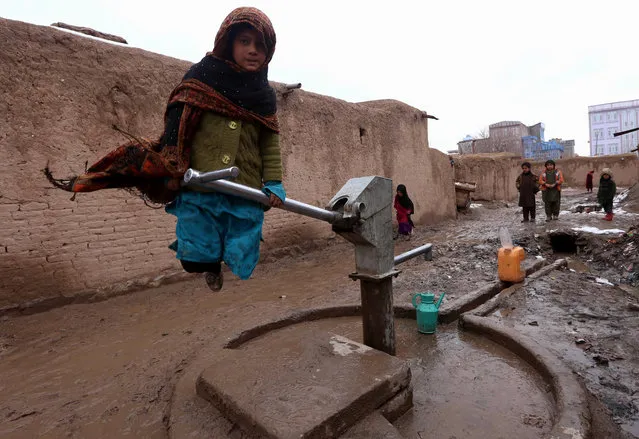
An Afghan woman fills containers with water near her temporary shelter at an internally displaced person's (IDP) camp on the outskirts of Herat, Afghanistan, January 21, 2015. Dozens of families are living in temporary shelters even in harsh winters and most depend on aid distributions by the United Nations High Commissioner for Refugees (UNHCR). (Photo by Jalil Rezayee/EPA)

An Afghan woman fills containers with water near her temporary shelter at an internally displaced person's (IDP) camp on the outskirts of Herat, Afghanistan, January 21, 2015. Dozens of families are living in temporary shelters even in harsh winters and most depend on aid distributions by the United Nations High Commissioner for Refugees (UNHCR). (Photo by Jalil Rezayee/EPA)
Details
23 Jan 2015 12:35:00