Loading...
Done
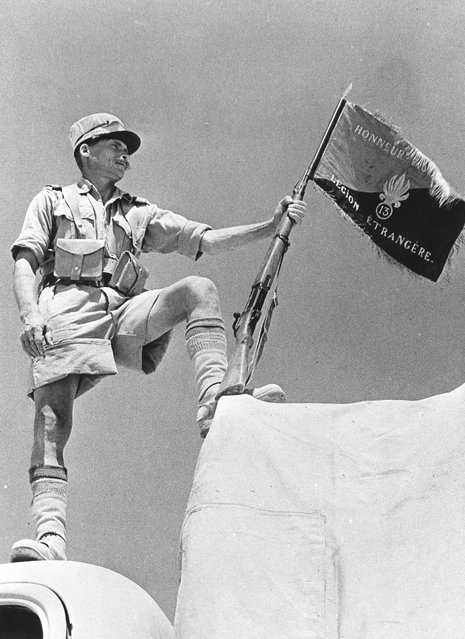
A soldier of the French Foreign Legion holding his regiment's banner at Bar Hacheim in Libya, circa 1940. (Photo by Three Lions)

A soldier of the French Foreign Legion holding his regiment's banner at Bar Hacheim in Libya, circa 1940. (Photo by Three Lions). P.S. All pictures are presented in high resolution.
Details
11 Sep 2012 08:29:00
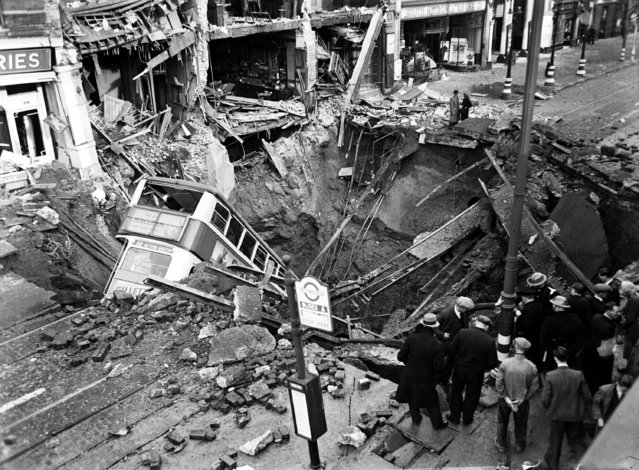
Following a large air raid by German bombers, local people, coming out of their air raid shelters found a bus standing on end in a large crater, in Balham, London, October 15, 1940. (Photo by AP Photo)

Following a large air raid by German bombers, local people, coming out of their air raid shelters found a bus standing on end in a large crater, in Balham, London, October 15, 1940. (Photo by AP Photo)
Details
17 Oct 2015 08:04:00
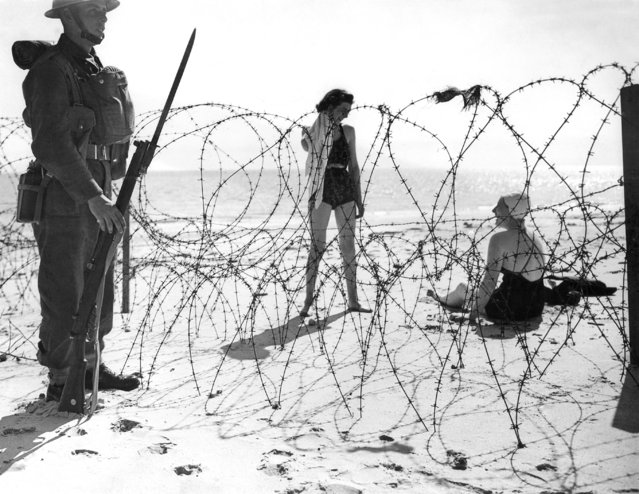
Two female holidaymakers relax on an unidentified beach of England, September 21, 1940, as a soldier, eyes straight ahead, stands guard at a barrier built as a defense against possible invasion by Germany. (Photo by AP Photo)

Two female holidaymakers relax on an unidentified beach of England, September 21, 1940, as a soldier, eyes straight ahead, stands guard at a barrier built as a defense against possible invasion by Germany. (Photo by AP Photo)
Details
22 Sep 2015 10:37:00
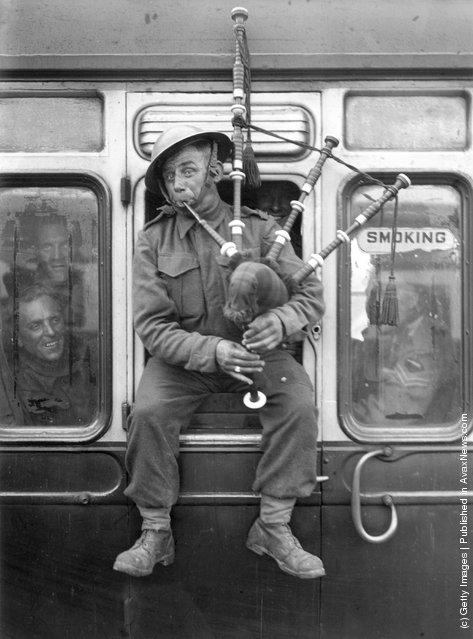
1940: Back in England, one of the British soldiers that continue to return in their thousands from Northern France, belies any mood of defeat with some high spirited piping on a train

Back in England, one of the British soldiers that continue to return in their thousands from Northern France, belies any mood of defeat with some high spirited piping on a train. (Photo by Parker/Fox Photos/Getty Images). 1st June 1940
Details
10 Mar 2012 12:27:00
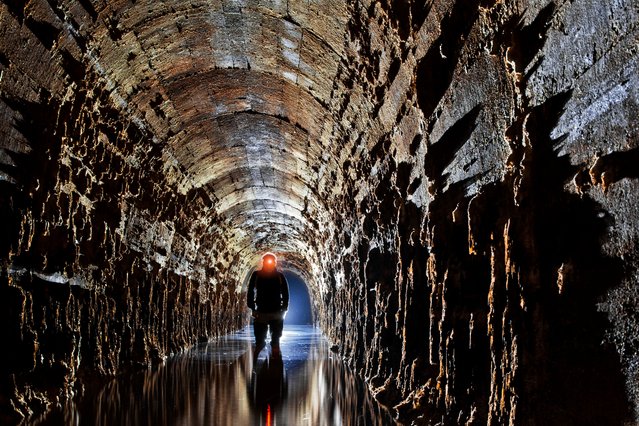
Regenwurmlager, Poland. The Regenwurmlager is an extensive underground fortification area constructed by Germany in 1920s-1940s, now in western Poland, near the city of Międzyrzecz. (Photo by Anna Arinova/Caters News)

Stunning silhouettes under European cities reveal the size and splendor of the continent’s urban foundations. Photographer and content-manager Anna Arinova, 28, from Moscow, captured the awe-inspiring labyrinths in Russia and Germany. Here: Regenwurmlager, Poland. The Regenwurmlager is an extensive underground fortification area constructed by Germany in 1920s-1940s, now in western Poland, near the city of Międzyrzecz. (Photo by Anna Arinova/Caters News)
Details
29 Dec 2016 07:53:00
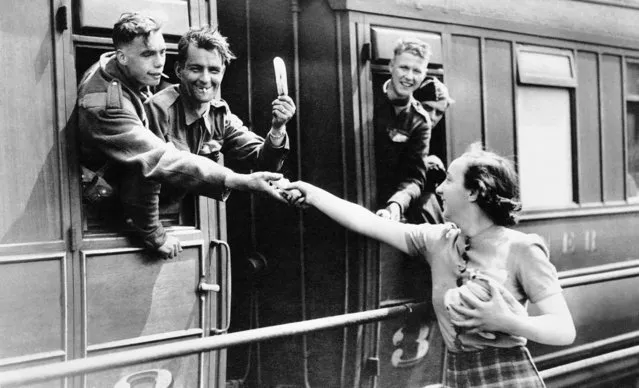
British troops arriving in England on June 6, 1940 after fleeing Flanders received all kinds of fruit and food from women who passed it out to them as they halted in railroad stations. A soldier holds aloft a banana he received from the woman. (Photo by AP Photo)

British troops arriving in England on June 6, 1940 after fleeing Flanders received all kinds of fruit and food from women who passed it out to them as they halted in railroad stations. A soldier holds aloft a banana he received from the woman. (Photo by AP Photo)
Details
05 Aug 2017 08:29:00


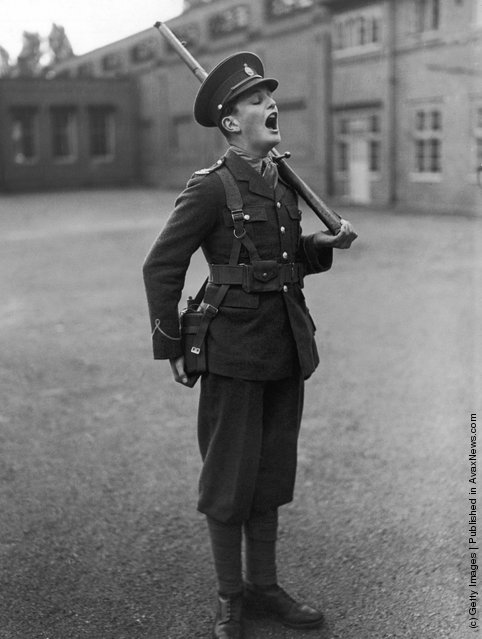
A member of the Eton public school O.T.C. (Officers Training Corps) practising shouting out orders during a training session, 20th January 1940. (Photo by Hulton Archive/Getty Images)
Details
04 Jun 2011 06:46:00
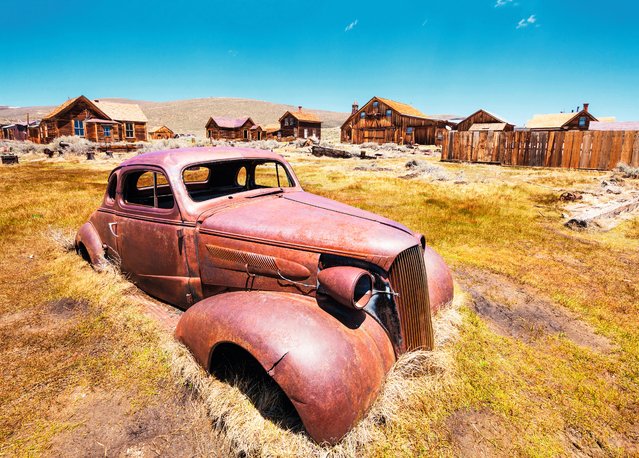
Bodie, Mono County, California. Gold was discovered at Bodie in 1859 (just after the initial California gold rush) and it went from mining camp to boomtown. Its decline began in 1880, when word spread of new boomtowns elsewhere. The Standard Consolidated Mine closed in 1913, and four years later the Bodie Railway was abandoned. By 1940 the population was down to 40. Today, Bodie is maintained in a state of arrested decay as a visitor attraction. (Photo by Alamy Stock Photo)

Kieron Connolly’s new book of photographs of more than 100 once-busy and often elegant buildings gives an idea of how the world might look if humankind disappeared. Here: Bodie, Mono County, California. Gold was discovered at Bodie in 1859 (just after the initial California gold rush) and it went from mining camp to boomtown. Its decline began in 1880, when word spread of new boomtowns elsewhere. The Standard Consolidated Mine closed in 1913, and four years later the Bodie Railway was abandoned. By 1940 the population was down to 40. Today, Bodie is maintained in a state of arrested decay as a visitor attraction. (Photo by Alamy Stock Photo)
Details
07 Sep 2016 09:50:00