Girls refresh themselves and their dog with water spray frames set along the central street of the Ukrainian capital of Kiev during a heatwave on June 25, 2020. (Photo by Sergei Supinsky/AFP Photo)
A woman fills her ballot paper during the State Duma, the Lower House of the Russian Parliament and local parliaments elections at a polling station in St. Petersburg, Russia, Friday, September 17, 2021. (Photo by Dmitri Lovetsky/AP Photo)
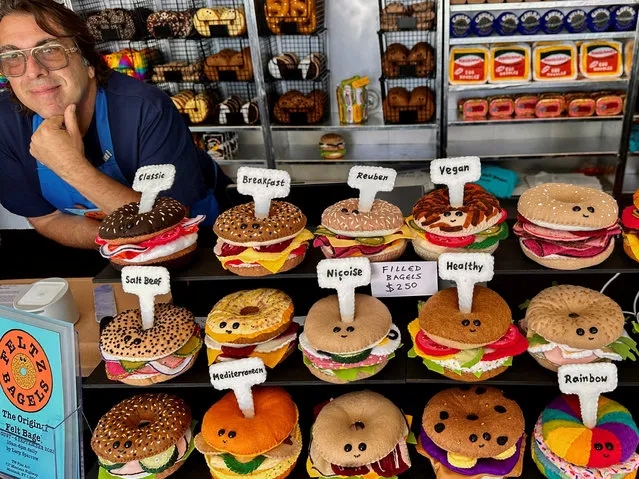
Mike De Paola, founding director of TW Fine Art, is seen near an art installation at “Feltz Bagels”, a bagel bakery made entirely from felt, at TW Fine Art in Montauk, New York, U.S. August 11, 2023. (Photo by Roselle Chen/Reuters)
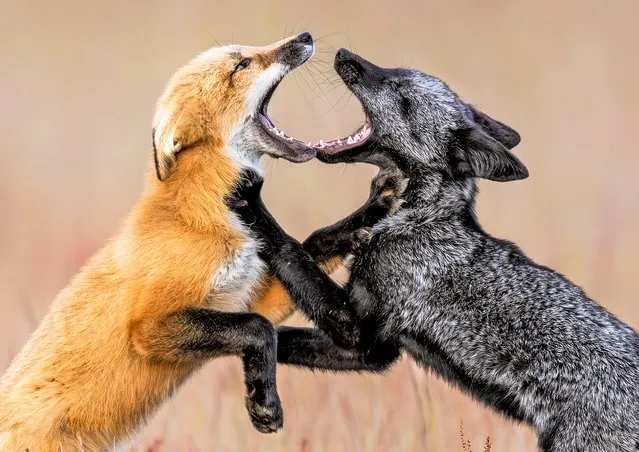
The rabbit population of San Juan Island, brought in to feed lighthouse keepers, got so big that in the 1930s foxes were introduced to kill them. Although they are red foxes, their coats can be orange, silver, black or multi-coloured. Picture date: September 2023. (Photo by Jun Zuo/Solent News)
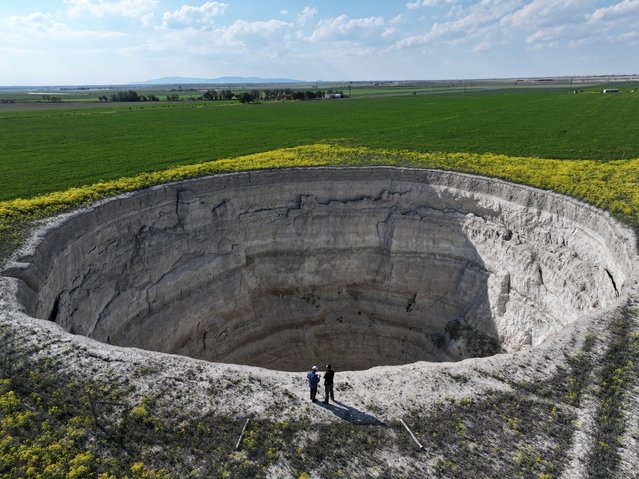
A view of Yarimoglu sinkhole (obruk), caused by some form of collapse of the surface layer in 2009, in Konya province, Turkiye on May 15, 2025. The gigantic pit formed between the fields where intensive irrigation activities are carried out is expanding and growing every year. (Photo by Abdullah Dogan/Anadolu via Getty Images)
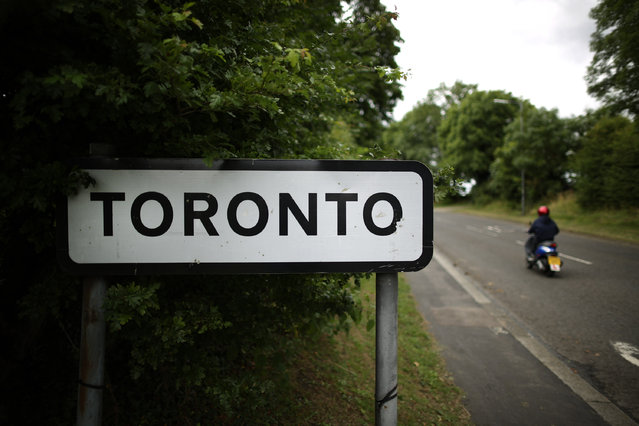
A handful of villages in the U.K. share the same name as cities or countries from around the world, and they’re spending life in the shadows of their more famous namesakes. Photo: A road sign points the way on August 6, 2013 in Toronto, England. Originally called Newton Cap in the county of Durham, built for workers at the nearby colliery, owner Henry Stobart re-named the village Toronto after visiting Canada. (Photo by Peter Macdiarmid/Getty Images)
#1: Superman. According to McAfee, 16.50% of Web searches for Superman led to sites with viruses and other malicious software. Pictured here: The Superman costume that was worn by Christopher Reeve in “Superman: The Movie” on display at Profiles In History in Calabasas, northwest of downtown Los Angeles, on July 19, 2012 in California. (Photo by Frederic J. Brown/AFP Photo)
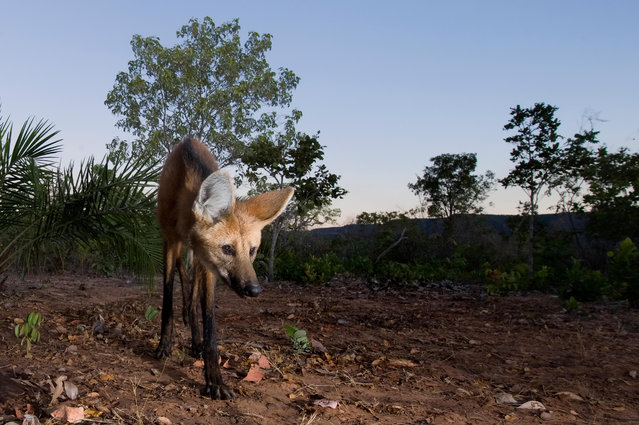
Global wildlife populations will decline by 67% by 2020 unless urgent action is taken to reduce human impact on species and ecosystems, warns the biennial Living Planet Index report from WWF (World Wide Fund for Nature) and ZSL (Zoological Society of London). From elephants to eels, here are some of the wildlife populations most affected by human activity. Here: The maned wolf is among the large mammals in the Brazilian Cerrado that are threatened by the increasing conversion of grasslands into farmland for grazing and growing crops. (Photo by Ben Cranke/Nature Picture Library/Alamy Stock Photo)