Loading...
Done
A priest sprinkles holy water on a believer during the Orthodox Easter service in the Holy Transfiguration Cathedral in the rebel-controlled city of Donetsk, Ukraine on May 2, 2021. (Photo by Alexander Ermochenko/Reuters)

A priest sprinkles holy water on a believer during the Orthodox Easter service in the Holy Transfiguration Cathedral in the rebel-controlled city of Donetsk, Ukraine on May 2, 2021. (Photo by Alexander Ermochenko/Reuters)
Details
03 May 2021 09:27:00
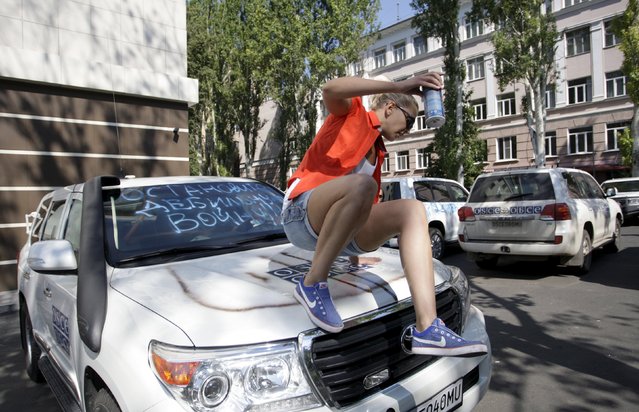
A demonstrator jumps from a vehicle of the Organisation for Security and Co-operation in Europe (OSCE) during a protest to demand what protesters say is true information from the OSCE about the shelling in Donetsk, Ukraine, July 23, 2015. The graffiti reads, “Stop moronic war!”. (Photo by Alexander Ermochenko/Reuters)

A demonstrator jumps from a vehicle of the Organisation for Security and Co-operation in Europe (OSCE) during a protest to demand what protesters say is true information from the OSCE about the shelling in Donetsk, Ukraine (since April 2014, the city is the administrative centre of the Donetsk People's Republic), July 23, 2015. The graffiti reads, “Stop moronic war!”. (Photo by Alexander Ermochenko/Reuters)
Details
24 Jul 2015 12:13:00
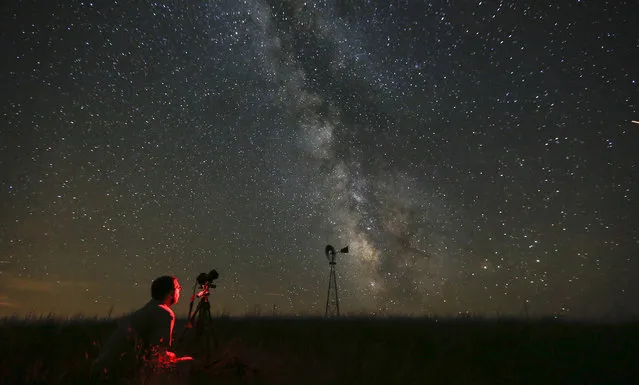
In this Wednesday, July 23, 2014 file photo, Omaha photographer Lane Hickenbottom photographs the night sky in a pasture near Callaway, Neb. With no moon in the sky, the Milky Way was visible to the naked eye. More than one-third of the world’s population can no longer see the Milky Way because of man-made lights, according to a scientific paper by Light Pollution Science and Technology Institute's Fabio Falchi and his team members, published on Friday, June 10, 2016. (Photo by Travis Heying/The Wichita Eagle via AP Photo)

In this Wednesday, July 23, 2014 file photo, Omaha photographer Lane Hickenbottom photographs the night sky in a pasture near Callaway, Neb. With no moon in the sky, the Milky Way was visible to the naked eye. More than one-third of the world’s population can no longer see the Milky Way because of man-made lights, according to a scientific paper by Light Pollution Science and Technology Institute's Fabio Falchi and his team members, published on Friday, June 10, 2016. (Photo by Travis Heying/The Wichita Eagle via AP Photo)
Details
11 Jun 2016 12:37:00
“Kids of Sapa”. Four little beautiful Hmong girls from Lao Chai Village, near Sapa, Vietnam. (Photo and caption by Felipe Hanower/National Geographic Traveler Photo Contest)

“Kids of Sapa”. Four little beautiful Hmong girls from Lao Chai Village, near Sapa, Vietnam. (Photo and caption by Felipe Hanower/National Geographic Traveler Photo Contest)
Details
15 Jul 2013 09:14:00
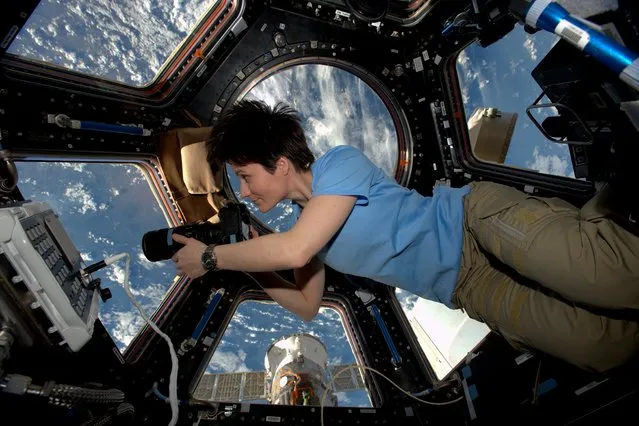
ESA astronaut Samantha Cristoforetti on the International Space Station 3 February 2015 during her Futura mission. Samantha is living and working on the Station as part of the Expedition 42 crew. (Photo by ESA/NASA)

ESA astronaut Samantha Cristoforetti on the International Space Station 3 February 2015 during her Futura mission. Samantha is living and working on the Station as part of the Expedition 42 crew. Picture released on February 10, 2015. (Photo by ESA/NASA)
Details
14 Feb 2015 12:40:00
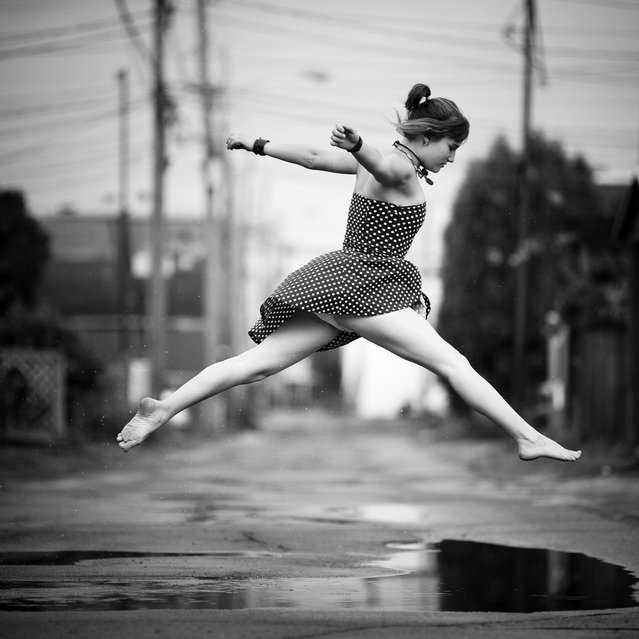
“Jumpology”. “Jump”. (Photo by Benoit Paillé)

“Jump”. (Photo by Benoit Paillé)

Details
06 Feb 2013 16:33:00
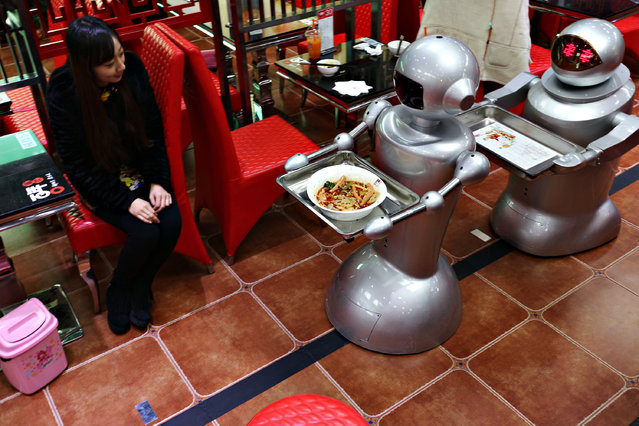
Two 70 thousand RMB (about 11,310 USD) robots carry dishes and offer service for customers at a robot themed restaurant at Chunxi Road in Chengdu, China, December 11, 2014. The restaurant has 10 robots to serve as waiters. Each robot can carry simple dishes and offer simple greetings. (Photo by ChinaFotoPress/ChinaFotoPress via Getty Images)

Two 70 thousand RMB (about 11,310 USD) robots carry dishes and offer service for customers at a robot themed restaurant at Chunxi Road in Chengdu, China, December 11, 2014. The restaurant has 10 robots to serve as waiters. Each robot can carry simple dishes and offer simple greetings. (Photo by ChinaFotoPress/ChinaFotoPress via Getty Images)
Details
13 Dec 2014 13:01:00
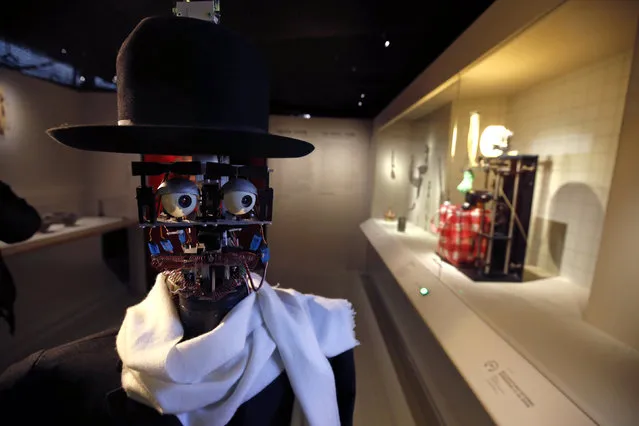
The Berenson robot strolls among visitors during the exhibition “Persona : Oddly Human” at the Quai Branly museum in Paris, France, February 23, 2016. The Berenson robot, developed in France in 2011, is the brainchild of anthropologist Denis Vidal and robotics engineer Philippe Gaussier. Its programming allows it to record reactions of museum visitors to certain pieces of art and then use the data to develop its own unique taste, which allows “Berenson” to judge whether or not it likes a certain work of art within an exhibition. (Photo by Philippe Wojazer/Reuters)

The Berenson robot strolls among visitors during the exhibition “Persona : Oddly Human” at the Quai Branly museum in Paris, France, February 23, 2016. The Berenson robot, developed in France in 2011, is the brainchild of anthropologist Denis Vidal and robotics engineer Philippe Gaussier. Its programming allows it to record reactions of museum visitors to certain pieces of art and then use the data to develop its own unique taste, which allows “Berenson” to judge whether or not it likes a certain work of art within an exhibition. (Photo by Philippe Wojazer/Reuters)
Details
25 Feb 2016 12:26:00