Loading...
Done
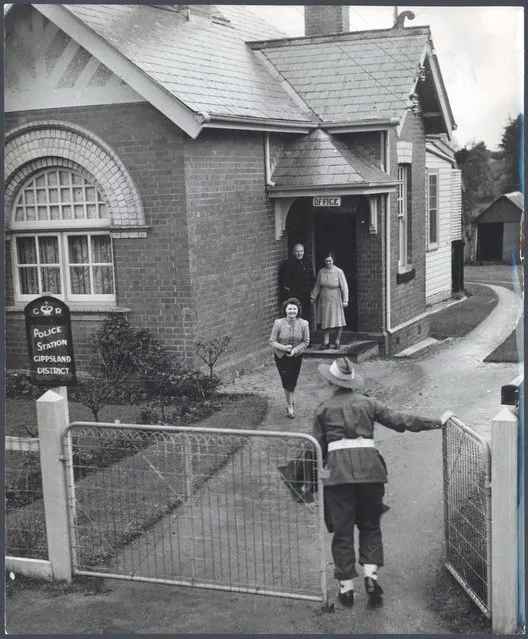
Private Wallace Tratford arrives home on leave, Drouin, Victoria, ca. 1944

Private Wallace Tratford arrives home on leave, Drouin, Victoria, ca. 1944. A.I.F. Private Wallace Tratford, son of 1st Constable James Tratford, Drouin's only policeman (responsible for area of 105 square miles; 3,000 people), arrives home on his first leave from New Guinea battlefronts since he was married.
Details
08 Aug 2012 10:10:00
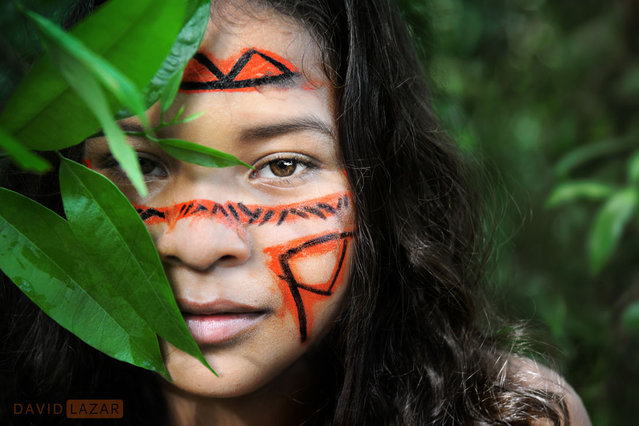
Amazon Tribe By David Lazar (Video)

Photographer David Lazar captured photos of native Dessana tribe, nearly 3,000 miles away from Brazil's capital. Tribe is only accessible by boat from city of Manaus. Surrounded by trees, waterfalls and tropical wildlife, this Amazon tribe is a world away from the beaches of Rio.
Details
27 Oct 2016 21:46:00
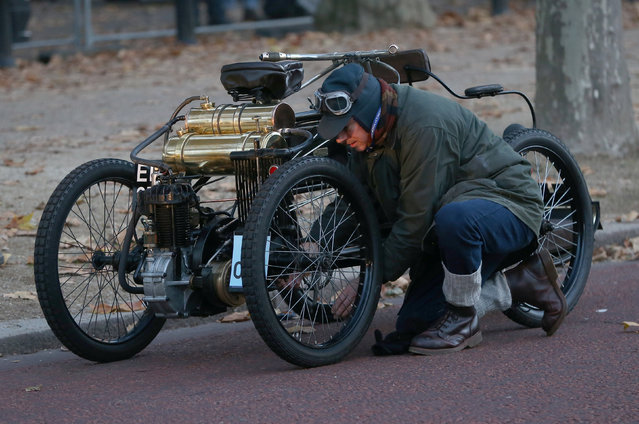
A participants mends his vintage car during the annual London to Brighton veteran car run in London, Britain November 6, 2016. (Photo by Neil Hall/Reuters)

A participants mends his vintage car during the annual London to Brighton veteran car run in London, Britain November 6, 2016. Around 600 classic cars took part in the annual 60 mile journey to the south coast resort. (Photo by Neil Hall/Reuters)
Details
07 Nov 2016 12:12:00
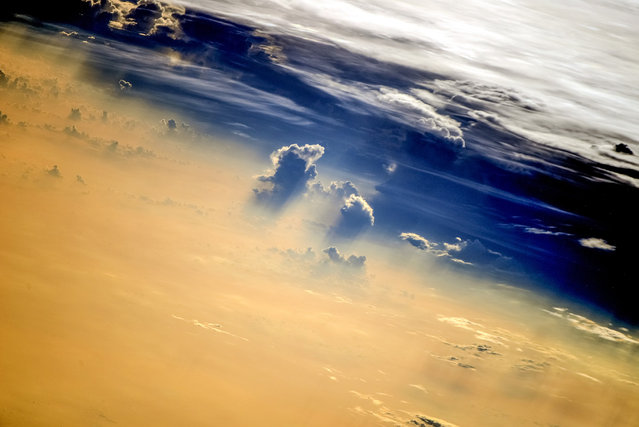
Image of the Clouds taken in August 2014 by astronauts on board the International Space Station (ISS).  A year from space photographs of hurricanes, typhoons and meteorite craters show an astronauts-eye view of our planet from hundreds of miles above the earth. The illuminating images were taken by astronauts onboard the International Space Station (ISS) over the course of 2014. (Photo by NASA/SPL/Barcroft Media)

Image of the Clouds taken in August 2014 by astronauts on board the International Space Station (ISS). A year from space photographs of hurricanes, typhoons and meteorite craters show an astronauts-eye view of our planet from hundreds of miles above the earth. The illuminating images were taken by astronauts onboard the International Space Station (ISS) over the course of 2014. (Photo by NASA/SPL/Barcroft Media)
Details
31 Dec 2014 14:47:00
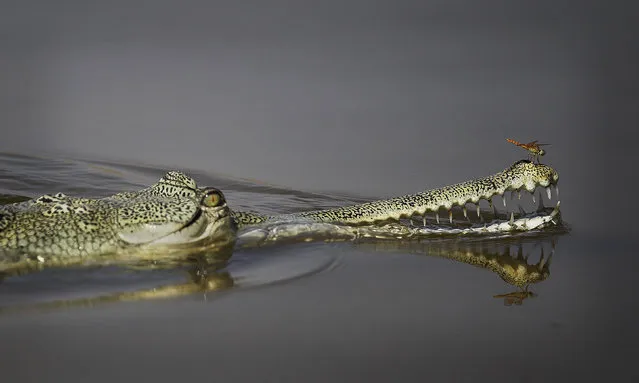
In this photo taken Wednesday, April 30, 2014, a dragonfly sits on the nose of a Gharial, rare crocodile-like creatures, in the River Chambal near Bhopepura village in the northern Indian state of Uttar Pradesh. The narrow 250-mile stretch of the Chambal is a place of crocodiles and jackals, of river dolphins and the occasional wolf. Hundreds of species of birds, storks, geese, babblers, larks, falcons and so many more, nest along the river. (Photo by Altaf Qadri/AP Photo)

In this photo taken Wednesday, April 30, 2014, a dragonfly sits on the nose of a Gharial, rare crocodile-like creatures, in the River Chambal near Bhopepura village in the northern Indian state of Uttar Pradesh. The narrow 250-mile stretch of the Chambal is a place of crocodiles and jackals, of river dolphins and the occasional wolf. Hundreds of species of birds, storks, geese, babblers, larks, falcons and so many more, nest along the river. Endangered birds lay small speckled eggs in tiny pits they dig in the sandbars. Gharials, rare crocodile-like creatures that look like they swaggered out of the Mesozoic Era, are commonplace here and nowhere else. (Photo by Altaf Qadri/AP Photo)
Details
23 Feb 2015 12:55:00
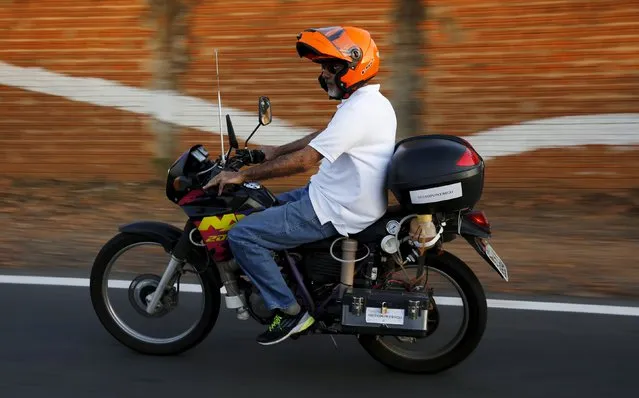
Ricardo Azevedo rides his Honda NX 200 motorbike, which he converted to be powered by water, in Salto, northwest of Sao Paulo, Brazil, August 6, 2015. The Sao Paulo civil servant built the motorbike which can cover up to 500 kilometres (311 miles) fueled by just one liter of water. Dubbed "Moto Power H2O", the bike is powered by a process of electrolysis by which the water molecule is broken down into its constituent elements. (Photo by Nacho Doce/Reuters)

Ricardo Azevedo rides his Honda NX 200 motorbike, which he converted to be powered by water, in Salto, northwest of Sao Paulo, Brazil, August 6, 2015. The Sao Paulo civil servant built the motorbike, which can cover up to 500 kilometres (311 miles) fuelled by just one litre of water. Dubbed “Moto Power H2O” the bike is powered by the process of electrolysis, which breaks the water molecule down into its constituent elements. (Photo by Nacho Doce/Reuters)
Details
13 Aug 2015 12:00:00
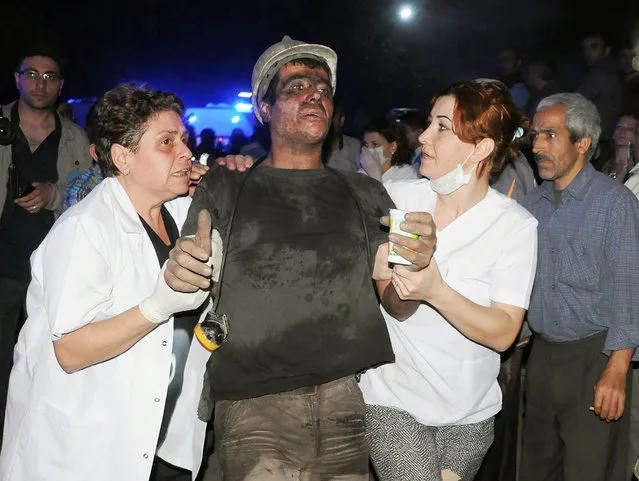
Medics help a rescued miner after an explosion and fire at a coal mine killed at least 17 miners and left up to 300 workers trapped underground, in Soma, in western Turkey, Tuesday, May 13, 2014, a Turkish official said. Twenty people were rescued from the mine but one later died in the hospital, Soma administrator Mehmet Bahattin Atci told reporters. The town is 250 kilometers (155 miles) south of Istanbul. The death toll was expected to rise. (Photo by AP Photo/Depo Photos)

Medics help a rescued miner after an explosion and fire at a coal mine killed at least 17 miners and left up to 300 workers trapped underground, in Soma, in western Turkey, Tuesday, May 13, 2014, a Turkish official said. Twenty people were rescued from the mine but one later died in the hospital, Soma administrator Mehmet Bahattin Atci told reporters. The town is 250 kilometers (155 miles) south of Istanbul. The death toll was expected to rise. (Photo by AP Photo/Depo Photos)
Details
14 May 2014 07:26:00
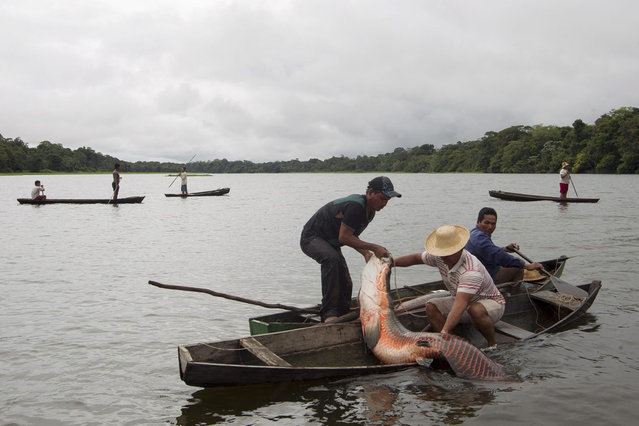
Villagers from the Porto Novo community load into their canoes arapaima or pirarucu, the largest freshwater fish species in South America and one of the largest in the world, while fishing in Poco Fundo lake along a branch of the Solimoes river, one of the main tributaries of the Amazon, in the Mamiraua nature reserve near Fonte Boa about 600 km (373 miles) west of Manaus, November 26, 2013. (Photo by Bruno Kelly/Reuters)

Villagers from the Porto Novo community load into their canoes arapaima or pirarucu, the largest freshwater fish species in South America and one of the largest in the world, while fishing in Poco Fundo lake along a branch of the Solimoes river, one of the main tributaries of the Amazon, in the Mamiraua nature reserve near Fonte Boa about 600 km (373 miles) west of Manaus, November 26, 2013. Catching the arapaima, a fish that is sought after for its meat and is considered by biologists to be a living fossil, is only allowed once a year by Brazil's environmental protection agency. The minimum size allowed for a fisherman to keep an arapaima is 1.5 meters (4.9 feet). (Photo by Bruno Kelly/Reuters)
Details
17 Dec 2013 08:03:00