Loading...
Done
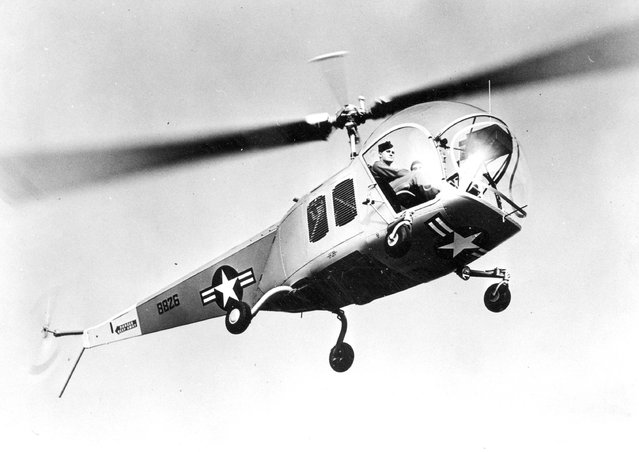
Number 10. BELL H-13 SIOUX was a two-bladed, single engine, light helicopter built by Bell Helicopter. Westland Aircraft manufactured the Sioux under license for the British military as the Sioux AH.1 and HT. (Photo by AP Photo)

Number 10. BELL H-13 SIOUX was a two-bladed, single engine, light helicopter built by Bell Helicopter. Westland Aircraft manufactured the Sioux under license for the British military as the Sioux AH.1 and HT. In 1947, the United States Air Force ordered the improved Bell Model 47A. Most were designated YR-13 and three winterized versions were designated YR-13A. The United States Army first ordered Bell 47s in 1948 under the designation H-13. These would later receive the name Sioux. The Bell-built H-13 B is seen airborne in this April 29, 1951 photo. The helicopter is equipped with a 173 horsepower engine, cruises at 85 miles per hour, climbs 900 feet in a minute and has a service ceiling of 11,500 feet. (Photo by AP Photo)
Details
08 Aug 2014 11:59:00
Ko Min, 26, manually extracts oil from one of three 300 feet deep wells he works on in the Minhla township of the Magwe district October 27, 2013. Everyday, Ko Min makes around $30 extracting crude oil from three small wells after he bought rights to use them for close to $1000 from a farmer who owns the land. (Photo by Damir Sagolj/Reuters)

Ko Min, 26, manually extracts oil from one of three 300 feet deep wells he works on in the Minhla township of the Magwe district October 27, 2013. Everyday, Ko Min makes around $30 extracting crude oil from three small wells after he bought rights to use them for close to $1000 from a farmer who owns the land. In Myanmar, an impoverished country rich with natural resources, people from poor communities find ways to supplement their income by exploiting such resources, such as the Minhla township, traditionally rich with oil, often using primitive and dangerous methods. (Photo by Damir Sagolj/Reuters)
Details
21 Apr 2014 10:06:00
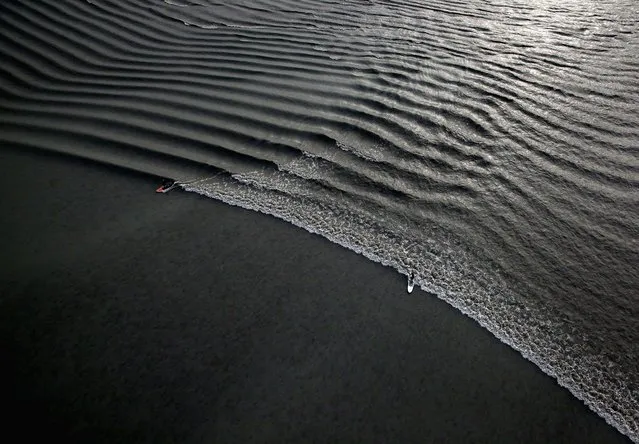
A group of surfers ride the Bore Tide at Turnagain Arm on July 15, 2014 in Anchorage, Alaska. Alaskas most famous Bore Tide, occurs in a spot on the outside of Anchorage in the lower arm of the Cook Inlet, Turnagain Arm, where wave heights can reach 6-10 feet tall, move at 10-15 mph and the water temperature stays around 40 degrees farenheit. This years Supermoon substantially increased the size of the normal wave and made it a destination for surfers. (Photo by Streeter Lecka/Getty Images)

A group of surfers ride the Bore Tide at Turnagain Arm on July 15, 2014 in Anchorage, Alaska. Alaskas most famous Bore Tide, occurs in a spot on the outside of Anchorage in the lower arm of the Cook Inlet, Turnagain Arm, where wave heights can reach 6-10 feet tall, move at 10-15 mph and the water temperature stays around 40 degrees farenheit. This years Supermoon substantially increased the size of the normal wave and made it a destination for surfers. (Photo by Streeter Lecka/Getty Images)
Details
05 Aug 2014 12:08:00
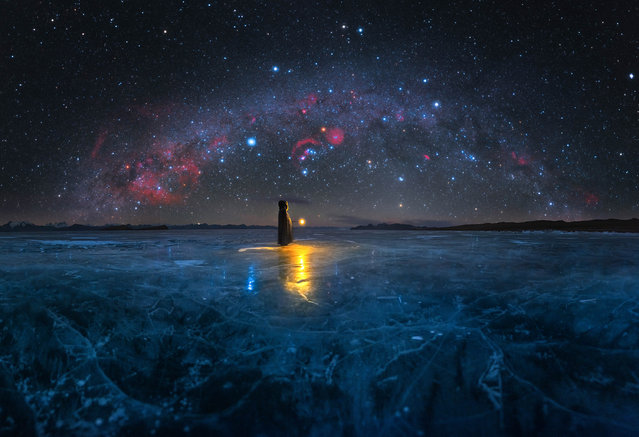
Ice Age – Tibet, China. “This is the Chinese version of the blue ice lake, Pumoungcuo, at an altitude of 5,070 metres (16,600 feet). This lake in Tibet freezes every winter. At night, under the low temperatures of -20C, you can listen to the sound of the ice cracking while capturing the most beautiful winter sky. The blue ice surface and dazzling Orion constellation create a fantasy landscape. I felt so happy to have the stars as my companion on this magical night”. (Photo by Daniel Zafra Portill/Milky Way Photographer of the Year)

Ice Age – Tibet, China. “This is the Chinese version of the blue ice lake, Pumoungcuo, at an altitude of 5,070 metres (16,600 feet). This lake in Tibet freezes every winter. At night, under the low temperatures of -20C, you can listen to the sound of the ice cracking while capturing the most beautiful winter sky. The blue ice surface and dazzling Orion constellation create a fantasy landscape. I felt so happy to have the stars as my companion on this magical night”. (Photo by Daniel Zafra Portill/Milky Way Photographer of the Year)
Details
21 May 2022 05:10:00
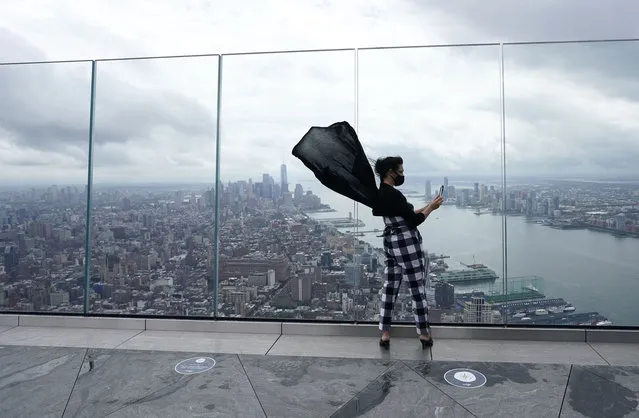
Anissa Barbato from New York looks out over the city as she takes pictures from the Edge, the highest outdoor sky deck in the Western Hemisphere on September 2, 2020 as it reopened to the public in New York. Rising 1,131 feet in the air from the heart of Hudson Yards it offers  360-degree views of New York Citys iconic skyline from the 100th floor outdoor viewing. (Photo by Timothy A. Clary/AFP Photo)

Anissa Barbato from New York looks out over the city as she takes pictures from the Edge, the highest outdoor sky deck in the Western Hemisphere on September 2, 2020 as it reopened to the public in New York. Rising 1,131 feet in the air from the heart of Hudson Yards it offers 360-degree views of New York Citys iconic skyline from the 100th floor outdoor viewing. (Photo by Timothy A. Clary/AFP Photo)
Details
24 Jan 2021 09:56:00
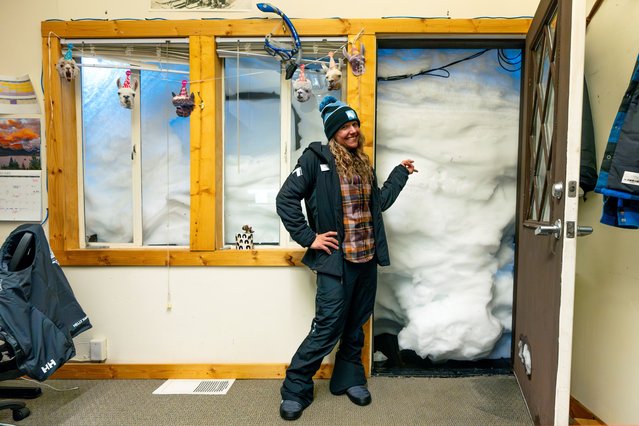
In this photo provided by Sugar Bowl Resort, snow covers the door of the marketing office at the Sugar Bowl Resort in Norden, Calif., on Monday, March 4, 2024. A powerful blizzard dumped more than 10 feet of snow on the California ski resort, where the marketing team had to dig a tunnel to get to their office door. The storm closed highways and most lifts at ski resorts over the weekend. (Photo by Jacob Banta/Sugar Bowl Resort via AP Photo)

In this photo provided by Sugar Bowl Resort, snow covers the door of the marketing office at the Sugar Bowl Resort in Norden, Calif., on Monday, March 4, 2024. A powerful blizzard dumped more than 10 feet of snow on the California ski resort, where the marketing team had to dig a tunnel to get to their office door. The storm closed highways and most lifts at ski resorts over the weekend. (Photo by Jacob Banta/Sugar Bowl Resort via AP Photo)
Details
11 Jul 2025 03:14:00
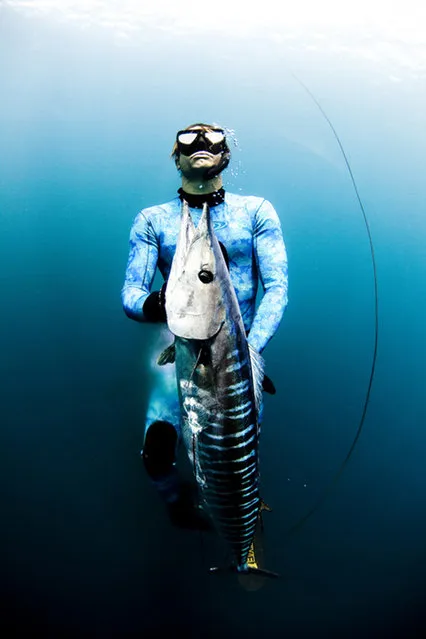
Free Dive Hunters

Without the use of any type of scuba equipment, divers descend to great depths armed with underwater guns, harpoons and strong line to stalk and hunt prey. Some of the best free-divers in the world can hold their breath for up to 5 minutes under water and go to depths greater than 100 feet.
(All photography © Eyeconic Images.)
Details
26 Jun 2013 14:17:00
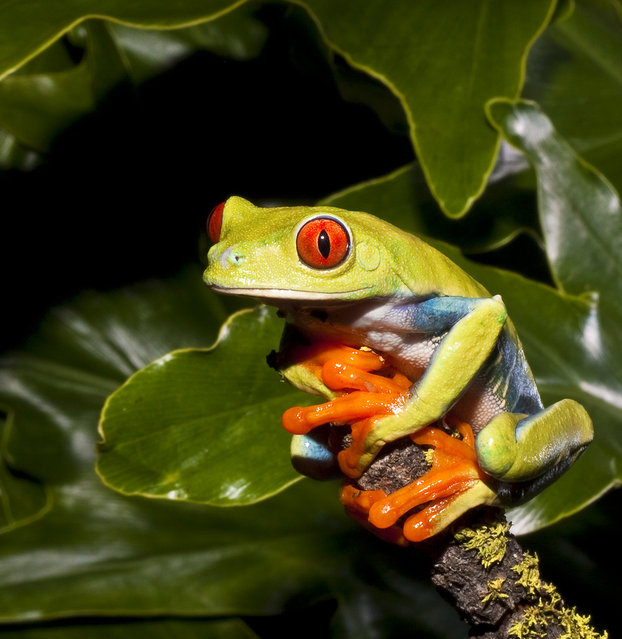
The Red-eyed Treefrog (Agalychnis callidryas)

“The Red-eyed Treefrog (Agalychnis callidryas) is an arboreal hylid native to Neotropical rainforests in Central America. Red-eyed tree frogs, as their name states, have red eyes with vertically narrowed noses, a vibrant green body with yellow and blue vertically striped sides, and orange or yellow webbed feet and toes”. – Wikipedia. (Photo by Donald Quintana)
Details
26 Jun 2012 10:13:00